
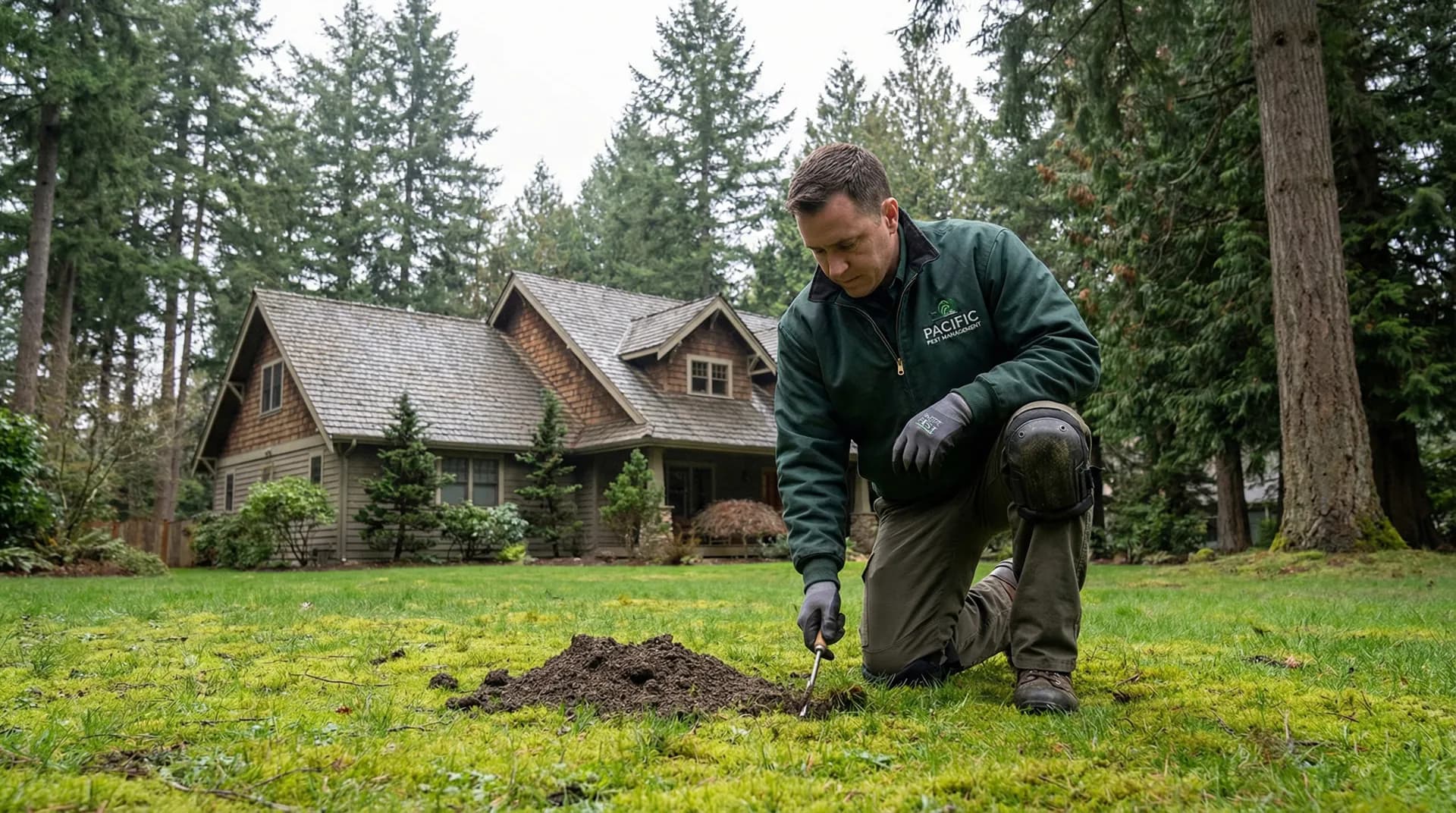
Mole Control in Brier
Big, wooded lots with mature landscaping on Alderwood glacial till — Brier is a mole's ideal neighborhood. The large lot sizes mean more lawn area to damage, the mature trees mean richer soil, and the semi-rural character means plenty of undisturbed ground where moles thrive. Got Moles has been serving Brier's unique conditions since 2017.
Call (253) 750-0211219+ Five-Star Google Reviews·Chemical-Free·Proven Results
Got Moles provides professional mole control in Brier, Washington. Chemical-free methods. Nearly 5,000 clients served since 2017. Call (253) 750-0211 for a free quote.
Brier is barely a square mile and a half, and that's exactly the point. Tucked between Mountlake Terrace, Bothell, and Kenmore, Brier has held onto its wooded, semi-rural character while the cities around it densified. Large lots, mature trees, and no sidewalks on most streets give it a feel closer to the 1960s suburbs than anything being built today. Residents here chose Brier specifically for the space and the quiet.
Why Moles Thrive in Brier
Brier sits on the same Alderwood glacial till that defines southern Snohomish County, with the hardpan layer at two to three feet trapping moisture in the topsoil. What sets Brier apart is the lot sizes — typically a quarter acre or larger, with mature tree canopy that's been dropping organic matter into the soil for 50+ years. That builds up a thick, humus-rich topsoil layer that supports dense earthworm populations. The wooded character of the city means undisturbed ground between properties, providing mole habitat right in the middle of the residential area. Rainfall around 37 inches keeps everything moist.
Moles in Brier Neighborhoods
Brier's residential character is remarkably consistent — large, wooded lots from one end to the other. Properties along Brier Road, the main spine of the city, have some of the most mature landscaping and deepest topsoil. The northern neighborhoods bordering Mountlake Terrace deal with moles crossing between the two cities. Southern properties near the Kenmore and Bothell borders face moles migrating from larger undeveloped parcels and the green spaces along the Burke-Gilman corridor. Properties with significant tree cover see heavier mole activity because the shade reduces evaporation and the leaf litter enriches the soil. Even Brier's lack of sidewalks contributes — the wide, unpaved shoulders and drainage swales along roads provide additional mole travel corridors.
How We Help Brier Homeowners
Year-Round Protection
$100/month
Our Total Mole Control Program keeps your yard protected all year. Regular visits, immediate response to new activity, and a report after every check.
Get Year-Round Protection→One-Time Removal
$450 flat rate
A focused, one-month eradication program for properties under 1 acre. 4-5 weekly visits. If we don't catch a mole, you only pay the $150 setup fee.
Get One-Time Removal→Commercial
Custom quote
Annual contracts for property managers, HOAs, sports facilities, and commercial grounds. Professional reporting, reliable scheduling.
Get a Commercial Quote→Local Tip
Brier's large lots mean moles have plenty of room to establish extensive tunnel networks before you notice surface damage. If you see one mound, the tunnel system underneath likely extends across a significant portion of your yard already. Early action saves money.
How It Works
Call
Tell us about your property
Inspect
We assess the mole activity
Trap
Professional equipment on active tunnels
Report
Results after every visit
Brier Mole Control FAQ
My lot is almost half an acre with lots of trees. Is that why my mole problem is worse than my friends' in Lynnwood?
The combination of lot size, mature trees, and wooded character creates ideal conditions. More trees mean richer soil with more earthworms. Larger lots mean more territory for moles to work. And Brier's undisturbed ground between properties provides habitat that denser cities don't have.
We chose Brier for the natural feel. Can you treat moles without damaging the natural landscaping?
Absolutely. Our traps are placed below ground in active tunnels — no disturbance to the surface, no chemicals, nothing that affects your trees, garden, or the natural character of your lot. The traps are invisible once set.
How many moles could a half-acre Brier property have?
Townsend's moles are solitary and territorial, so even a large lot typically has two to five active moles. A single mole can create an extensive tunnel system across your entire property. We assess the number during inspection based on tunnel patterns and mound distribution.
My yard has a lot of shade and stays damp. Is that related to the moles?
Directly. Shade reduces evaporation, which keeps soil moisture higher. Damp, shaded soil under mature trees builds up organic matter and supports more earthworms per square foot than sunny, dry areas. That's exactly what moles look for.
We don't have a fence and neither do our neighbors. Should we coordinate treatment?
Strongly recommended. Brier's open lot layouts with no fences mean mole tunnel systems cross property lines freely. Treating one yard while the adjacent lots are untreated leads to rapid recolonization. Even getting one neighbor on board doubles the effectiveness of treatment.
Ready for Mole-Free Living in Brier?
Call (253) 750-0211 or fill out the form below.
CALL (253) 750-0211Free inspection. No obligation.