
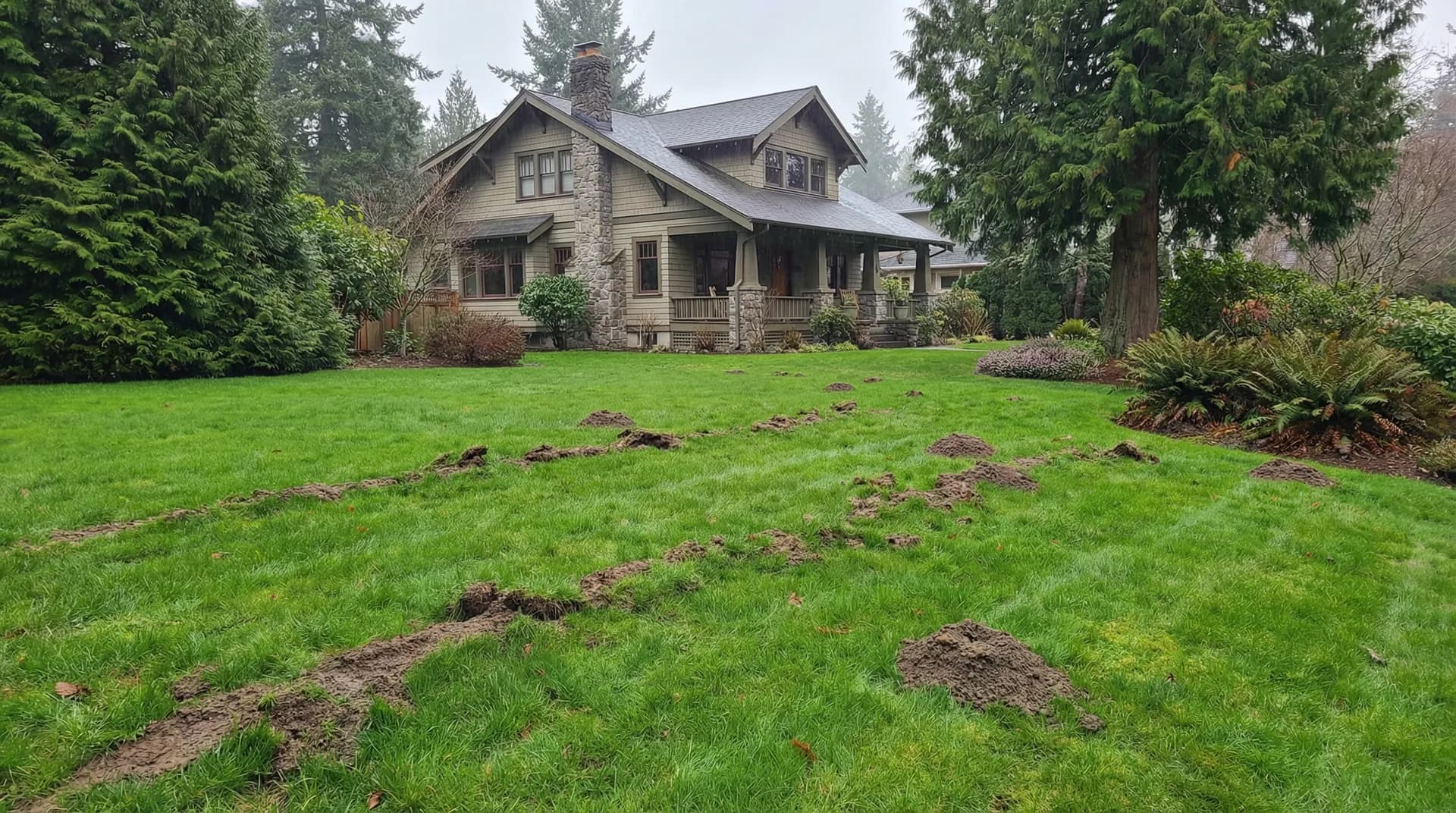
Mole Control in Tacoma
Tacoma sits on rolling glacial hills above Puget Sound, and that terrain means moles have been here as long as the lawns have. From North End yards backing up to Puget Creek Natural Area to newer subdivisions spreading across the South End, Got Moles has been handling Pierce County mole problems since 2017 with chemical-free methods safe for kids and pets.
Call (253) 750-0211219+ Five-Star Google Reviews·Chemical-Free·Proven Results
Got Moles provides professional mole control in Tacoma, Washington. Chemical-free methods. Nearly 5,000 clients served since 2017. Call (253) 750-0211 for a free quote.
Tacoma is a city that earns its pride. From the Museum District along Pacific Avenue to the tree-lined streets of the Proctor neighborhood and the stunning views from Point Defiance Park, this is a place where people put down roots and stay. Stadium High School's castle-like silhouette, the working waterfront along Commencement Bay, and the revitalized Hilltop neighborhood give Tacoma a character that's equal parts grit and beauty.
Why Moles Thrive in Tacoma
Tacoma's soil is a mix of glacial till deposits, volcanic ash from Mount Rainier, and alluvial sediment near the waterways. The glacial till creates a compacted hardpan layer 18 to 36 inches down that traps moisture above it, keeping the topsoil wet and earthworm-rich year-round. With 38 inches of annual rainfall and mild winters that never freeze deep enough to slow them down, Townsend's moles stay active in every season. Elevation varies from sea level to nearly 500 feet, creating pockets of especially moist, loamy soil in the valleys between hills.
Moles in Tacoma Neighborhoods
In the North End, the mature landscaping around Proctor, Old Town, and the Stadium District creates prime mole habitat. Decades-old lawns with deep root systems and rich organic soil attract heavy earthworm populations that draw moles in. The Hilltop neighborhood sees activity where yards border Wright Park and its surrounding green spaces. Over in the South End, Lincoln District and South Tacoma properties near Wapato Lake Park deal with moles migrating from the park's moist riparian corridors. West-facing slopes in the Narrows neighborhood drain toward the Sound, creating saturated soil bands where moles concentrate. Newer developments off Portland Avenue and around McKinley Hill see moles pushing in from adjacent undeveloped land.
How We Help Tacoma Homeowners
Year-Round Mole Control
$100/month
Our Total Mole Control Program keeps your yard protected all year. Regular visits, immediate response to new activity, and a report after every check.
Get Year-Round Protection→One-Time Mole Removal
$450 flat rate
A focused, one-month eradication program for properties under 1 acre. 4-5 weekly visits. If we don't catch a mole, you only pay the $150 setup fee.
Get One-Time Removal→Commercial Mole Control
Custom quote
Annual contracts for property managers, HOAs, sports facilities, and commercial grounds. Professional reporting, reliable scheduling.
Get a Commercial Quote→Local Tip
If your yard sits on one of Tacoma's glacial hillsides, check the downhill side of your property first. Water follows gravity through the glacial till, and the lower sections of sloped lots stay wetter longer. That's where moles start digging.
How It Works
Call
Phone quote, no obligation
Book
Pay $150 setup. We schedule your first visit.
Trap
Tech inspects and sets traps on the first visit
Report
Weekly checks. Written report every visit.
Tacoma Mole Control FAQ
Why does my North End yard keep getting new moles after I thought the problem was solved?
The North End's mature tree canopy and proximity to natural areas like Puget Creek and Point Defiance create a constant supply of moles. When one is removed, another moves in from adjacent habitat. That's why our Trapping and Monitoring Control Program provides ongoing protection instead of a one-and-done approach.
Is mole activity in Tacoma worse in certain seasons?
Moles are active year-round in Tacoma because the ground rarely freezes. You'll notice more surface tunneling in spring and fall when soil moisture is highest and moles hunt closer to the surface for earthworms. Winter and summer activity tends to be deeper underground — less visible but still happening.
Are your methods safe for my dog who plays in the yard every day?
Completely safe. We use professional traps placed underground in active tunnels. No poison, no chemicals, nothing on the surface that could harm pets or children. Your dog can use the yard as normal during and after treatment.
My property backs up to Wright Park. Will I always have mole problems?
Properties bordering parks and green spaces face higher reinvasion pressure. The park's undisturbed soil is ideal mole habitat, and they push into adjacent yards looking for food. Our monitoring program catches new arrivals early before they establish tunnel networks — the most effective approach for park-adjacent properties.
My neighbor and I both have moles. Should we coordinate treatment?
Absolutely. Moles travel between adjacent properties through connected tunnel systems. Treating both yards at the same time is more effective and more cost-efficient than each homeowner dealing with it separately. We handle multi-property coordination regularly.
Ready for Mole-Free Living in Tacoma?
Call (253) 750-0211 or fill out the form below.
CALL (253) 750-0211Free quote. No obligation.