
Mole Control in Prairie Ridge
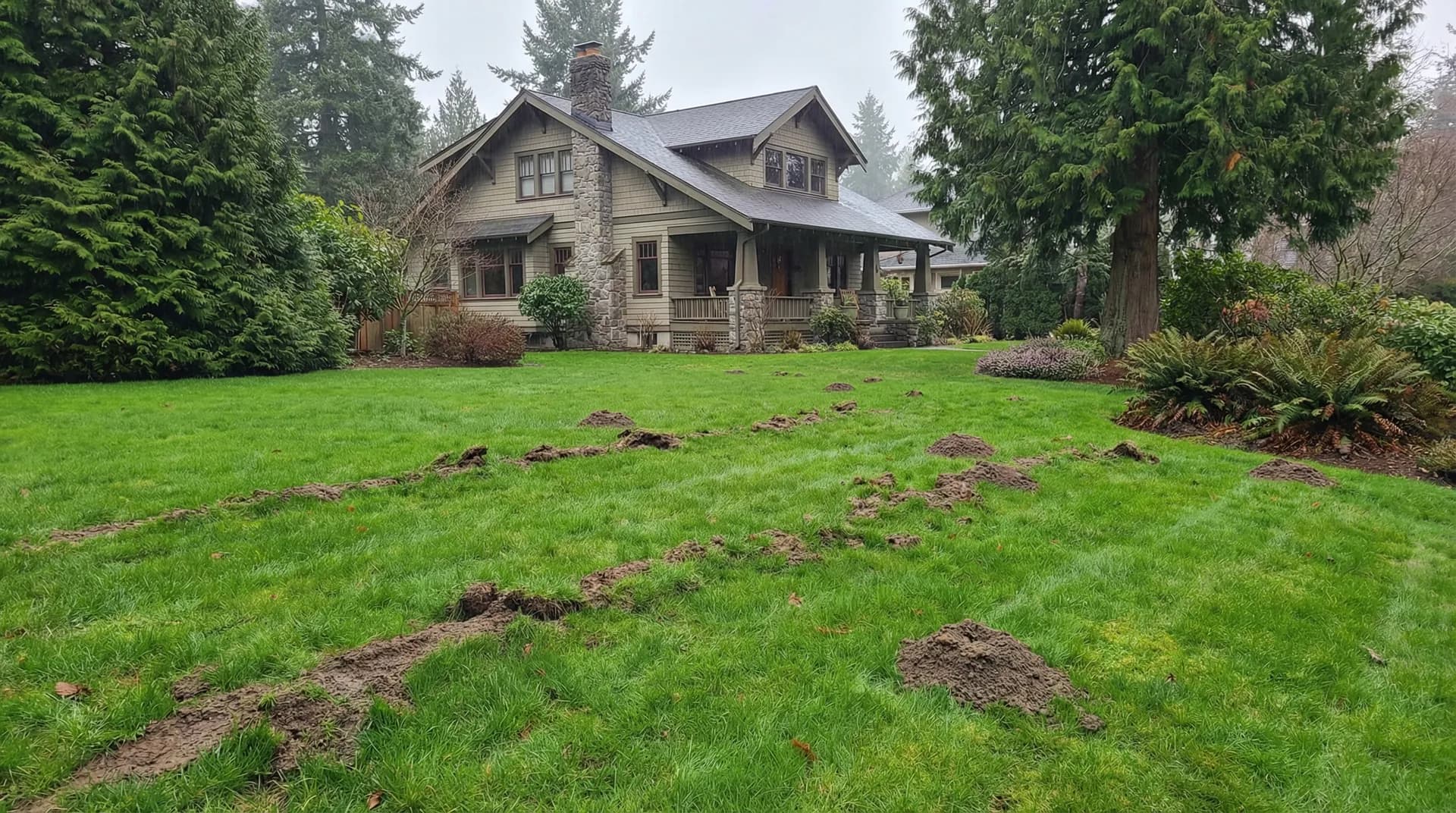
Bigger yards, more tree cover, and more ground moles never see anyone walking on — that's why Prairie Ridge properties get hit harder than their Bonney Lake neighbors. Got Moles handles the conditions out here the same way we do everywhere else in Pierce County: chemical-free, guaranteed, and safe for the kids, dogs, and horses using the property every day.
Call (253) 750-0211219+ Five-Star Google Reviews·Chemical-Free·Proven Results
Got Moles provides professional mole control in Prairie Ridge, Washington. Chemical-free methods. Nearly 5,000 clients served since 2017. Call (253) 750-0211 for a free quote.
Prairie Ridge is a community of around 12,000 people tucked between Bonney Lake and South Prairie, with the kind of medium-to-large single-family homes and quiet streets that pulled families out of Tacoma in the first place. Allan Yorke Park, just up the road in Bonney Lake, handles the ball fields, the skatepark, and access to Lake Tapps. This is a rural-edge suburb where the yards are bigger, the tree lines are closer, and the pace is measurably slower than the I-5 corridor.
Why Moles Thrive in Prairie Ridge
Prairie Ridge sits on the plateau between Bonney Lake and South Prairie, on Alderwood glacial till with a characteristic hardpan layer roughly three feet down. That hardpan traps moisture in the topsoil, supporting heavy earthworm populations that Townsend's moles feed on year-round. The combination of larger, irrigated yards, surrounding second-growth forest, and nearby undeveloped ground means moles have endless territory to move through. Annual rainfall exceeds 45 inches here, and the tree cover keeps the soil shaded and damp longer into summer than more open terrain.
Moles in Prairie Ridge Neighborhoods
The newer subdivisions along 120th Street and the streets branching off 214th Avenue East sit on recently graded soil that's easy for moles to tunnel through — homes here often see mole activity within the first couple of years. Older Prairie Ridge properties, with mature trees and established lawns, have tunnel systems moles have used for decades. Homes along the boundary with South Prairie face constant reinvasion from undeveloped agricultural and forest land just beyond the property lines. Lots backing onto forested green belts between neighborhoods deal with the same edge-effect pressure — moles stage in undisturbed cover before pushing into cleared yards. Properties close to Allan Yorke Park and the route down to Lake Tapps see moles migrating through from the heavily irrigated park grounds.
How We Help Prairie Ridge Homeowners
Year-Round Protection
$100/month
Our Total Mole Control Program keeps your yard protected all year. Regular visits, immediate response to new activity, and a report after every check.
Get Year-Round Protection→One-Time Removal
$450 flat rate
A focused, one-month eradication program for properties under 1 acre. 4-5 weekly visits. If we don't catch a mole, you only pay the $150 setup fee.
Get One-Time Removal→Commercial
Custom quote
Annual contracts for property managers, HOAs, sports facilities, and commercial grounds. Professional reporting, reliable scheduling.
Get a Commercial Quote→Local Tip
Large Prairie Ridge lots benefit from a perimeter-first approach — we find new mole activity along the property lines and tree edges before it reaches the main lawn. Catching the perimeter early prevents the interior damage that's expensive to repair.
How It Works
Call
Tell us about your property
Inspect
We assess the mole activity
Trap
Professional equipment on active tunnels
Report
Results after every visit
Prairie Ridge Mole Control FAQ
We're on a half-acre lot with a lot of lawn. How does pricing work on bigger properties?
Pricing is based on the extent of mole activity, not the lot size. A large Prairie Ridge lot with one active area costs less to treat than a smaller yard with multiple infestations. We do a free inspection, identify the active tunnel network, and give you a clear quote before any work starts.
Our property borders open fields. Are moles always going to be a problem?
Field-adjacent properties do face more reinvasion pressure than interior lots. The fields supply moles continuously. One-time removal handles what's there now, but our Total Mole Control Program is the more effective long-term approach for properties on the edge of open land.
We have horses on the property. Can you work around the paddocks?
Yes. We service larger Prairie Ridge properties with pastures, paddocks, and outbuildings regularly. Mole mounds in paddocks create real tripping and mowing hazards, and pasture soil tends to be especially earthworm-rich from manure input — so mole activity is often concentrated there. We target the paddock areas along with the lawn.
The ground freezes occasionally in winter. Do the moles go away?
No. Even when the top inch or two of soil freezes, the ground below stays workable, and that's where moles operate. Prairie Ridge winters aren't harsh enough to stop them. Activity slows at the surface but continues underground year-round.
Are sonic repellers or repellent granules worth trying first?
No. Sonic repellers have been tested repeatedly and don't affect mole behavior. Castor-oil granules may push moles to a different part of your yard temporarily but don't remove them. Professional trapping is the only method proven to eliminate Townsend's moles from a property.
Ready for Mole-Free Living in Prairie Ridge?
Call (253) 750-0211 or fill out the form below.
CALL (253) 750-0211Free inspection. No obligation.