
Mole Control in Bremerton
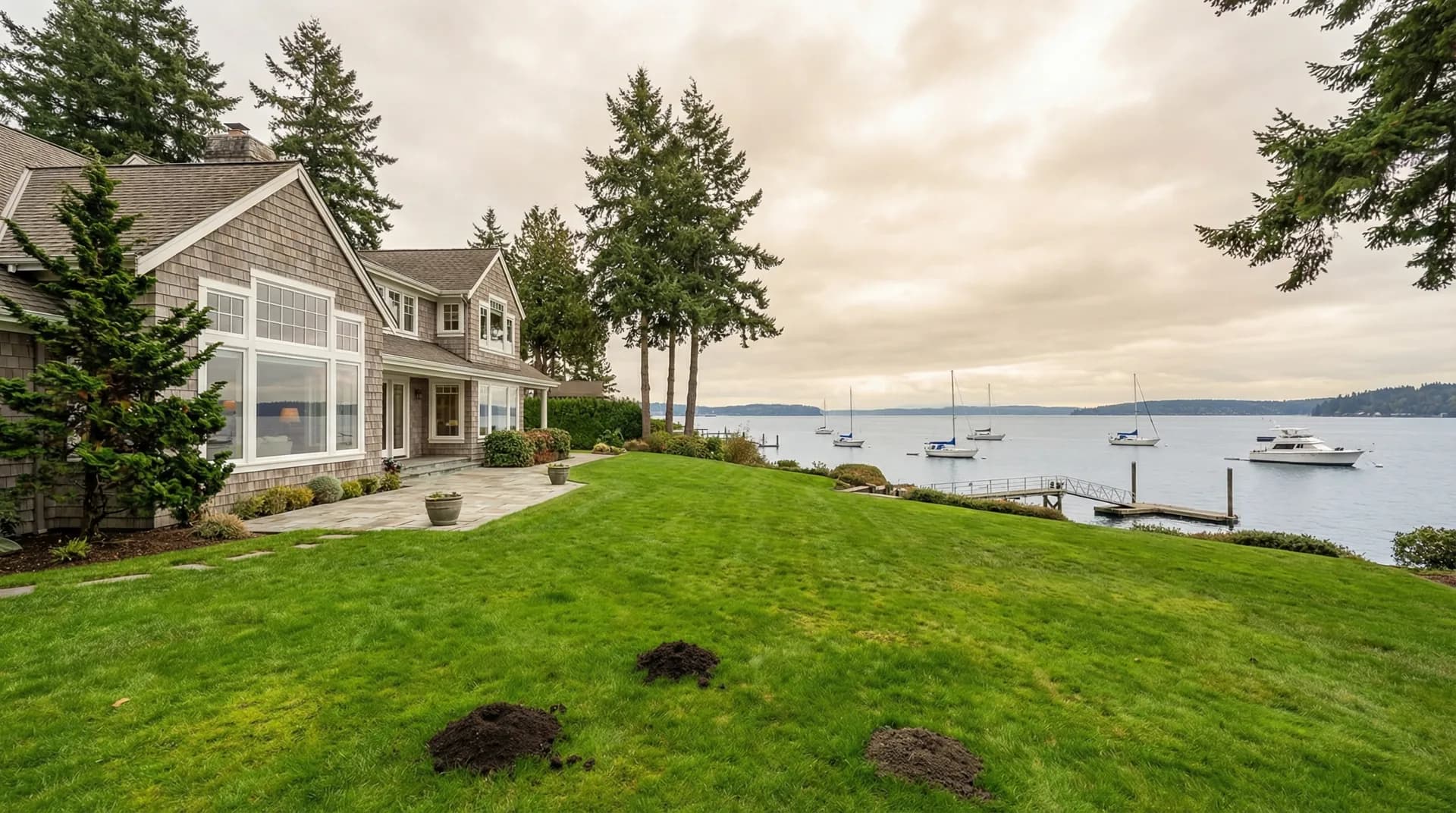
Bremerton averages 56+ inches of rain a year and sits on a peninsula surrounded by Puget Sound on three sides. That much water, combined with the glacial soils of the Kitsap Peninsula, creates mole conditions that are among the most persistent in our service area. Got Moles brings proven, chemical-free methods to a city that truly needs them.
Call (253) 750-0211219+ Five-Star Google Reviews·Chemical-Free·Proven Results
Got Moles provides professional mole control in Bremerton, Washington. Chemical-free methods. Nearly 5,000 clients served since 2017. Call (253) 750-0211 for a free quote.
Bremerton is a Navy town through and through. The Puget Sound Naval Shipyard has anchored the city's identity since 1891, and the shipyard's massive cranes are the first thing you see coming across Sinclair Inlet. But Bremerton is more than its base. The Manette neighborhood across the bridge has an artsy, walkable energy. Charleston's older homes carry working-class character. The downtown waterfront has reinvented itself with a boardwalk, a ferry terminal connecting to Seattle, and restaurants that didn't exist ten years ago.
Why Moles Thrive in Bremerton
The Kitsap Peninsula's soils are predominantly glacial till and outwash deposits, and Bremerton's position on Sinclair Inlet means marine influence keeps humidity and soil moisture elevated year-round. With 56+ inches of annual rainfall — roughly 50% more than Seattle — the ground rarely dries out at tunnel depth. The city's hilly terrain creates drainage patterns where moisture collects in valleys and along hillside benches, producing bands of saturated soil that moles follow like roads. The combination of heavy rainfall, marine air, glacial soil, and varied topography makes Bremerton one of the most consistently active mole environments in the Puget Sound region.
Moles in Bremerton Neighborhoods
Manette, across the Manette Bridge from downtown, sits on a hillside above the inlet with mature landscaping and older homes whose established yards support dense earthworm populations. Mole activity there is reliable year-round. The Charleston neighborhood on the west side of the shipyard has similar characteristics — older lots, deep topsoil, and proximity to undeveloped ravines that funnel moles into residential areas. The hillside neighborhoods above the downtown waterfront, including areas along Sheridan Road and Warren Avenue, deal with moles following the moisture that flows downhill through the glacial drift. Properties near Kitsap Lake see elevated activity from the lake's influence on the local water table. Navy Yard City, with its mix of residential and green space bordering the shipyard, sees moles in the buffer zones between developed and military land.
How We Help Bremerton Homeowners
Year-Round Protection
$100/month
Our Total Mole Control Program keeps your yard protected all year. Regular visits, immediate response to new activity, and a report after every check.
Get Year-Round Protection→One-Time Removal
$450 flat rate
A focused, one-month eradication program for properties under 1 acre. 4-5 weekly visits. If we don't catch a mole, you only pay the $150 setup fee.
Get One-Time Removal→Commercial
Custom quote
Annual contracts for property managers, HOAs, sports facilities, and commercial grounds. Professional reporting, reliable scheduling.
Get a Commercial Quote→Local Tip
Bremerton's hills mean water moves through your soil on a slant. If your yard has any slope at all, the moles are almost certainly more active on the downhill side where moisture accumulates. Start your inspection there — that's where the freshest tunnels will be.
How It Works
Call
Tell us about your property
Inspect
We assess the mole activity
Trap
Professional equipment on active tunnels
Report
Results after every visit
Bremerton Mole Control FAQ
Why does Bremerton seem to have worse mole problems than other Kitsap cities?
Bremerton's 56+ inches of annual rainfall, combined with its hilly terrain and Puget Sound on three sides, creates ideal conditions. The hills funnel moisture into valleys and low spots, keeping soil saturated at tunnel depth for longer periods than flatter areas. More water means more earthworms, which means more moles.
I live in Manette. Are the older neighborhoods more susceptible?
Older neighborhoods like Manette and Charleston tend to have deeper topsoil from decades of landscaping, larger trees with extensive root systems, and richer organic soil. All of that supports higher earthworm densities. So yes, established neighborhoods generally see more mole activity than newer developments — at least until the new developments mature.
Are your traps safe around the military housing areas?
Our traps are placed underground inside active mole tunnels. There's nothing on the surface that could affect people, pets, or wildlife. We serve residential properties throughout Bremerton, including neighborhoods adjacent to the naval base.
Does the saltwater affect moles near the waterfront?
Moles avoid direct saltwater exposure, but the residential soil even a block or two from the waterfront is fresh-water influenced from rainfall and runoff. The marine air keeps humidity high, which helps soil retain moisture, but the salt itself doesn't reach residential yards in meaningful concentrations. Waterfront-adjacent properties still have active mole populations.
My hillside property has retaining walls. Can mole tunnels damage them?
Mole tunnels can undermine retaining walls by creating voids behind the wall and redirecting water flow through the soil. On Bremerton's hilly terrain, where water already moves through the soil under gravity, mole tunnels accelerate the process. Addressing the mole problem protects both your lawn and your retaining structures.
Ready for Mole-Free Living in Bremerton?
Call (253) 750-0211 or fill out the form below.
CALL (253) 750-0211Free inspection. No obligation.