
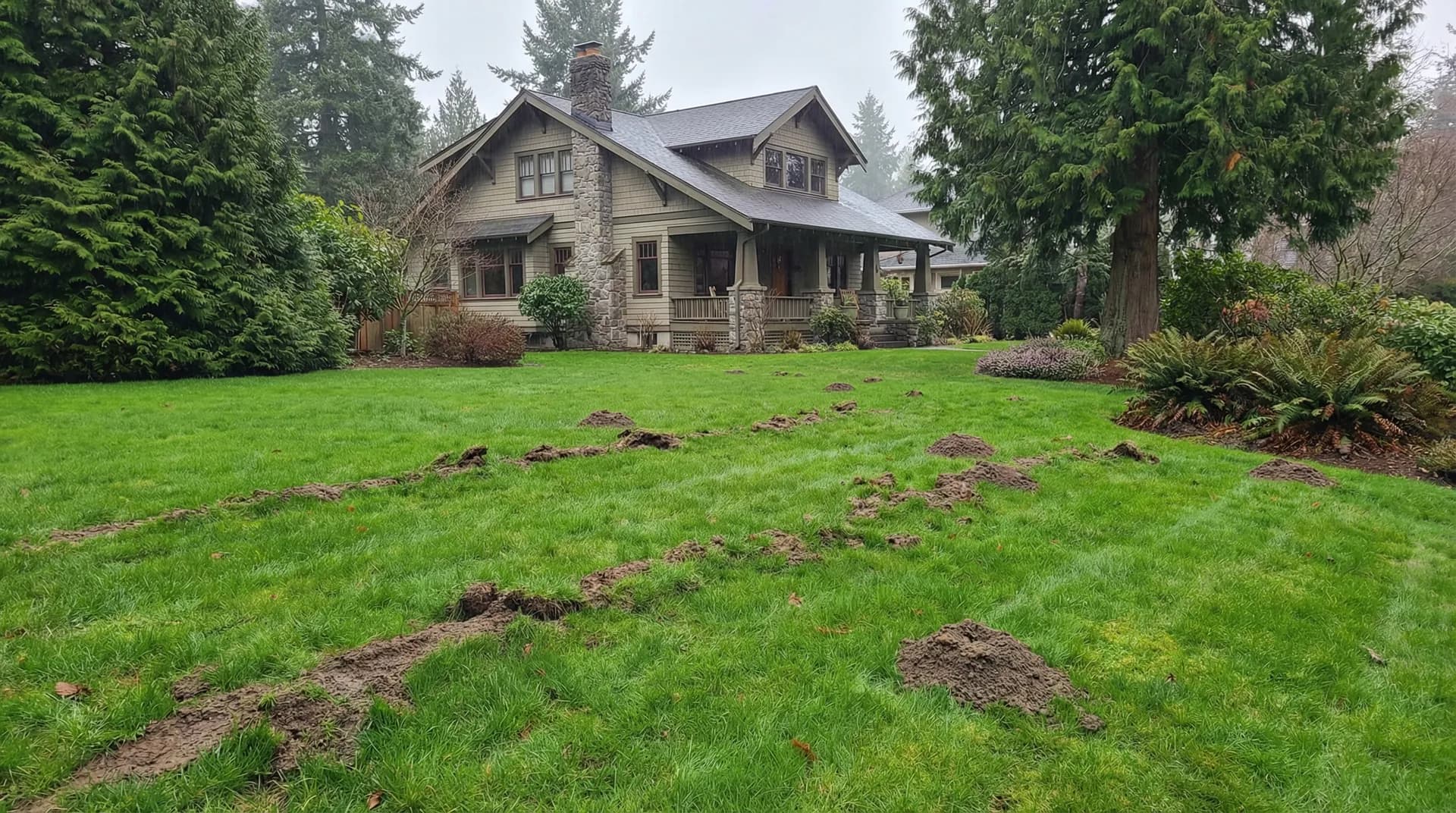
Mole Control in Orting
The Carbon River valley that cradles Orting is built on layer after layer of volcanic mudflow deposits. The most recent lahar buried this valley under 20 feet of sediment just 600 years ago. That deep, rich volcanic soil is exactly the kind of ground that supports enormous earthworm populations and the Townsend's moles that feed on them. Got Moles protects Orting properties with chemical-free methods that work with this unique terrain.
Call (253) 750-0211219+ Five-Star Google Reviews·Chemical-Free·Proven Results
Got Moles provides professional mole control in Orting, Washington. Chemical-free methods. Nearly 5,000 clients served since 2017. Call (253) 750-0211 for a free quote.
Orting sits in the Carbon River valley at the base of Mount Rainier, surrounded by farmland and forest with the mountain filling the sky. The Foothills Trail runs through town, connecting Orting to the wider valley trail system. This is a community of about 9,000 that balances small-town pride with the reality of living in a designated lahar zone. The annual Daffodil Classic running race, the Soldiers Home cemetery, and the Carbon River corridor define Orting's character.
Why Moles Thrive in Orting
Orting's valley floor is composed of lahar deposits from Mount Rainier, layers of volcanic sediment 30 to 100 feet deep. This material is a mix of clay, sand, gravel, and volcanic ash that retains moisture exceptionally well. The Carbon River and its tributaries keep the water table high across the valley, and the surrounding foothills funnel rainfall into the lowland where Orting sits. At 208 feet of elevation in a valley surrounded by higher terrain, Orting collects moisture from every direction. Annual rainfall exceeds 42 inches, and the mild temperatures mean moles never go dormant.
Moles in Orting Neighborhoods
The residential neighborhoods east and west of Orting Highway see heavy mole activity on the deep lahar deposits. The newer subdivisions built in the 2000s on former farmland along Calistoga Street and Pioneer Way inherited mole populations already established in the soil. Properties along the Carbon River corridor and near the Foothills Trail face constant reinvasion from the riparian zone. The Orting Soldiers Home area, with its older landscaping and proximity to open land, sees moles moving between maintained yards and undisturbed ground. Neighborhoods near Whitesell Street and the north end of town, closer to the river confluence, deal with the highest water tables and the softest soil in the community.
How We Help Orting Homeowners
Year-Round Protection
$100/month
Our Total Mole Control Program keeps your yard protected all year. Regular visits, immediate response to new activity, and a report after every check.
Get Year-Round Protection→One-Time Removal
$450 flat rate
A focused, one-month eradication program for properties under 1 acre. 4-5 weekly visits. If we don't catch a mole, you only pay the $150 setup fee.
Get One-Time Removal→Commercial
Custom quote
Annual contracts for property managers, HOAs, sports facilities, and commercial grounds. Professional reporting, reliable scheduling.
Get a Commercial Quote→Local Tip
Orting's lahar-deposit soil holds so much moisture that even properties that look dry on the surface often have saturated soil at the 4-to-8-inch depth where moles tunnel. If you're on the valley floor, assume the conditions are right for moles whether or not your lawn looks wet.
How It Works
Call
Tell us about your property
Inspect
We assess the mole activity
Trap
Professional equipment on active tunnels
Report
Results after every visit
Orting Mole Control FAQ
Does the lahar-zone soil actually affect mole activity?
Directly. Lahar deposits create deep, loose, moisture-retentive soil that is ideal for both earthworms and moles. The volcanic sediment that makes Orting's valley floor is some of the most mole-friendly terrain in Pierce County. The depth and softness of the soil allows moles to tunnel faster and establish larger networks than in areas with harder glacial till.
I live near the Carbon River. Should I expect moles permanently?
Properties along the Carbon River corridor will always face reinvasion pressure. The riparian zone is permanent mole habitat with high moisture, soft soil, and abundant food. Our monitoring program is the best fit for river-adjacent properties because it catches new arrivals on a regular schedule before they get established.
Will the Foothills Trail bring moles into my yard?
The trail corridor does serve as a mole highway. Moles use the undisturbed soil along trails and linear green spaces to move between habitat patches. If your property borders the Foothills Trail, that edge is the most likely entry point for new moles. We focus trapping on those entry zones first.
Do moles go deeper in winter here?
They do. Winter surface tunneling is less visible in Orting because moles shift to deeper tunnels when soil moisture is uniform throughout the profile. That doesn't mean they're inactive. They're still tunneling and feeding, just below the visible zone. Spring brings them back to the surface as earthworms move up with the warming soil.
Are your methods safe for our vegetable garden?
Completely safe. Our traps are placed underground in active mole tunnels away from garden beds. No chemicals, no poisons, nothing that could contaminate soil or affect your produce. Removing the moles also protects your garden roots from tunneling damage and keeps voles from using mole tunnels to reach your plants.
Ready for Mole-Free Living in Orting?
Call (253) 750-0211 or fill out the form below.
CALL (253) 750-0211Free inspection. No obligation.