
Mole Control in Elk Plain
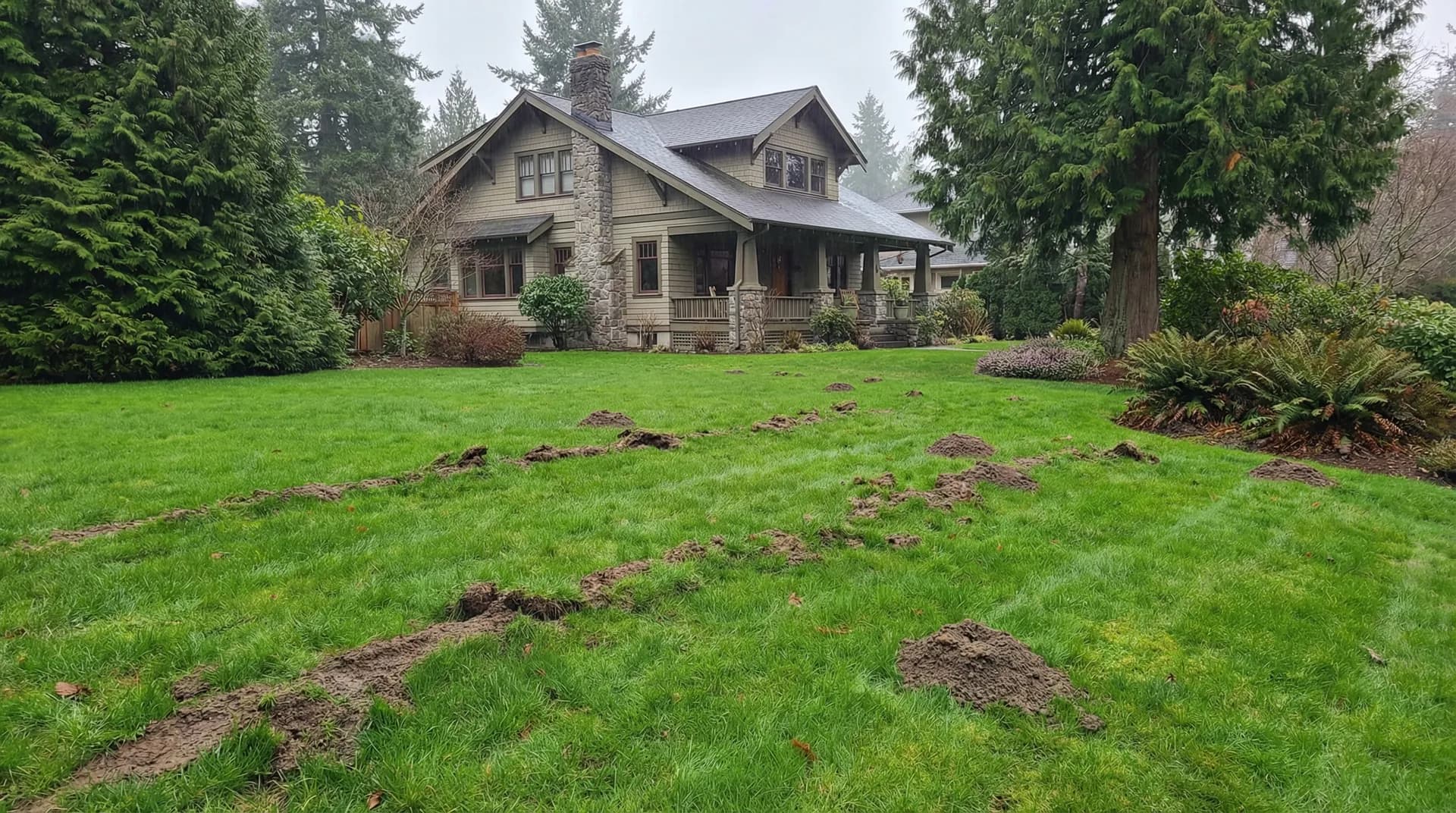
Elk Plain's open grasslands, proximity to Joint Base Lewis-McChord's undeveloped buffer zones, and large rural lots create a continuous band of mole habitat across the community. There's no shortage of undisturbed ground here for Townsend's moles to call home. Got Moles serves Elk Plain with chemical-free trapping that protects the lawns and pastures families depend on.
Call (253) 750-0211219+ Five-Star Google Reviews·Chemical-Free·Proven Results
Got Moles provides professional mole control in Elk Plain, Washington. Chemical-free methods. Nearly 5,000 clients served since 2017. Call (253) 750-0211 for a free quote.
Elk Plain is an unincorporated community in southern Pierce County where open land still defines the landscape. Properties are bigger here, views of Mount Rainier are unobstructed, and the pace is unhurried. The proximity to JBLM draws military families, while the space and affordability attract anyone looking for room to breathe. It's the kind of place where you can still see elk grazing at dusk and hear coyotes at night.
Why Moles Thrive in Elk Plain
Elk Plain sits on the glacial outwash plain that stretches across southern Pierce County, with Spanaway gravelly sandy loam as the dominant soil type. The flat to gently rolling terrain collects moisture in low spots and drainage channels between properties. The JBLM buffer zones on the western and northern edges are permanent, undisturbed mole habitat — thousands of acres that have never been developed and never will be. Annual rainfall around 40 inches keeps the soil moist, and the open grassland between properties supports healthy earthworm populations that moles follow from parcel to parcel.
Moles in Elk Plain Neighborhoods
Properties along the JBLM boundary see the heaviest and most consistent mole pressure. The base's undeveloped buffer zones are an endless mole supply, and residential yards on the boundary are the first expansion point. The neighborhoods along McKenna-Elk Plain Road deal with moles moving between the commercial corridor and surrounding rural lots. Properties near the drainage channels that cross the plain see concentrated mole activity where moisture collects. The larger acreage lots with maintained lawns surrounded by open pasture or grassland create ideal conditions for moles to tunnel between the wild and maintained zones. Even newer homes built on former farmland see moles return within the first year of landscaping.
How We Help Elk Plain Homeowners
Year-Round Protection
$100/month
Our Total Mole Control Program keeps your yard protected all year. Regular visits, immediate response to new activity, and a report after every check.
Get Year-Round Protection→One-Time Removal
$450 flat rate
A focused, one-month eradication program for properties under 1 acre. 4-5 weekly visits. If we don't catch a mole, you only pay the $150 setup fee.
Get One-Time Removal→Commercial
Custom quote
Annual contracts for property managers, HOAs, sports facilities, and commercial grounds. Professional reporting, reliable scheduling.
Get a Commercial Quote→Local Tip
On Elk Plain's larger properties, the boundary between your maintained lawn and the surrounding open land is where moles enter. Concentrate your attention on that edge. If you see a mound within 20 feet of the mowed-to-unmowed transition, act immediately — that's a mole moving in, not one that's been there a while.
How It Works
Call
Tell us about your property
Inspect
We assess the mole activity
Trap
Professional equipment on active tunnels
Report
Results after every visit
Elk Plain Mole Control FAQ
The JBLM buffer zone is right behind my property. Will I always have moles?
The JBLM buffer zones are permanent, undisturbed mole habitat. Properties on that boundary will always face reinvasion pressure. Our monitoring program is specifically designed for this situation. We check your property regularly and trap new arrivals before they establish extensive tunnel networks. One-time removal is a temporary fix for JBLM-adjacent properties.
I have a 3-acre lot but only maintain about half an acre. Do you treat the whole thing?
We focus on the area you maintain and the entry points where moles cross from untreated land into your yard. Treating the full 3 acres would be impractical and unnecessary. We identify the active zones during the inspection and target those, plus the boundary points where new moles are most likely to enter.
Are moles a year-round problem in Elk Plain?
Yes. The glacial outwash soil here holds enough moisture at tunnel depth year-round to keep moles active in every season. You'll see the most surface activity in spring and fall when soil moisture peaks, but the moles don't stop tunneling in summer or winter.
My neighbor keeps mowing over the mole mounds instead of dealing with them. Does that work?
Mowing over mounds does nothing to address the moles. The tunnels are 3 to 8 inches below the surface, and flattening the mounds just spreads the excavated soil around your lawn. The moles keep tunneling, and new mounds appear within days. It's cosmetic maintenance, not mole control.
Is there a mole season, or should I call any time I see activity?
Call any time you see activity. Moles are active year-round in Western Washington. There's no wrong time to start treatment, but earlier is always better. A mole that's been tunneling for a week has a simple network. A mole that's been there for three months has a complex system that takes longer to clear.
Ready for Mole-Free Living in Elk Plain?
Call (253) 750-0211 or fill out the form below.
CALL (253) 750-0211Free inspection. No obligation.