
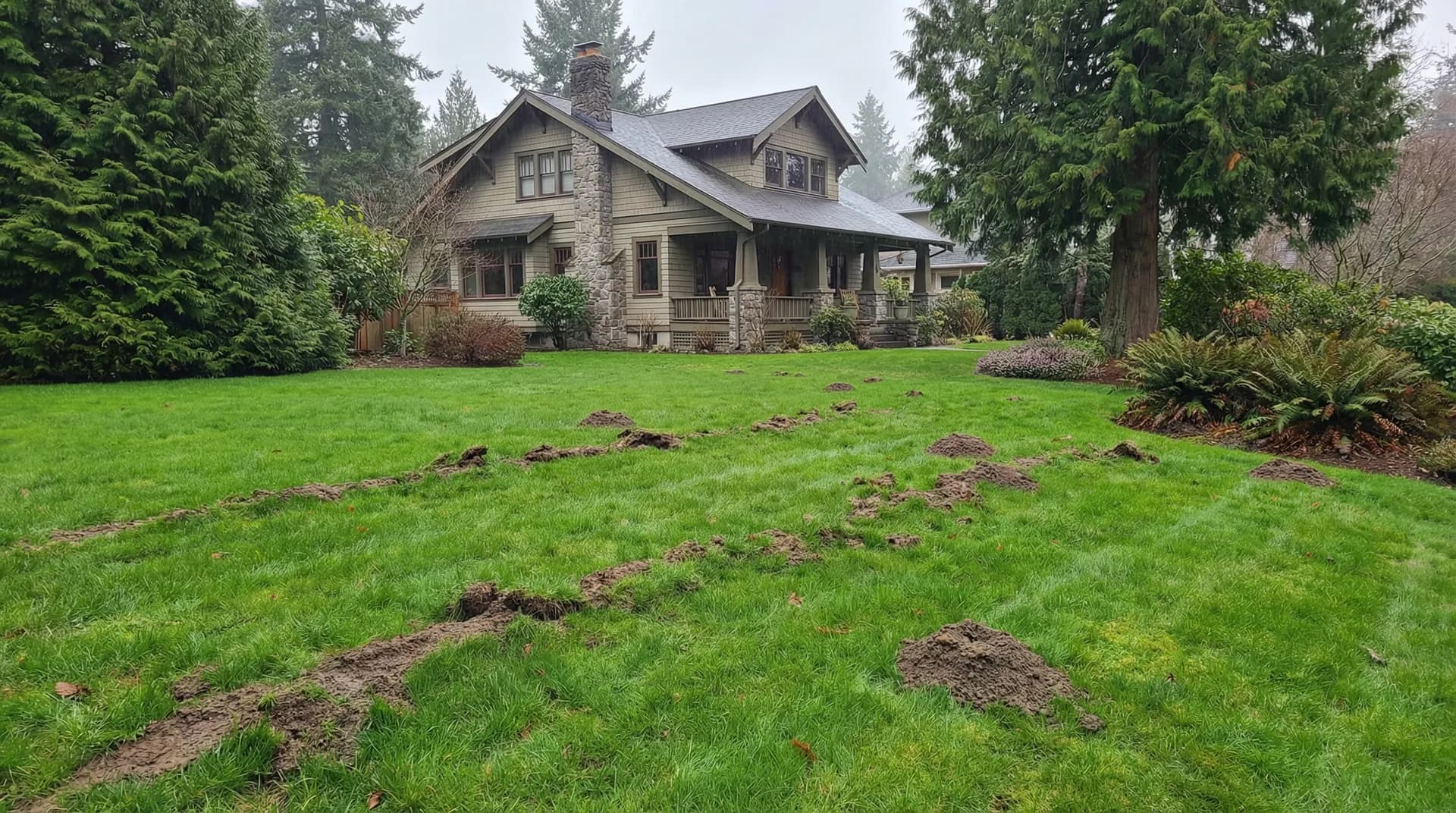
Mole Control in Spanaway
Spanaway's glacial outwash soil, high water table near the lakes, and proximity to the JBLM buffer zone make it a consistent hot spot for mole activity in Pierce County. Got Moles has been serving Spanaway homeowners since 2017 with chemical-free trapping methods safe for families and pets.
Call (253) 750-0211219+ Five-Star Google Reviews·Chemical-Free·Proven Results
Got Moles provides professional mole control in Spanaway, Washington. Chemical-free methods. Nearly 5,000 clients served since 2017. Call (253) 750-0211 for a free quote.
Spanaway centers on its 135-acre lake park and the easygoing community that surrounds it. Spanaway Lake is where families fish, kayak, and picnic on summer weekends. Tule Lake, the nearby Northwest Trek Wildlife Park, and the Pacific Avenue corridor give the area its identity. It's an unincorporated community where you can still find affordable homes on decent-sized lots with a rural-suburban mix that keeps things relaxed.
Why Moles Thrive in Spanaway
Spanaway sits on the same excessively drained Spanaway gravelly sandy loam that extends across the Lakewood-to-Roy plain. This glacial outwash soil, mixed with volcanic ash in the upper layers, drains quickly on the surface but holds moisture at mole-tunnel depth thanks to the influence of Spanaway Lake and Tule Lake on the local water table. The undeveloped buffer zones around Joint Base Lewis-McChord create permanent mole habitat that pushes moles into adjacent residential areas. Porous soil is easy for moles to tunnel through, and the organic layer built up from decades of residential landscaping supports healthy earthworm populations.
Moles in Spanaway Neighborhoods
Properties ringing Spanaway Lake see the heaviest mole activity. The elevated water table near the lake keeps surrounding soil moist and earthworm-rich at exactly the depth moles prefer. The Spanaway Lake neighborhood, with older homes and mature landscaping on the south side, is one of our busiest areas. Bethel, in the eastern section, has a mix of established yards and newer construction that both attract moles for different reasons. Along Pacific Avenue, commercial development pushes moles into residential neighborhoods on either side. Meadow Park in the southern portion sees steady activity where residential lots border open land. Properties along Tule Lake and the creek corridors connecting the two lakes deal with moles using those waterways as travel routes.
How We Help Spanaway Homeowners
Year-Round Mole Control
$100/month
Our Total Mole Control Program keeps your yard protected all year. Regular visits, immediate response to new activity, and a report after every check.
Get Year-Round Protection→One-Time Mole Removal
$450 flat rate
A focused, one-month eradication program for properties under 1 acre. 4-5 weekly visits. If we don't catch a mole, you only pay the $150 setup fee.
Get One-Time Removal→Commercial Mole Control
Custom quote
Annual contracts for property managers, HOAs, sports facilities, and commercial grounds. Professional reporting, reliable scheduling.
Get a Commercial Quote→Local Tip
If you live within a few blocks of Spanaway Lake or Tule Lake, check your yard for new mole activity after any week with more than two inches of rain. Heavy rain raises the water table quickly in this porous soil, pushing moles toward the surface and into your lawn.
How It Works
Call
Phone quote, no obligation
Book
Pay $150 setup. We schedule your first visit.
Trap
Tech inspects and sets traps on the first visit
Report
Weekly checks. Written report every visit.
Spanaway Mole Control FAQ
Why does my Spanaway Lake neighborhood yard always seem to have moles?
Properties near Spanaway Lake sit on sandy glacial soil with a lake-influenced water table. That combination creates permanent mole-friendly conditions. The lake and its surrounding green space serve as a habitat reservoir. When one mole is removed, the conditions that attracted it haven't changed, and another will eventually move in. Ongoing monitoring is the most practical approach for lake-adjacent properties.
Are sonic mole repellers worth trying before calling you?
The short answer is no. Sonic and vibrating repellers have been studied repeatedly and show no reliable effect on moles. Townsend's moles live underground in a naturally noisy environment with vibrations from traffic, footsteps, and weather. A battery-powered vibrating stake doesn't register as a meaningful threat.
Can moles survive in the sandy soil around here?
Absolutely. Spanaway's sandy glacial soil is actually easier for moles to tunnel through than heavier clay soils. The volcanic ash mixed into the upper layers holds enough moisture and organic matter to support earthworm populations. Sandy doesn't mean mole-free.
Is the JBLM buffer zone contributing to mole problems in my neighborhood?
Very likely. The undeveloped land around Joint Base Lewis-McChord is permanent, undisturbed mole habitat. Moles from those buffer zones push outward into Spanaway's residential neighborhoods. Properties on the west side of the community closest to the base see particularly consistent reinvasion pressure.
How far do moles travel? Could the moles in my yard be coming from the park?
Townsend's moles can maintain tunnel systems covering up to a third of an acre, and they push into new territory regularly. If your yard is within a couple hundred yards of Spanaway Lake Park or any undeveloped green space, those areas are almost certainly the source. Moles follow moist soil corridors between habitat patches.
Ready for Mole-Free Living in Spanaway?
Call (253) 750-0211 or fill out the form below.
CALL (253) 750-0211Free quote. No obligation.