
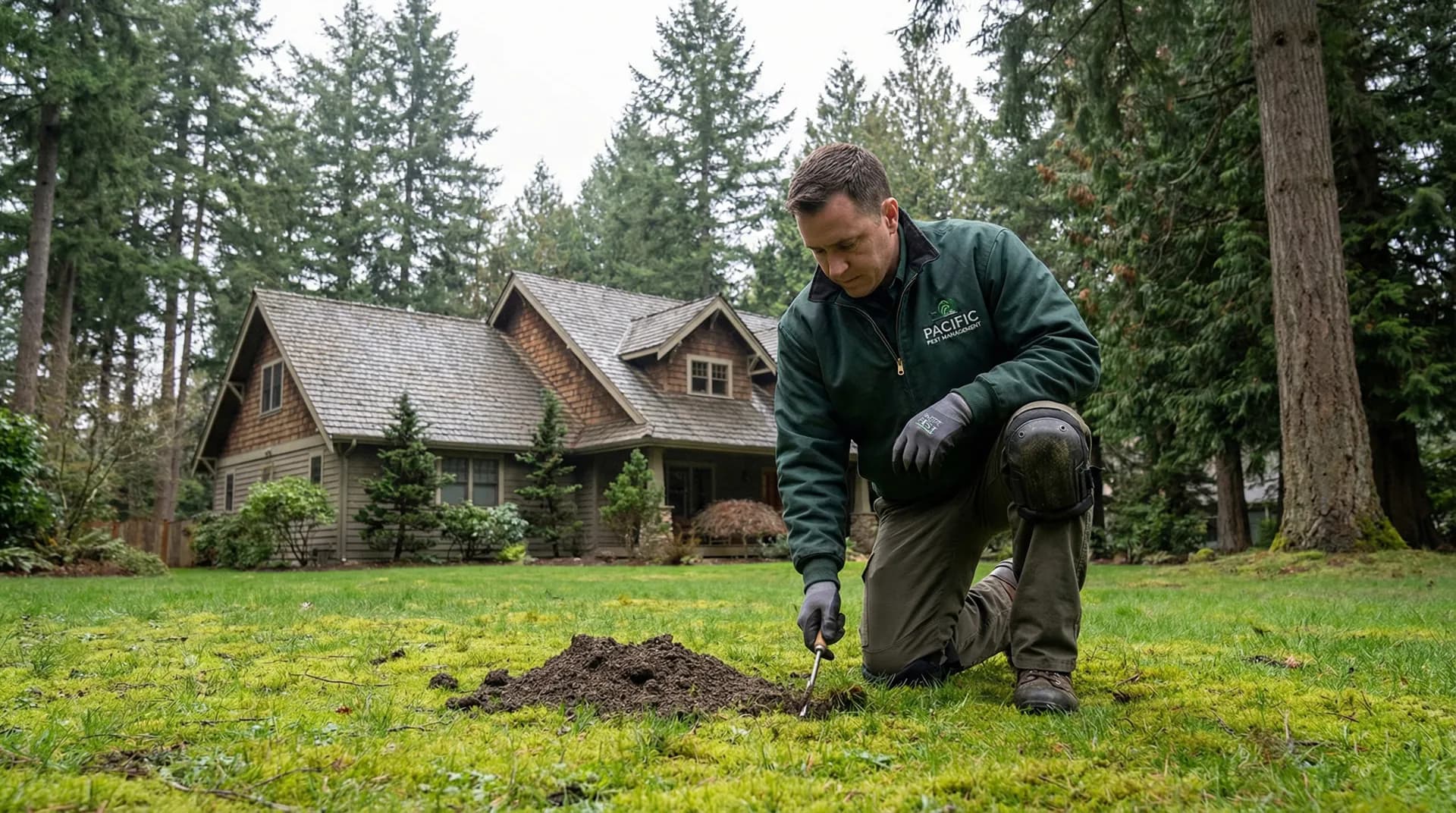
Mole Control in Marysville
Marysville sits in the floodplain between Ebey Slough and Quilceda Creek, and that low-lying, nutrient-rich soil is exactly what Townsend's moles thrive in. Agricultural land turning into subdivisions means moles that lived in farm fields for decades are now pushing into residential yards. Got Moles has been solving this problem across Marysville since 2017.
Call (253) 750-0211219+ Five-Star Google Reviews·Chemical-Free·Proven Results
Got Moles provides professional mole control in Marysville, Washington. Chemical-free methods. Nearly 5,000 clients served since 2017. Call (253) 750-0211 for a free quote.
Marysville calls itself the Strawberry City, and that agricultural heritage still shapes the place. The annual Strawberry Festival has been running since 1932, and the flat farmland north of town is a reminder of what the whole area looked like not long ago. The Tulalip Tribes' reservation borders the city to the west. Lakewood, Smokey Point, and the neighborhoods along Quilceda Boulevard have grown fast, but Marysville still keeps a small-town pace.
Why Moles Thrive in Marysville
Marysville's location in the Snohomish River floodplain gives it some of the deepest, most fertile soil in the county. Decades of agricultural use enriched it further with organic matter. Ebey Slough and Quilceda Creek keep the water table high across much of the city, especially in the western and southern neighborhoods closest to the water. Annual rainfall sits around 37 inches, and the flat terrain means water doesn't drain quickly — it sits in the soil, feeding earthworm populations that draw moles in from every direction.
Moles in Marysville Neighborhoods
The Lakewood neighborhood, one of Marysville's oldest residential areas, has mature landscaping and well-established tunnel networks that moles have used for years. Properties along Quilceda Creek see some of the heaviest activity because the creek corridor provides both moisture and a travel route for moles moving between territories. Smokey Point, the fastest-growing part of Marysville, is seeing a pattern common across the county: new construction displaces moles from farm fields and they migrate into freshly sodded yards. Neighborhoods near Ebey Slough on the south side of town deal with the highest water tables and the most persistent mole pressure. The Strawberry Fields area along 67th Avenue NE has the rich agricultural soil that made Marysville famous — and that same soil grows earthworms like nowhere else.
How We Help Marysville Homeowners
Year-Round Protection
$100/month
Our Total Mole Control Program keeps your yard protected all year. Regular visits, immediate response to new activity, and a report after every check.
Get Year-Round Protection→One-Time Removal
$450 flat rate
A focused, one-month eradication program for properties under 1 acre. 4-5 weekly visits. If we don't catch a mole, you only pay the $150 setup fee.
Get One-Time Removal→Commercial
Custom quote
Annual contracts for property managers, HOAs, sports facilities, and commercial grounds. Professional reporting, reliable scheduling.
Get a Commercial Quote→Local Tip
If your home was built on former farmland in the Smokey Point or 67th Avenue corridor, watch for moles in the first two years after construction. The grading and sodding process creates loose, easy-to-tunnel soil that moles colonize fast.
How It Works
Call
Tell us about your property
Inspect
We assess the mole activity
Trap
Professional equipment on active tunnels
Report
Results after every visit
Marysville Mole Control FAQ
We just moved into a new subdivision near Smokey Point and already have mole mounds. Is that normal?
Very normal. New construction on former agricultural land disturbs existing mole habitat. The moles don't leave — they move into nearby yards, especially freshly sodded lawns where the soil is loose and full of grubs. It's the most common call we get from new Marysville homeowners.
My property backs up to Quilceda Creek. Is that why I have worse mole problems than my neighbors?
Almost certainly. Creek corridors are natural mole highways. The moist, organic-rich soil along Quilceda supports heavy earthworm populations, and moles use the riparian zone to travel and establish territory before pushing into adjacent yards.
Are moles seasonal here, or is this a year-round problem?
Year-round. Marysville's mild winters and consistently moist soil mean moles stay active in every month. You'll see more surface mounds in spring and fall when moles feed closer to the surface, but they're tunneling below even in summer and winter.
Will poison or repellents work in my Marysville yard?
Poisons and sonic repellents don't work reliably on Townsend's moles. Over-the-counter products are designed for Eastern mole species with different behaviors. Professional trapping is the only method that consistently removes moles from Western Washington soil conditions.
My yard connects to my neighbor's yard with no fence. Should we both get treated?
Absolutely. Moles don't respect property lines, and connected yards share tunnel systems. Treating both properties at the same time is significantly more effective than treating one and watching moles migrate back from next door.
Ready for Mole-Free Living in Marysville?
Call (253) 750-0211 or fill out the form below.
CALL (253) 750-0211Free inspection. No obligation.