
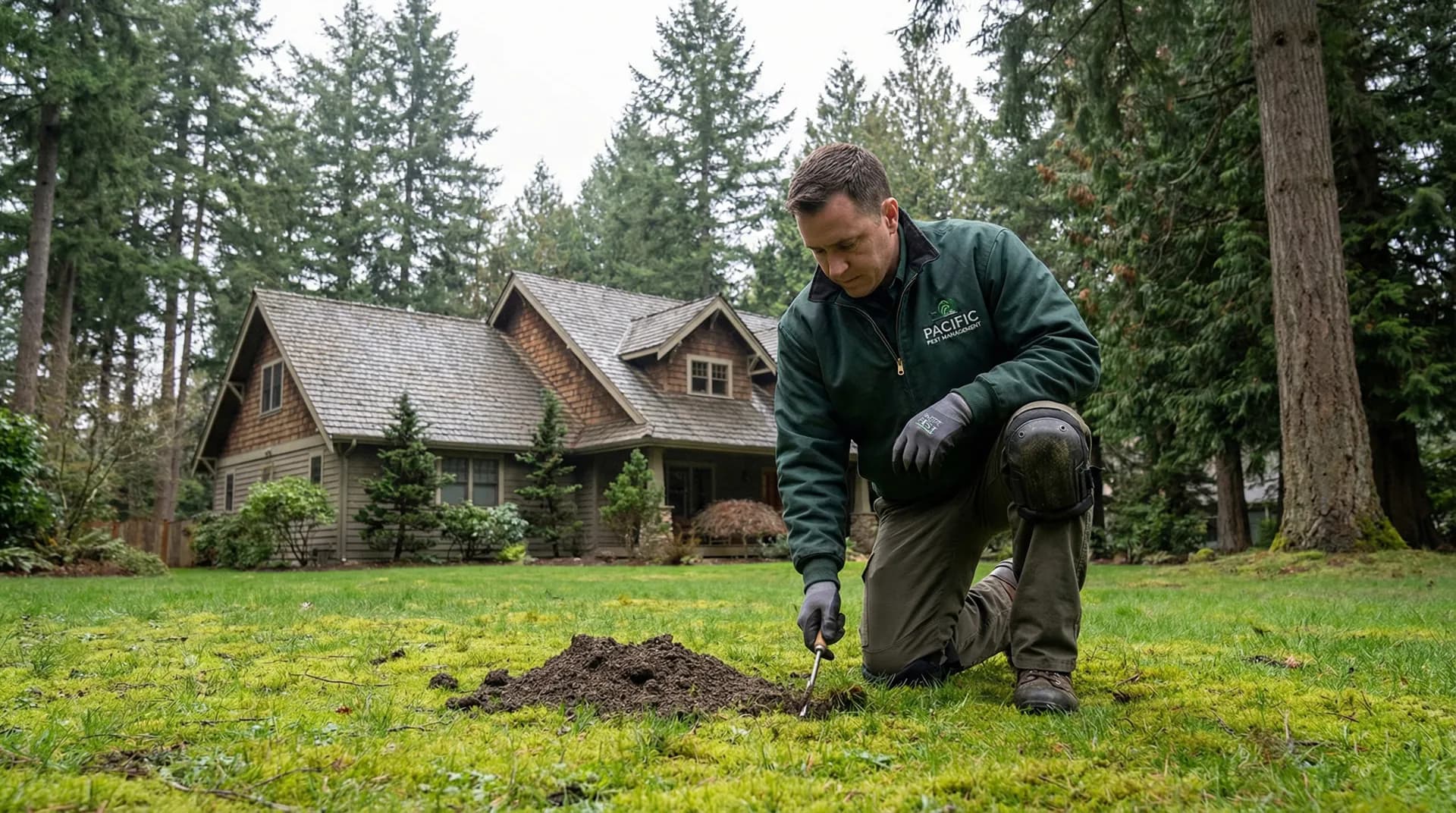
Mole Control in Snohomish
Snohomish sits right in the Snohomish River floodplain, where generations of farming created some of the deepest, richest topsoil in the county. That soil grows world-class earthworms — and world-class mole problems. Got Moles has been protecting Snohomish properties since 2017 with chemical-free methods that work in agricultural and residential soil alike.
Call (253) 750-0211219+ Five-Star Google Reviews·Chemical-Free·Proven Results
Got Moles provides professional mole control in Snohomish, Washington. Chemical-free methods. Nearly 5,000 clients served since 2017. Call (253) 750-0211 for a free quote.
The city of Snohomish wears its history well. First Street's antique shops have earned it the title of Antiques Capital of the Northwest, and the Victorian-era buildings downtown look like they were kept up by people who actually cared. The Snohomish River winds along the south and west edges of town, and the surrounding farmland — dairy, berries, hay — hasn't all disappeared into subdivisions yet. It's a place that still feels like a small agricultural town, even as Snohomish County grows around it.
Why Moles Thrive in Snohomish
The Snohomish River floodplain delivers deep alluvial soil loaded with organic matter from decades of farming and natural river deposits. This is some of the most fertile ground in Western Washington, and fertile ground means massive earthworm populations. The river keeps the water table high across the low-lying areas south and west of town, while properties on the gentle hills north and east of downtown sit on Alderwood glacial till with its characteristic moisture-trapping hardpan. Annual rainfall around 40 inches and year-round mild temperatures mean moles never take a season off.
Moles in Snohomish Neighborhoods
Properties along the Snohomish River corridor — especially south of downtown between the Pilchuck River confluence and Harvey Airfield — deal with the richest soil and the heaviest mole activity. First Street and the historic downtown area have mature yards with established tunnel systems that have been active for decades. The Bickford Avenue corridor running north from town transitions from floodplain to glacial till, and moles work both soil types. Properties near Ferguson Park and the Snohomish Riverwalk Trail face recolonization pressure from the undisturbed riparian habitat. The agricultural parcels on the outskirts that are being converted to housing push moles directly into new residential developments. Hill Park, on the north side of town, sits higher but still deals with moles thanks to the Alderwood hardpan trapping moisture.
How We Help Snohomish Homeowners
Year-Round Protection
$100/month
Our Total Mole Control Program keeps your yard protected all year. Regular visits, immediate response to new activity, and a report after every check.
Get Year-Round Protection→One-Time Removal
$450 flat rate
A focused, one-month eradication program for properties under 1 acre. 4-5 weekly visits. If we don't catch a mole, you only pay the $150 setup fee.
Get One-Time Removal→Commercial
Custom quote
Annual contracts for property managers, HOAs, sports facilities, and commercial grounds. Professional reporting, reliable scheduling.
Get a Commercial Quote→Local Tip
If your property is in the floodplain south of downtown, check for mole activity after any period of high water. Rising river levels push moles to higher ground — including your yard — and they don't always leave when the water recedes.
How It Works
Call
Tell us about your property
Inspect
We assess the mole activity
Trap
Professional equipment on active tunnels
Report
Results after every visit
Snohomish Mole Control FAQ
I live on a small acreage outside Snohomish with pasture and garden. Can you handle a property that size?
Absolutely. We regularly work rural and semi-rural properties around Snohomish. We'll focus trapping on the areas that matter most to you — the yard, garden beds, and any areas where tunneling threatens structures or fencing.
Does all the farming around Snohomish contribute to mole problems in town?
It does. Agricultural land is prime mole habitat — the soil is deep, rich, and full of earthworms. Moles established in farm fields move into adjacent residential areas, especially when farmland is graded for new construction.
I'm near the Snohomish River and my yard floods occasionally. Do moles come back after flooding?
Moles retreat to higher ground during high water but return quickly once the soil drains. Flood-prone properties often see a burst of new mole activity in the weeks following a flood as moles recolonize freshly deposited, nutrient-rich soil.
My neighbor uses poison bait for moles. Should I be concerned about my pets?
Poison bait designed for moles can pose a secondary risk to pets and wildlife that contact poisoned animals. Our trapping methods use no chemicals at all — nothing that could harm your pets, your garden, or the soil itself.
We have a large garden and raised beds. Do moles get into those?
Moles typically work through in-ground soil rather than raised beds, but they'll tunnel right under and around raised beds to reach the surrounding lawn and garden. The rich soil in and near vegetable gardens is a magnet for the earthworms moles eat.
Ready for Mole-Free Living in Snohomish?
Call (253) 750-0211 or fill out the form below.
CALL (253) 750-0211Free inspection. No obligation.