
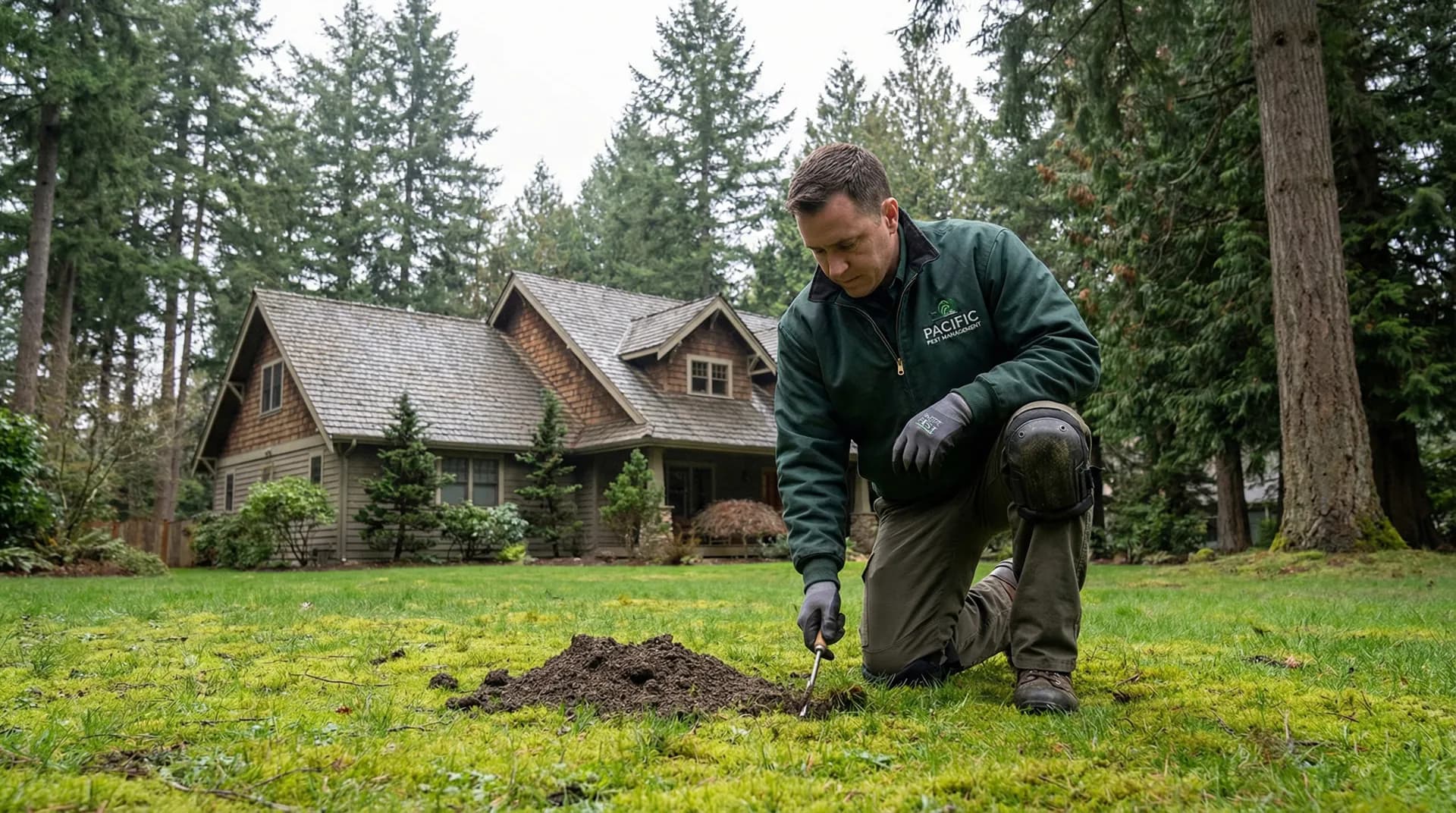
Mole Control in Stanwood
Tidal influence from Port Susan Bay, the Stillaguamish River delta, and some of the richest agricultural soil in Washington — Stanwood's mole conditions are extreme by any measure. The combination of permanently saturated soil, river-deposited nutrients, and flat terrain creates mole habitat that extends from the farmland right into town. Got Moles has handled Stanwood's challenging conditions since 2017.
Call (253) 750-0211219+ Five-Star Google Reviews·Chemical-Free·Proven Results
Got Moles provides professional mole control in Stanwood, Washington. Chemical-free methods. Nearly 5,000 clients served since 2017. Call (253) 750-0211 for a free quote.
Stanwood sits where the Stillaguamish River meets Port Susan Bay, and the tidal flats, farmland, and bird migration routes define the place. The Snow Goose Festival every winter draws birders from across the Pacific Northwest to watch tens of thousands of snow geese in the fields. Downtown Stanwood has a quiet, agricultural-town character. Camano Island, connected by a bridge, is part of the community's identity even though it's technically Island County.
Why Moles Thrive in Stanwood
Stanwood sits on the Stillaguamish River delta, where centuries of river deposits have created deep, silty, nutrient-rich soil. Tidal influence from Port Susan Bay keeps the water table near the surface across much of the area, especially west of town. The flat delta terrain means water doesn't drain away — it sits in the soil. This creates some of the densest earthworm populations in the region. Annual rainfall of 33 inches is supplemented by the river and tidal moisture, and the mild maritime climate means moles are active every day of the year.
Moles in Stanwood Neighborhoods
Properties west of downtown toward Port Susan Bay deal with the highest water tables and the most persistent mole activity. The soil here is delta silt — fine-grained, moisture-retentive, and packed with earthworms. In-town neighborhoods along 271st Street NW and the downtown core have older homes with established mole tunnel networks that have been active for years. The agricultural land surrounding Stanwood on all sides acts as a permanent mole reservoir. Properties along the Stillaguamish River corridor on the south side of town face both river-influenced moisture and farmland-adjacent recolonization pressure. East Stanwood, slightly higher in elevation, sits on better-drained soil but still deals with moles thanks to the Alderwood hardpan layer.
How We Help Stanwood Homeowners
Year-Round Protection
$100/month
Our Total Mole Control Program keeps your yard protected all year. Regular visits, immediate response to new activity, and a report after every check.
Get Year-Round Protection→One-Time Removal
$450 flat rate
A focused, one-month eradication program for properties under 1 acre. 4-5 weekly visits. If we don't catch a mole, you only pay the $150 setup fee.
Get One-Time Removal→Commercial
Custom quote
Annual contracts for property managers, HOAs, sports facilities, and commercial grounds. Professional reporting, reliable scheduling.
Get a Commercial Quote→Local Tip
Stanwood's delta soil is so moisture-rich that moles stay active even in the driest weeks of summer. Don't assume a dry spell means the moles have moved on — they're just tunneling slightly deeper. If you had mounds in spring, the moles are still there.
How It Works
Call
Tell us about your property
Inspect
We assess the mole activity
Trap
Professional equipment on active tunnels
Report
Results after every visit
Stanwood Mole Control FAQ
I live near the Stillaguamish River flats. Is this the worst area in the county for moles?
It's among the most active. Delta soil with tidal moisture influence creates year-round earthworm habitat that supports high mole density. River flat properties around Stanwood consistently have some of the heaviest mole pressure we see anywhere in our service area.
The fields next to my property flood in winter. Does that affect my mole problem?
Yes. Seasonal flooding pushes moles from low-lying agricultural land onto higher residential ground. After the water recedes, moles return to the fields but often maintain the tunnel networks they established in your yard during the flood.
We farm part of our property. Can you treat just the residential portion?
Absolutely. We'll focus on your yard, garden, and the areas around structures and walkways. Treating the entire agricultural acreage isn't practical, but protecting the residential boundary prevents moles from crossing into the areas you care most about.
Are the moles here bigger because of the rich soil?
Townsend's moles in the Stanwood area do tend to be well-fed because the earthworm supply is so abundant. A healthy adult Townsend's mole can weigh over 5 ounces and move a surprising amount of soil. Larger moles create larger mounds, which is why Stanwood mole damage often looks more dramatic than other areas.
I've heard moles eat the roots of my plants. Is that true?
No. Moles are insectivores — they eat earthworms, grubs, and beetle larvae. They don't eat plant roots. However, their tunneling disrupts root systems, separates roots from soil contact, and dries out root zones, which can kill plants just as effectively. The damage is mechanical, not feeding.
Ready for Mole-Free Living in Stanwood?
Call (253) 750-0211 or fill out the form below.
CALL (253) 750-0211Free inspection. No obligation.