
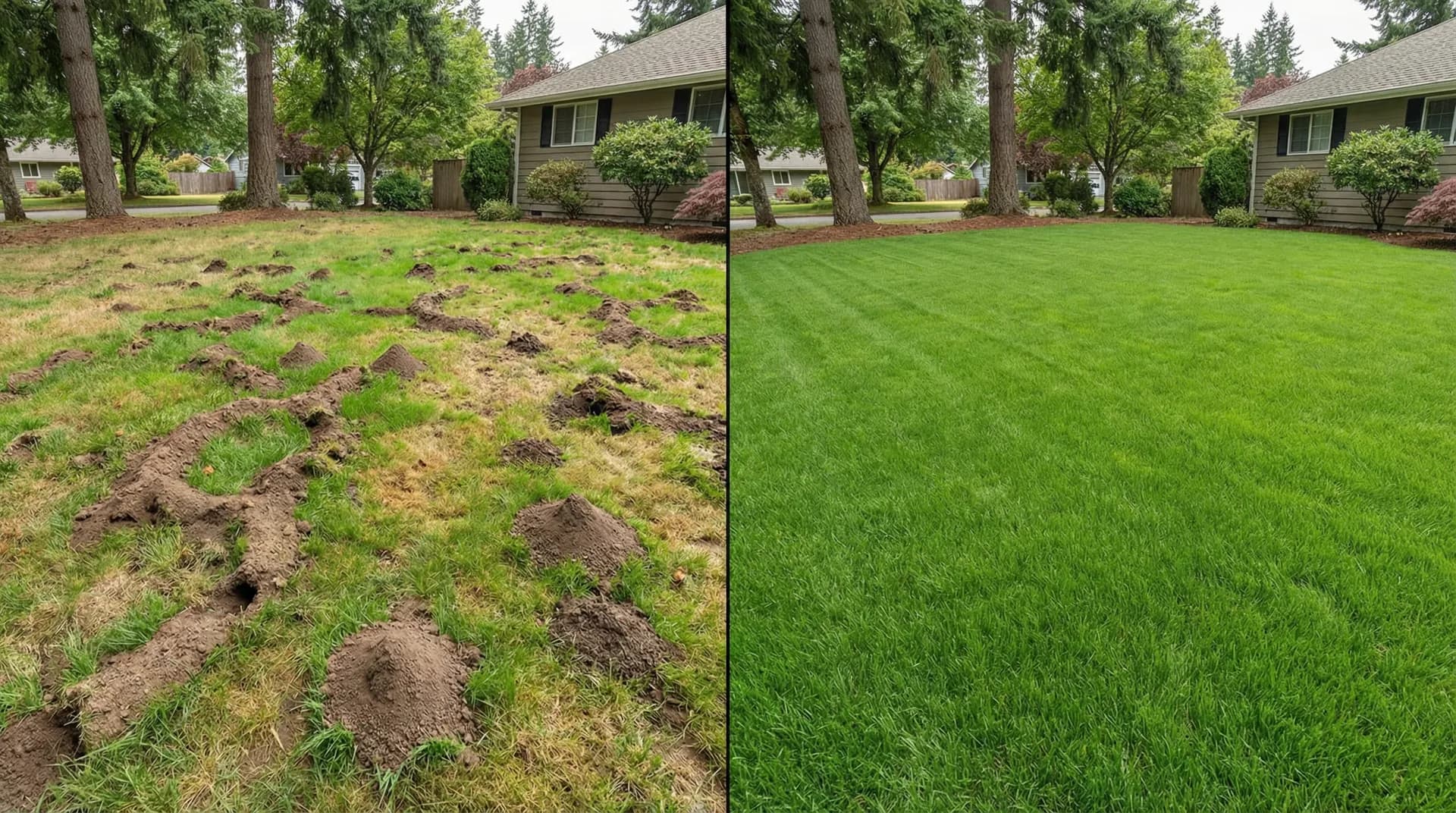
Mole Control in Olympia
Olympia gets over 50 inches of rain a year, sits at the terminus of Puget Sound, and has soil that's been collecting organic material since the glaciers retreated. That's a recipe for some of the most persistent mole problems in the state. Got Moles has served Olympia since 2017 with chemical-free trapping that's safe for kids, pets, and the environmentally conscious community that calls this city home.
Call (253) 750-0211219+ Five-Star Google Reviews·Chemical-Free·Proven Results
Got Moles provides professional mole control in Olympia, Washington. Chemical-free methods. Nearly 5,000 clients served since 2017. Call (253) 750-0211 for a free quote.
Olympia is Washington's capital and a city that wears its personality on its sleeve. The downtown Farmers Market runs year-round, Capitol Campus sits on a bluff overlooking Capitol Lake, and the neighborhood energy shifts block by block — from the historic homes on South Capitol Hill to the college-town feel of the Eastside near Evergreen State. Watershed Park's 153 acres of old-growth forest sit right inside city limits, and Percival Landing connects the waterfront to downtown along Budd Inlet at the southern tip of Puget Sound.
Why Moles Thrive in Olympia
Olympia's position at the southern tip of Puget Sound means marine-influenced weather keeps the ground damp for nine months of the year. The Deschutes River watershed drains through the city, and its tributaries feed a water table that stays high across most residential areas. Soils are a mix of glacial drift and alluvial deposits — loamy, deep, and loaded with the organic matter that sustains massive earthworm populations. With 50+ inches of annual rainfall and winter temperatures that rarely dip below freezing, Townsend's moles stay active year-round without interruption.
Moles in Olympia Neighborhoods
South Capitol Hill's mature residential lots with deep topsoil and old-growth trees see some of the heaviest mole activity in the city. The root systems of those century-old landscapes support earthworm densities that moles can't resist. On the Westside, neighborhoods along Division Street and near Watershed Park deal with moles migrating from the park's 153 acres of undisturbed forest floor — one of the largest urban old-growth reserves in the state. The Eastside, particularly around Olympia's college-adjacent neighborhoods near Evergreen State, has sandy loam that drains well on the surface but stays moist at tunnel depth thanks to the high water table. Properties near Indian Creek and along the Capitol Lake corridor face reinvasion pressure from the riparian zones. The Northeast neighborhood, with its mix of newer construction and established lots, sees moles pushing in from undeveloped parcels along Henderson Boulevard.
How We Help Olympia Homeowners
Year-Round Protection
$100/month
Our Total Mole Control Program keeps your yard protected all year. Regular visits, immediate response to new activity, and a report after every check.
Get Year-Round Protection→One-Time Removal
$450 flat rate
A focused, one-month eradication program for properties under 1 acre. 4-5 weekly visits. If we don't catch a mole, you only pay the $150 setup fee.
Get One-Time Removal→Commercial
Custom quote
Annual contracts for property managers, HOAs, sports facilities, and commercial grounds. Professional reporting, reliable scheduling.
Get a Commercial Quote→Local Tip
If your property borders Watershed Park or any of Olympia's creek corridors, don't wait for mounds to appear. Moles travel along these green corridors year-round. Check for soft, spongy soil along the yard edge closest to the natural area — that's a tunnel before it's a mound.
How It Works
Call
Tell us about your property
Inspect
We assess the mole activity
Trap
Professional equipment on active tunnels
Report
Results after every visit
Olympia Mole Control FAQ
Does Olympia's rain really make mole problems worse than other cities?
Yes. Olympia averages 50+ inches of rainfall, which is significantly more than Seattle. That moisture keeps the soil saturated at tunnel depth for most of the year, supporting dense earthworm populations that are a mole's primary food source. Drier cities see seasonal lulls in activity. Olympia doesn't get that break.
My yard is near Watershed Park. Is there any way to keep moles out permanently?
Permanent exclusion isn't realistic when you're adjacent to 153 acres of prime mole habitat. The park's undisturbed forest floor is a constant source of moles expanding their territory. What works is ongoing monitoring — our program catches new arrivals at the property edge before they establish tunnel networks across your yard.
Are moles active on Capitol Campus and do they affect nearby residential areas?
Capitol Campus has extensive irrigated lawns and mature landscaping that support mole populations. Moles don't respect property lines, so residential streets bordering the campus grounds do see spillover activity. We serve several homeowners in the South Capitol neighborhood dealing with exactly this pattern.
I'm near the Deschutes River. Is the flooding risk connected to mole tunnels?
Mole tunnels don't cause flooding, but they can redirect water flow through your yard during heavy rains. Near the Deschutes, where the water table is already high, tunnel networks act like drainage channels that move water in unintended directions. This can create soft spots, pooling, and erosion. Addressing the mole problem reduces that secondary damage.
Do you use any chemicals? I'm concerned about runoff into Budd Inlet.
Zero chemicals. We use professional body-gripping traps placed underground in active tunnels. Nothing enters the soil, nothing washes into waterways. It's the most environmentally responsible approach to mole control available, which is why it's the only method we use.
Ready for Mole-Free Living in Olympia?
Call (253) 750-0211 or fill out the form below.
CALL (253) 750-0211Free inspection. No obligation.