
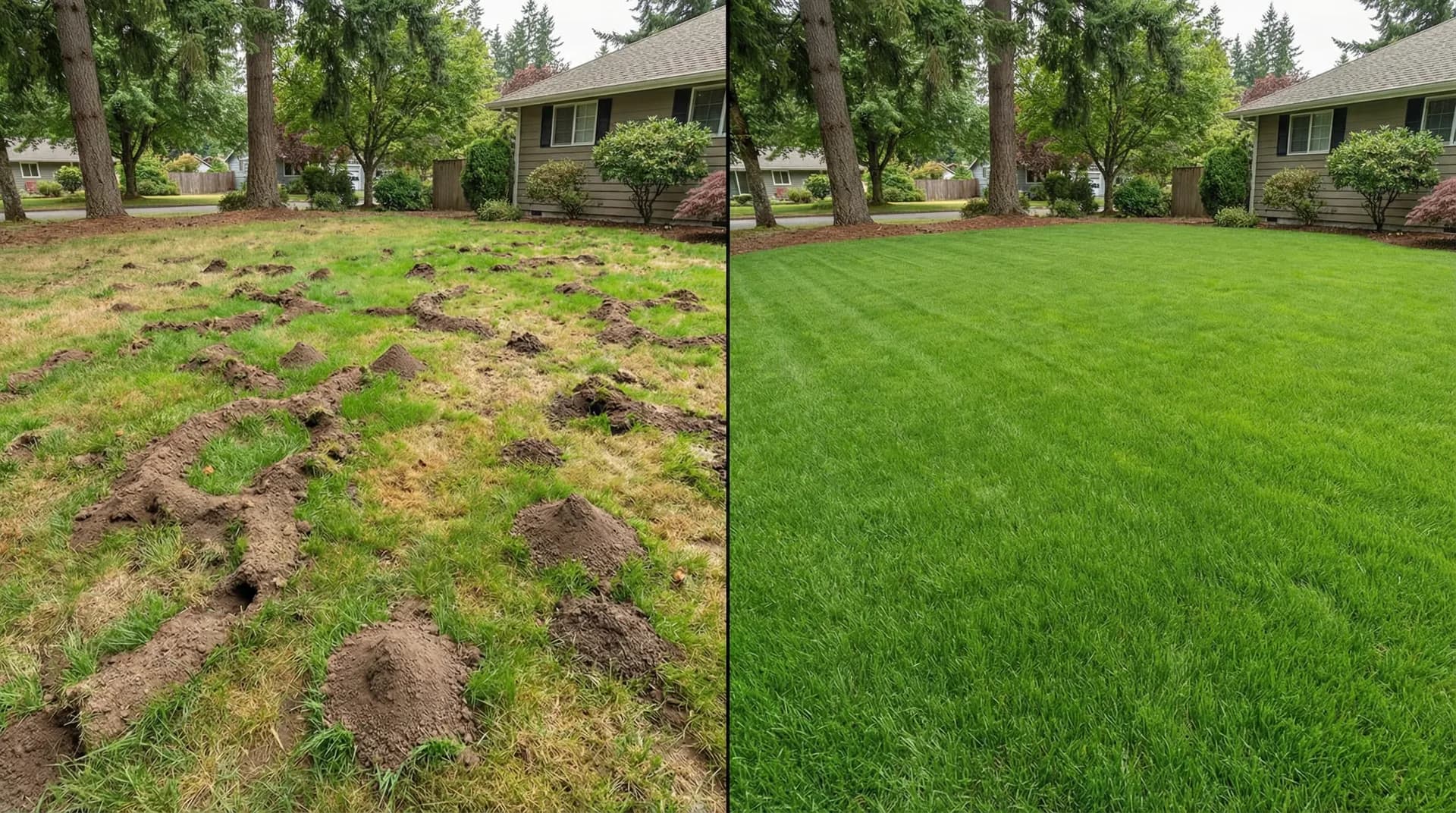
Mole Control in Tumwater
The Deschutes River runs through the heart of Tumwater, and its falls, tributaries, and floodplain create some of the most mole-friendly soil conditions in Thurston County. Got Moles has served Tumwater since 2017 with the same chemical-free trapping that's protected over 5,000 properties across Western Washington.
Call (253) 750-0211219+ Five-Star Google Reviews·Chemical-Free·Proven Results
Got Moles provides professional mole control in Tumwater, Washington. Chemical-free methods. Nearly 5,000 clients served since 2017. Call (253) 750-0211 for a free quote.
Tumwater holds the distinction of being the oldest American settlement on Puget Sound, founded in 1845 at the falls of the Deschutes River. The historic Olympia Brewery building still anchors the riverfront, Tumwater Falls Park draws visitors year-round with its salmon-run viewing platforms, and the residential neighborhoods climb the hillsides above the river valley. It's a community that values its history and its natural setting in equal measure.
Why Moles Thrive in Tumwater
The Deschutes River carved a deep valley through Tumwater before reaching Capitol Lake and Budd Inlet. The alluvial soils deposited along the river corridor are deep, loamy, and rich in organic matter. Tumwater's hillside neighborhoods sit on glacial drift above the valley floor, where a clay-rich hardpan layer traps moisture in the upper soil horizon. With over 50 inches of annual rainfall and the river's influence on the local water table, the entire city maintains the kind of consistent soil moisture that earthworms and moles need to thrive year-round.
Moles in Tumwater Neighborhoods
Properties along the Deschutes River corridor, particularly near Tumwater Falls Park and the historic brewery district, deal with the highest mole pressure in the city. The alluvial soil there is soft, deep, and perpetually moist. Hillside neighborhoods above the river — along Capitol Boulevard and near Tumwater Hill Park — see mole activity driven by the hardpan moisture trap. Water percolates through the topsoil and hits the glacial hardpan, creating a wet zone at exactly the depth moles prefer to tunnel. The residential areas near Bush Prairie and along Israel Road sit on the glacial outwash plain and experience conditions similar to neighboring Lacey — sandy soils that hold more moisture at depth than the surface suggests. Properties near Pioneer Park and the Henderson neighborhood see moles migrating from the park's green spaces.
How We Help Tumwater Homeowners
Year-Round Protection
$100/month
Our Total Mole Control Program keeps your yard protected all year. Regular visits, immediate response to new activity, and a report after every check.
Get Year-Round Protection→One-Time Removal
$450 flat rate
A focused, one-month eradication program for properties under 1 acre. 4-5 weekly visits. If we don't catch a mole, you only pay the $150 setup fee.
Get One-Time Removal→Commercial
Custom quote
Annual contracts for property managers, HOAs, sports facilities, and commercial grounds. Professional reporting, reliable scheduling.
Get a Commercial Quote→Local Tip
Tumwater's hillside lots have a hidden advantage for mole detection. On sloped properties, look for mole mounds on the downhill side first. Water flows downhill through the glacial drift, and the lower portion of a sloped yard stays wetter longer — that's where moles start digging.
How It Works
Call
Tell us about your property
Inspect
We assess the mole activity
Trap
Professional equipment on active tunnels
Report
Results after every visit
Tumwater Mole Control FAQ
Does the Deschutes River cause more mole problems in Tumwater than surrounding cities?
The river is a major factor. The Deschutes corridor creates a band of deep, moist alluvial soil through the center of Tumwater that's ideal mole habitat. Properties near the river consistently see higher mole activity than hillside lots farther from the water. But the hillside lots aren't immune — they have their own moisture dynamics that attract moles.
My property near Tumwater Falls Park keeps getting reinvaded. What can I do?
Tumwater Falls Park and the surrounding Deschutes corridor are permanent mole habitat. When one mole is removed, the vacant tunnel system attracts another from the park. Our monitoring program is designed for exactly this situation — regular visits catch new arrivals at the property edge before they colonize your entire yard.
I'm on a hillside above the river. Why do I still have moles?
Tumwater's hillside soils sit on glacial hardpan that traps moisture above it. Even though you're uphill from the river, your soil stays wet at tunnel depth because water can't drain past the hardpan layer. That trapped moisture supports earthworms, which attract moles. Elevation above the river doesn't equal dry soil.
Will mole tunnels damage the retaining walls on my hillside property?
Mole tunnels can undermine shallow foundations and retaining walls over time by redirecting water flow and creating voids in the soil behind the wall. On Tumwater's hillsides, where water already moves through the soil under gravity, mole tunnels can accelerate erosion behind retaining structures. Addressing the moles early prevents that kind of secondary damage.
Are your methods safe for the salmon in the Deschutes?
Our methods have zero environmental impact on waterways. We use mechanical body-gripping traps placed underground — no chemicals, no poison, nothing that enters the soil or water. The Deschutes salmon runs are completely unaffected by our work.
Ready for Mole-Free Living in Tumwater?
Call (253) 750-0211 or fill out the form below.
CALL (253) 750-0211Free inspection. No obligation.