
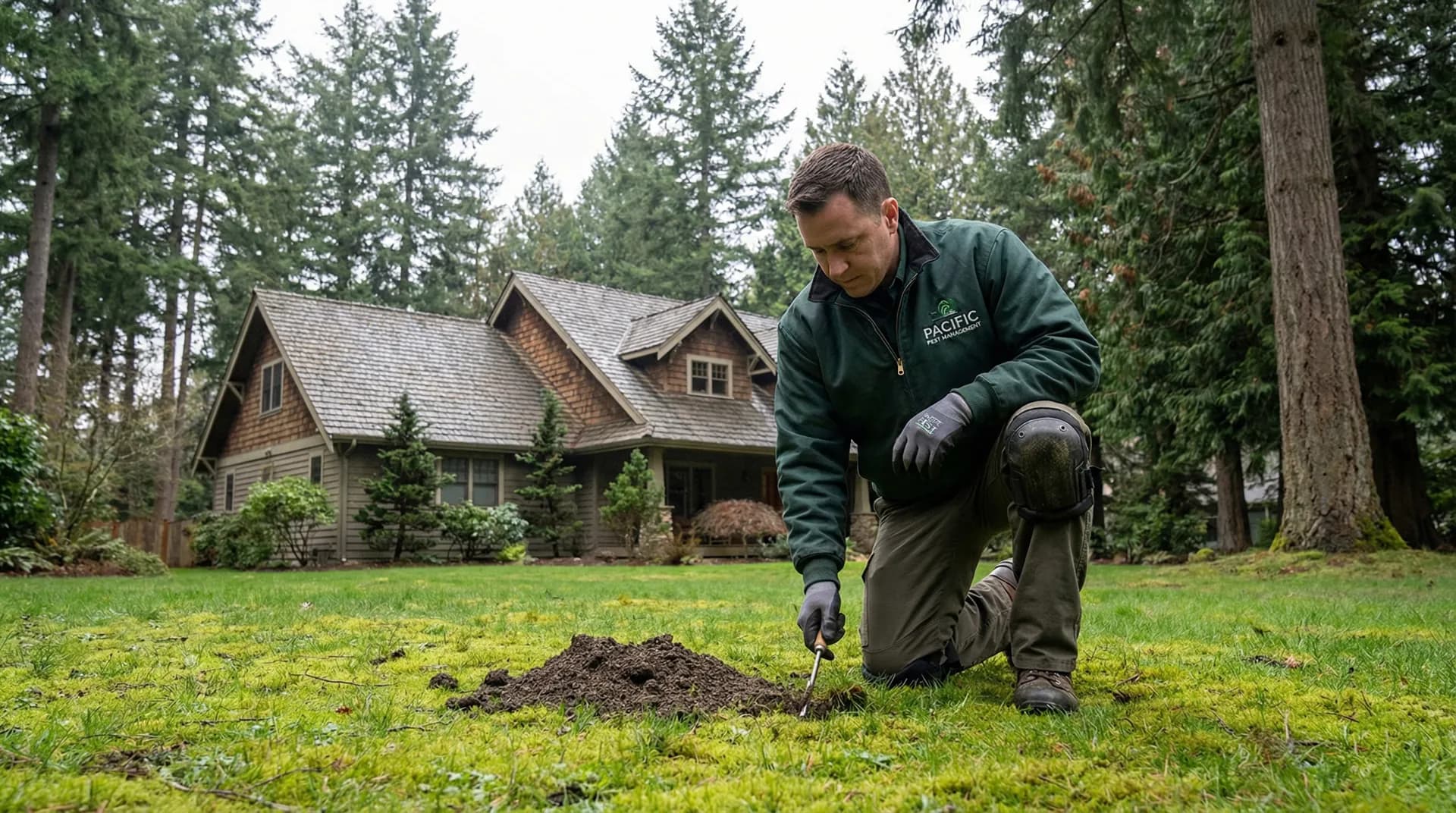
Mole Control in Lake Stevens
A thousand-acre lake surrounded by rapid residential development on former farmland and forest. That's the Lake Stevens mole equation: high water tables near the lake, disturbed soil from construction, and earthworm-rich ground everywhere in between. Got Moles has been handling Lake Stevens properties since 2017 with chemical-free methods that keep lakeside yards safe.
Call (253) 750-0211219+ Five-Star Google Reviews·Chemical-Free·Proven Results
Got Moles provides professional mole control in Lake Stevens, Washington. Chemical-free methods. Nearly 5,000 clients served since 2017. Call (253) 750-0211 for a free quote.
Lake Stevens is defined by its lake — 1,040 acres of water right in the middle of town. For decades it was a rural community where people escaped to the water on weekends. Now it's one of the fastest-growing cities in Snohomish County, with new neighborhoods spreading out from the lakeshore and Hartford Road corridor. The lakefront parks, boat launches, and the Aquafest celebration every summer still anchor the community's identity.
Why Moles Thrive in Lake Stevens
Lake Stevens sits in a basin that collects drainage from surrounding hills, keeping the water table elevated across much of the city. Properties within a half mile of the lake have consistently moist soil that supports dense earthworm populations year-round. The surrounding terrain is a mix of Alderwood glacial till with its moisture-trapping hardpan and richer alluvial deposits near the creeks feeding the lake. Rapid development has converted forest and farmland into neighborhoods, displacing moles directly into new residential yards. Annual rainfall around 40 inches keeps everything wet.
Moles in Lake Stevens Neighborhoods
Lakeshore properties along North and South Lake Stevens see the heaviest mole pressure because the soil stays saturated much of the year. The Hartford neighborhood east of the lake has been the center of new construction, and homeowners there consistently report moles appearing within months of moving in as displaced populations find new territory. Properties along Catherine Creek and Lundeen Creek deal with riparian corridor moles migrating into yards. The older neighborhoods on the western shore near Frontier Heights have mature landscaping with established tunnel networks. North Cove and Cavalero Hill, at higher elevations, sit on glacial till where the hardpan traps moisture and creates ideal conditions in the topsoil layer.
How We Help Lake Stevens Homeowners
Year-Round Mole Control
$100/month
Our Total Mole Control Program keeps your yard protected all year. Regular visits, immediate response to new activity, and a report after every check.
Get Year-Round Protection→One-Time Mole Removal
$450 flat rate
A focused, one-month eradication program for properties under 1 acre. 4-5 weekly visits. If we don't catch a mole, you only pay the $150 setup fee.
Get One-Time Removal→Commercial Mole Control
Custom quote
Annual contracts for property managers, HOAs, sports facilities, and commercial grounds. Professional reporting, reliable scheduling.
Get a Commercial Quote→Local Tip
If your Lake Stevens home was built in the last five years on land that used to be wooded or farmed, don't wait for mole signs before acting. Early intervention catches tunnel activity before mounds appear and damage spreads across a new lawn.
How It Works
Call
Phone quote, no obligation
Book
Pay $150 setup. We schedule your first visit.
Trap
Tech inspects and sets traps on the first visit
Report
Weekly checks. Written report every visit.
Lake Stevens Mole Control FAQ
I live right on the lake. Does proximity to the water make my mole problem worse?
Yes. Lakefront properties have elevated water tables that keep soil moist year-round. That moisture supports the earthworm populations moles depend on. Properties within a few hundred yards of the lake typically see heavier and more persistent mole activity than those on higher ground.
Our neighborhood in Hartford was built two years ago and half the houses have moles. Why?
New development on former forest or farmland pushes resident mole populations directly into new yards. Fresh sod on graded soil is loose, moist, and easy to tunnel through. It's the single most common pattern we see in Lake Stevens right now.
Will the moles damage our dock or lakeshore landscaping?
Moles can undermine retaining walls, walkways, and landscaped slopes near the waterfront. If you've invested in lakeshore stabilization or hardscaping, mole tunneling underneath it can compromise the structure over time.
We've tried castor oil granules from the hardware store. Why didn't they work?
Castor oil repellents may temporarily shift mole activity to a different part of your yard, but they don't remove moles from the property. Townsend's moles in Western Washington are persistent — they'll tunnel around or under treated areas. Professional trapping is the only reliable solution.
Is there a bad time of year to start mole treatment?
No. Moles are active year-round in Lake Stevens. That said, spring and fall are when you'll notice the most surface damage because moles feed closer to the top when soil moisture is highest. Starting treatment when you first see activity — regardless of season — gives the best results.
Ready for Mole-Free Living in Lake Stevens?
Call (253) 750-0211 or fill out the form below.
CALL (253) 750-0211Free quote. No obligation.