
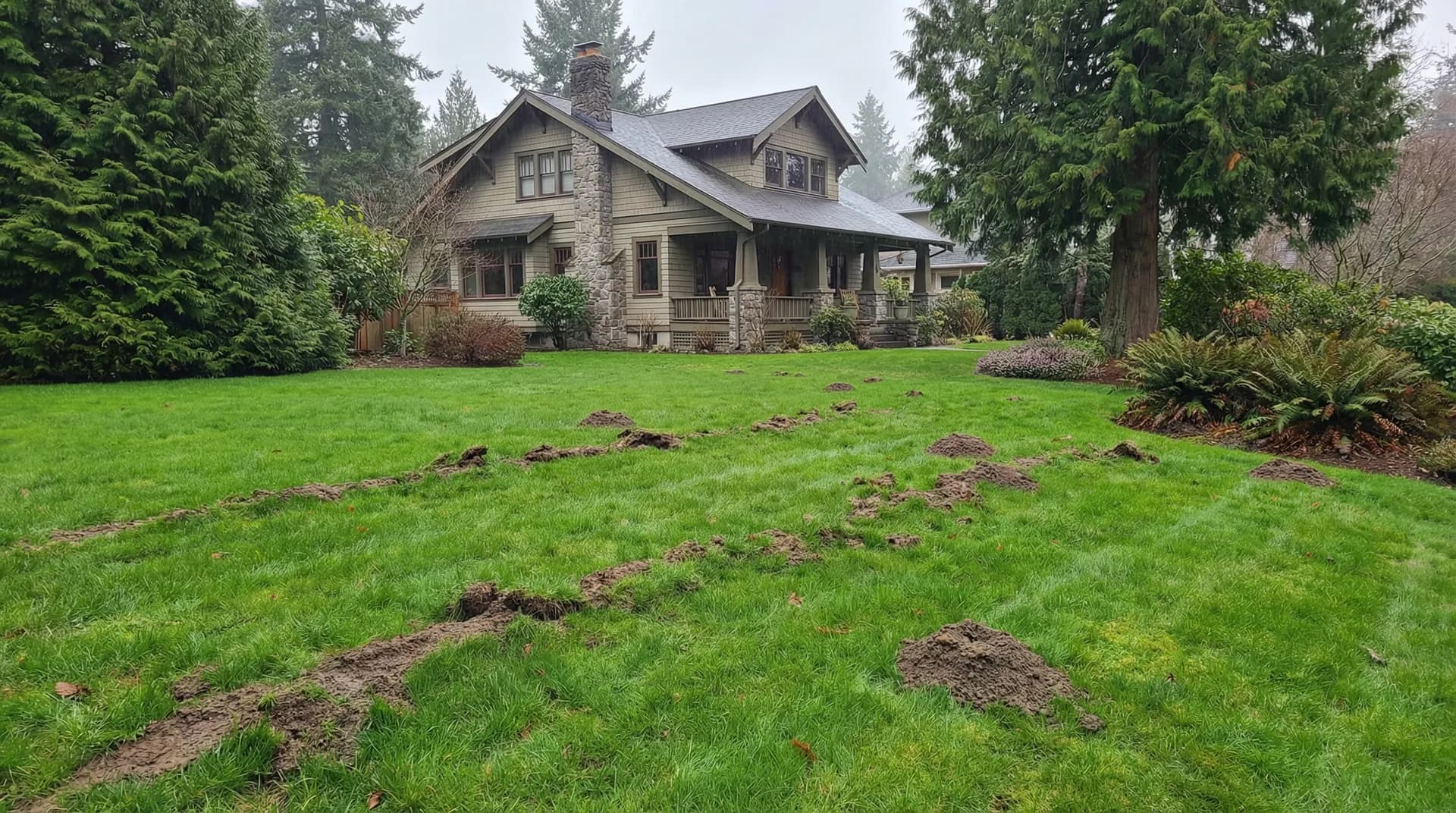
Mole Control in Lakewood
Five glacial kettle lakes, a high water table, and some of the most permeable soil in Pierce County make Lakewood a place where moles do exceptionally well. Got Moles has served Lakewood neighborhoods since 2017 with chemical-free methods safe for the families and pets that enjoy these lakeside communities.
Call (253) 750-0211219+ Five-Star Google Reviews·Chemical-Free·Proven Results
Got Moles provides professional mole control in Lakewood, Washington. Chemical-free methods. Nearly 5,000 clients served since 2017. Call (253) 750-0211 for a free quote.
Lakewood is defined by its lakes. American Lake, Gravelly Lake, Lake Steilacoom, Lake Louise, and Waughop Lake are all glacial kettle lakes formed when ice blocks melted 13,000 years ago. Fort Steilacoom Park's 340 acres of rolling meadows, the diverse International District along South Tacoma Way, and the community's connection to Joint Base Lewis-McChord give Lakewood a character that blends natural beauty with military pride and cultural diversity.
Why Moles Thrive in Lakewood
Lakewood sits on a glacial outwash plain composed of Spanaway gravelly sandy loam, an excessively drained soil type mixed with volcanic ash in the upper layers. This sounds like it would be too dry for moles, but the five kettle lakes and their associated springs keep the water table high across much of the city. The shallow unconfined aquifer that feeds the lakes also keeps residential soil moist at tunnel depth even during dry spells. Average rainfall around 40 inches, combined with the porous soil that absorbs water quickly and the moisture influence from the lakes, creates ideal earthworm habitat that supports a large mole population.
Moles in Lakewood Neighborhoods
Properties around Gravelly Lake and American Lake see the heaviest mole activity. The gravel-bottom lakebed and surrounding permeable soil keep these neighborhoods consistently moist at root depth. The Oakbrook neighborhood in the south, with its tree-lined streets and golf course, provides the mix of irrigated turf and mature landscaping that moles prefer. Fort Steilacoom Park's 340 acres of meadow and forest serve as a massive mole reservoir, and homes along its perimeter in the Lakeview and Lake Steilacoom neighborhoods deal with constant reinvasion. Tillicum, with its mix of older homes and varied lot sizes near American Lake, sees steady mole activity. Even the commercial areas near Lakewood Towne Center push moles into adjacent residential streets when development disturbs their habitat.
How We Help Lakewood Homeowners
Year-Round Mole Control
$100/month
Our Total Mole Control Program keeps your yard protected all year. Regular visits, immediate response to new activity, and a report after every check.
Get Year-Round Protection→One-Time Mole Removal
$450 flat rate
A focused, one-month eradication program for properties under 1 acre. 4-5 weekly visits. If we don't catch a mole, you only pay the $150 setup fee.
Get One-Time Removal→Commercial Mole Control
Custom quote
Annual contracts for property managers, HOAs, sports facilities, and commercial grounds. Professional reporting, reliable scheduling.
Get a Commercial Quote→Local Tip
If your property is within a few blocks of any of Lakewood's lakes, your soil moisture at tunnel depth is almost certainly higher than you'd guess from the surface. The sandy soil drains fast on top but holds moisture below, and that subsurface moisture is exactly what draws moles. Don't wait for visible mounds to call.
How It Works
Call
Phone quote, no obligation
Book
Pay $150 setup. We schedule your first visit.
Trap
Tech inspects and sets traps on the first visit
Report
Weekly checks. Written report every visit.
Lakewood Mole Control FAQ
Why do I get moles every year even though I had them removed last spring?
Lakewood's lake-influenced water table and porous soil create permanent mole-friendly conditions. When one mole is removed, the habitat remains attractive, and another moves in from adjacent undeveloped land, lakeside corridors, or Fort Steilacoom Park. Ongoing monitoring catches new arrivals before they build extensive tunnel networks.
Is mole activity worse near the lakes?
Yes. Properties within a quarter mile of American Lake, Gravelly Lake, Lake Steilacoom, or any of the smaller lakes see noticeably higher mole activity. The elevated water table near the lakes keeps soil moist year-round at tunnel depth. Lake-adjacent properties almost always benefit from our ongoing protection plan.
I live near Fort Steilacoom Park. Is that why I always have moles?
Very likely. Fort Steilacoom Park's 340 acres of meadow, forest, and wetland are prime mole habitat. Moles don't respect property lines, and the park provides a continuous supply that expands into neighboring yards. Our monitoring program is specifically designed for this kind of ongoing pressure.
Are your traps safe with the wildlife around the lake areas?
Our traps are placed underground inside active mole tunnels. They're not accessible to surface wildlife, birds, dogs, cats, or children. This is one of the key advantages of professional traps over surface-level DIY approaches.
My yard has very sandy soil. Can moles even live in that?
Lakewood's sandy glacial outwash soil is actually excellent for moles. It's easy for them to tunnel through, and the volcanic ash mixed into the upper layers holds just enough moisture and nutrients to support healthy earthworm populations. Sandy soil doesn't mean mole-free soil.
Ready for Mole-Free Living in Lakewood?
Call (253) 750-0211 or fill out the form below.
CALL (253) 750-0211Free quote. No obligation.