
Mole Control in DuPont
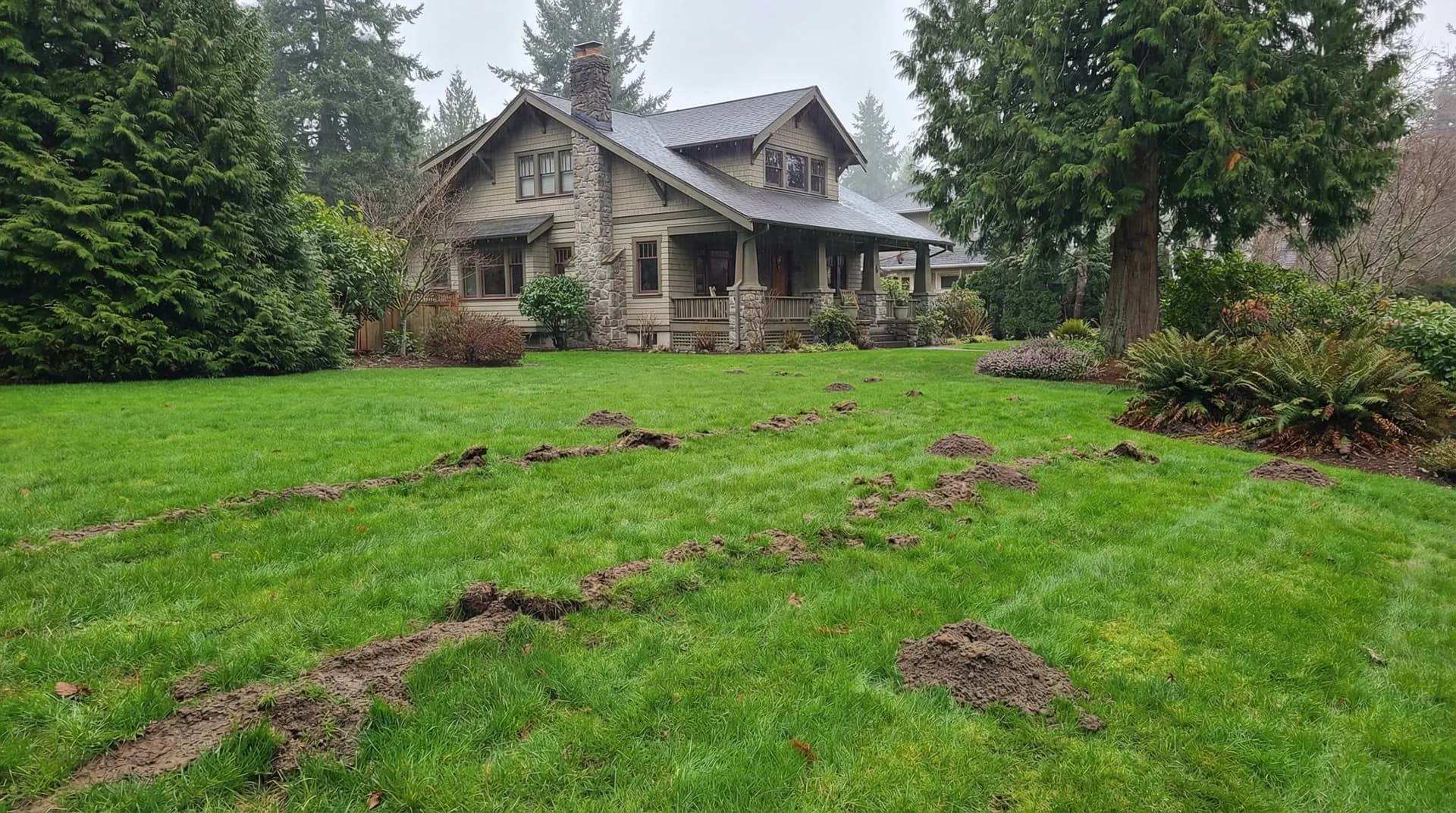
DuPont's position between Joint Base Lewis-McChord and the Nisqually River delta means mole habitat on two sides of town that will never be developed. Add Sequalitchew Creek running through the community and the Puget Sound shoreline to the west, and DuPont is effectively surrounded by permanent mole territory. Got Moles serves DuPont with chemical-free trapping safe for the families and wildlife that share this unique landscape.
Call (253) 750-0211341 Five-Star Google Reviews·Chemical-Free·Proven Results
Got Moles provides professional mole control in DuPont, Washington. Chemical-free methods. Nearly 5,000 clients served since 2017. Call (253) 750-0211 for a free quote.
DuPont is a master-planned community built on ground with deep history. The original company town served the DuPont powder works from the 1900s through the 1970s, and the Historic Village with its close-set cottages and registered landmarks still anchors one end of town. Northwest Landing fills the rest — Craftsman-inspired homes, townhomes near Center Drive, and hillside lots on Bell Hill. Sequalitchew Creek runs through town to a beach on Puget Sound, and the proximity to both JBLM and the Nisqually National Wildlife Refuge puts DuPont at a nature-meets-civilization crossroads.
Why Moles Thrive in DuPont
DuPont sits on glacial outwash and till deposits typical of the southern Puget Sound lowlands. Sequalitchew Creek and its associated wetlands keep the water table elevated through the center of town. The JBLM buffer zone along the north and east boundaries is permanent, undisturbed mole habitat. To the south, the Nisqually River delta and wildlife refuge provide another massive block of undeveloped, moist ground. DuPont's master-planned landscaping with irrigated lawns, parks, and green belts creates the maintained turf that draws moles out of the surrounding wild habitat. Annual rainfall around 40 inches keeps conditions favorable year-round.
Moles in DuPont Neighborhoods
The Northwest Landing neighborhoods closest to the JBLM boundary see the most consistent mole pressure from the base's undeveloped buffer zones. Properties along Sequalitchew Creek, including the Creekside Village area, deal with moles using the creek corridor as a travel route between habitat patches. Bell Hill, with its hillside lots, sees moles concentrated in the moisture-collecting lower elevations. The Historic Village, with its older landscaping and compact lots, has established mole populations that have been in the soil for decades. Homes near Center Drive and the community parks see moles moving between irrigated green spaces and residential yards. Properties on the southern edge toward the Nisqually area face reinvasion from the river delta's mole-rich wetlands.
How We Help DuPont Homeowners
Year-Round Mole Control
$100/month
Our Total Mole Control Program keeps your yard protected all year. Regular visits, free return visits for new activity, and a report after every check.
Get Year-Round Protection→One-Time Mole Removal
$450 flat rate
A focused, one-month eradication program for properties under 1 acre. 4-5 weekly visits. If we don't catch a mole, you only pay the $150 setup fee.
Get One-Time Removal→Commercial Mole Control
Custom quote
Annual contracts for property managers, HOAs, sports facilities, and commercial grounds. Professional reporting, reliable scheduling.
Get a Commercial Quote→Local Tip
DuPont's master-planned parks and green belts are attractive community features, but they're also mole highways connecting one neighborhood to the next. If your property borders a park, trail, or green belt, that's your primary entry point for new moles. Focus your attention on that edge.
How It Works
Call
Phone quote, no obligation
Book
Pay $150 setup. We schedule your first visit.
Trap
Tech inspects and sets traps on the first visit
Report
Weekly checks. Written report every visit.
DuPont Mole Control FAQ
I thought DuPont's newer construction would mean fewer moles. Why are they already here?
DuPont's master-planned development was built on land with existing mole populations. Construction compressed and disrupted tunnel networks but didn't eliminate the moles. Once landscaping was installed and irrigation started, moles recolonized within months. The surrounding undeveloped land — JBLM and the Nisqually area — provides an endless supply.
Does the Sequalitchew Creek trail corridor affect mole activity in my neighborhood?
Yes. Creek corridors are classic mole highways. The moist soil along Sequalitchew Creek supports year-round mole activity, and the linear green space connects different parts of town. Moles travel along the creek and expand outward into adjacent residential properties. Homes within a few hundred feet of the creek see elevated activity.
Are the moles in DuPont coming from JBLM?
For properties on the north and east side of DuPont, JBLM's buffer zones are almost certainly a source. Those undeveloped areas are permanent mole habitat, and moles expand outward into the nearest residential neighborhoods. The south side of DuPont faces similar pressure from the Nisqually area.
My Historic Village home has had moles for years. Is the soil different there?
The Historic Village has some of the oldest landscaping in DuPont, which means a thicker organic soil layer built up over decades. That richer soil supports denser earthworm populations and, consequently, more persistent mole activity. The older the landscape, the more attractive it is to moles.
We have bald eagles and other wildlife along the creek. Will your traps affect them?
Not at all. Our traps are placed underground inside active mole tunnels. They're completely inaccessible to surface wildlife, birds of prey, pets, or children. The creek corridor's wildlife is unaffected by our work. We're removing moles from your yard, not from the ecosystem.
Ready for Mole-Free Living in DuPont?
Call (253) 750-0211 or fill out the form below.
CALL (253) 750-0211Free quote. No obligation.