
Mole Control in Eatonville
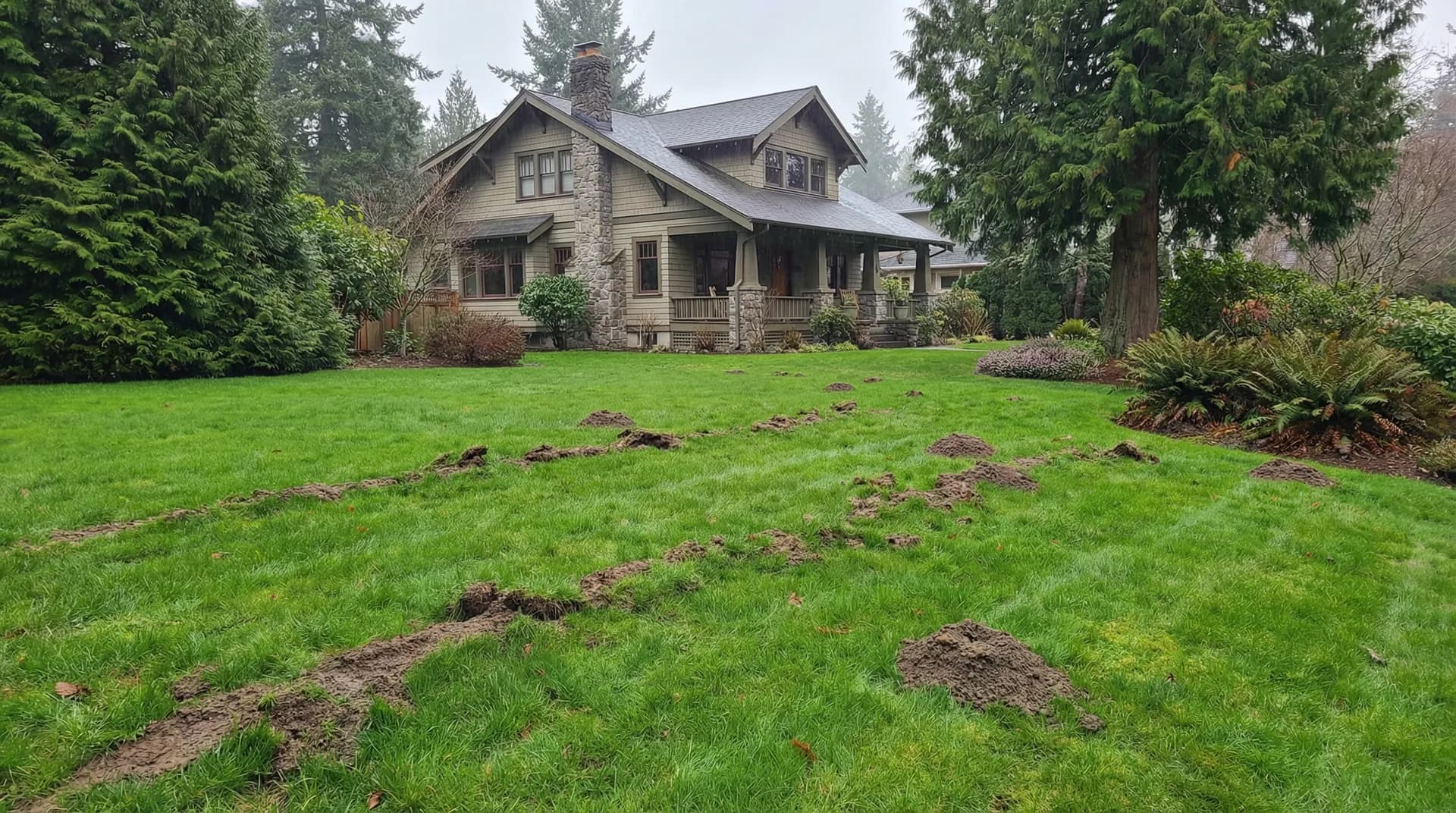
Eatonville properties sit on some of the most mole-friendly ground in Pierce County. Cool, moist soil, heavy earthworm populations under the hemlock and cedar, and decades of established pasture and lawn give Townsend's moles exactly what they need. Got Moles serves the Eatonville area using chemical-free trapping methods that protect pets, livestock, and the creeks and wetlands these properties tend to border.
Call (253) 750-0211219+ Five-Star Google Reviews·Chemical-Free·Proven Results
Got Moles provides professional mole control in Eatonville, Washington. Chemical-free methods. Nearly 5,000 clients served since 2017. Call (253) 750-0211 for a free quote.
Eatonville sits in the foothills of Mount Rainier, where the Nisqually and Mashel Rivers frame a town that still feels like the rural Pierce County most of the Eastside used to be. It's the gateway to Northwest Trek Wildlife Park, the start of the climb toward the national park, and home to acre-plus properties, working timber ground, and families who've stayed for three or four generations. Forested lots, pasture, and river-valley bottomland make up most of the land around town.
Why Moles Thrive in Eatonville
Eatonville sits on glacial till and outwash soils deposited during the last ice age, with heavy organic matter from centuries of forest cover. The Nisqually River corridor and Ohop Creek valley both carry deep alluvial soil that stays damp most of the year. Rainfall in the foothills runs higher than the Tacoma lowland — often 50 to 70 inches annually — which keeps earthworm populations strong. Townsend's moles establish here and stay. Proximity to Northwest Trek's forest habitat, the Elbe State Forest edge, and private timber ground means there's always a population in the surrounding landscape ready to move into cleared residential areas.
Moles in Eatonville Neighborhoods
Properties in and around the Ohop Valley deal with consistent mole pressure from the creek-adjacent pastures and hayfields. Acreage on the slopes above town carries heavier activity than the center of town because the cooler, wetter microclimate favors earthworms. Homes along the Mashel River and its tributaries see riparian recolonization any time an area is cleared. Mid-size residential lots in town — the grid roughly bounded by Center Street and the schools — have established mole tunnel systems that have been in place for decades, so activity patterns repeat from lot to lot. Newer developments on the outskirts pull moles in from surrounding forest and pasture.
How We Help Eatonville Homeowners
Year-Round Mole Control
$100/month
Our Total Mole Control Program keeps your yard protected all year. Regular visits, immediate response to new activity, and a report after every check.
Get Year-Round Protection→One-Time Mole Removal
$450 flat rate
A focused, one-month eradication program for properties under 1 acre. 4-5 weekly visits. If we don't catch a mole, you only pay the $150 setup fee.
Get One-Time Removal→Commercial Mole Control
Custom quote
Annual contracts for property managers, HOAs, sports facilities, and commercial grounds. Professional reporting, reliable scheduling.
Get a Commercial Quote→Local Tip
If your property has horses, sheep, or cattle, watch for mole mounds in paddocks and turnout areas — the soft, heavily-manured ground is prime mole habitat. Mounds in pasture are a real trip hazard for stock, and mower strikes on hidden mound tops are expensive. Managing moles on livestock ground isn't cosmetic; it's a safety and equipment issue.
How It Works
Call
Phone quote, no obligation
Book
Pay $150 setup. We schedule your first visit.
Trap
Tech inspects and sets traps on the first visit
Report
Weekly checks. Written report every visit.
Eatonville Mole Control FAQ
We're on acreage with livestock and woods. Is your service built for that kind of property?
Yes. Acreage and rural properties are a significant part of our work in outer Pierce County. On a parcel with livestock, woods, and open ground, we focus on the zones that matter most — around barns and paddocks, the house lawn, any irrigated or high-traffic areas — rather than trying to clear forested edges where moles will recolonize from anyway. We tailor the plan to the property.
Is mole trapping safe to run near horses and cattle?
Yes. Our traps sit below ground in active tunnels and aren't accessible from the surface. Since we use chemical-free physical trapping, there's no risk of livestock encountering bait or poisoned ground. We flag the locations we've set so pasture rotation can work around them.
Our property is near Ohop Creek and we're worried about chemicals. Do you use any?
None. Every Got Moles service is chemical-free — professional traps placed in active tunnels and nothing else. That's the same methodology on every property we work, and it's particularly important on land near Ohop Creek, the Mashel, or any Nisqually tributary where runoff into wetlands matters.
Moles or voles — how do I tell the difference out here?
Mole mounds are volcano-shaped cones of loose soil with no visible hole at the top. Vole damage is surface runways in grass — narrow tracks chewed at ground level, usually worst after snow melt. Moles push up mounds; voles chew pathways. If you're seeing both, it's not unusual on Eatonville-area ground. We handle the moles directly; fewer moles usually means fewer vole runway entry points too.
What's the best time to call for mole work in Eatonville?
Any time activity is visible is the right time, but the heaviest demand runs March through June as soil warms and moles push into peak feeding. If you're seeing fresh mounds in early spring on pasture or lawn, call sooner rather than later — waiting usually means a full tunnel network by mid-summer. Call (253) 750-0211 for current scheduling.
Ready for Mole-Free Living in Eatonville?
Call (253) 750-0211 or fill out the form below.
CALL (253) 750-0211Free quote. No obligation.