
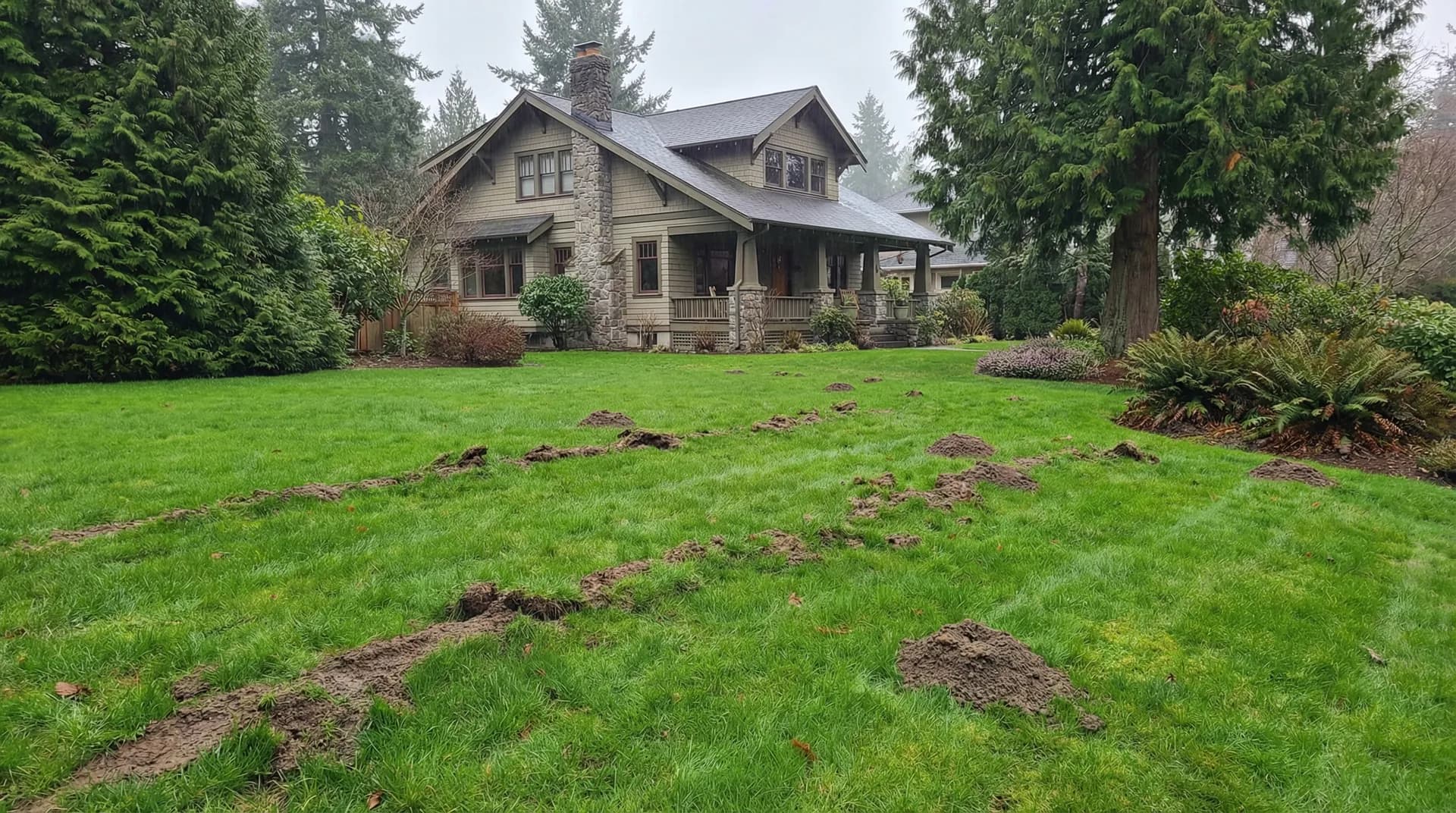
Mole Control in Roy
Roy is quiet, rural, and surrounded by the kind of prairie and farmland that supports mole populations in numbers most Pierce County suburbs never see. If you have a yard, a pasture, or a garden out here, you've almost certainly dealt with moles. Got Moles serves Roy and the rural parcels south of JBLM with chemical-free trapping that keeps pastures, paddocks, and lawns clear — safe for horses, dogs, kids, and livestock.
Call (253) 750-0211219+ Five-Star Google Reviews·Chemical-Free·Proven Results
Got Moles provides professional mole control in Roy, Washington. Chemical-free methods. Nearly 5,000 clients served since 2017. Call (253) 750-0211 for a free quote.
Roy is a small agricultural city of around 800 people sitting where the Muck Creek and Nisqually valleys meet, just off the eastern edge of Joint Base Lewis-McChord. The Roy Pioneer Rodeo is the event of the summer, the stables and pastures spread in every direction, and a meaningful share of the residents are either active-duty military, retirees from the base, or families who've been working this prairie ground for generations. Roy City Park anchors a downtown small enough to walk in a few minutes.
Why Moles Thrive in Roy
The Roy area sits on the Nisqually prairie — a mix of glacial outwash gravels and prairie loam that moles tunnel through easily. Muck Creek drains through the heart of town, and its floodplain keeps the water table elevated across a significant portion of the community. The surrounding agricultural land, with its tilled, organic-rich soil and consistent irrigation, supports some of the highest earthworm densities in the region. Annual rainfall runs around 45 inches, and the flat terrain means water pools rather than running off, extending the wet season. With farmland, pastures, and the Nisqually corridor all providing unlimited staging ground, moles move into residential yards continuously.
Moles in Roy Neighborhoods
Properties in downtown Roy along the Muck Creek corridor deal with the high water table and consistently damp soil that comes with creek frontage. The residential streets around Roy City Park sit on the same prairie loam that makes the surrounding farmland productive — easy tunneling and abundant food. Rural acreage parcels north toward McKenna and south toward the base see moles moving freely between pasture and lawn with nothing to stop them. Horse properties, which Roy has many of, face concentrated mole activity because paddock soil stays soft, moist, and earthworm-rich from the manure cycle. Newer homes on previously undeveloped prairie ground get hit fast because the surrounding undisturbed soil is full of existing mole networks.
How We Help Roy Homeowners
Year-Round Protection
$100/month
Our Total Mole Control Program keeps your yard protected all year. Regular visits, immediate response to new activity, and a report after every check.
Get Year-Round Protection→One-Time Removal
$450 flat rate
A focused, one-month eradication program for properties under 1 acre. 4-5 weekly visits. If we don't catch a mole, you only pay the $150 setup fee.
Get One-Time Removal→Commercial
Custom quote
Annual contracts for property managers, HOAs, sports facilities, and commercial grounds. Professional reporting, reliable scheduling.
Get a Commercial Quote→Local Tip
Roy properties with pastures should watch for mole mounds around waterers, hay feeders, and gate areas first — these spots stay damp and get plenty of organic input, which draws moles long before the main yard sees activity.
How It Works
Call
Tell us about your property
Inspect
We assess the mole activity
Trap
Professional equipment on active tunnels
Report
Results after every visit
Roy Mole Control FAQ
We're on several acres with horses. Can you realistically treat that much ground?
Yes. We work Roy-area acreage and pasture properties regularly. The approach on a large parcel is different from a suburban lot — we focus on the highest-impact areas (around the barn, paddock entries, main turnout, and lawn) rather than trying to clear the entire parcel. We build a management plan around the zones that matter to you.
Can mole mounds actually hurt horses?
Yes. Mounds create trip hazards, and the soft spots over collapsed tunnels are a real risk for horses moving at speed. Moles also damage mower decks when machines hit hidden mound tops. On horse property, mole control is a safety issue, not just a cosmetic one.
We're on JBLM base housing. Can you service on-base properties?
On-base housing typically goes through the base's approved contractors, so we generally work with off-base properties in the Roy, McKenna, and surrounding rural areas. If you're unsure about your specific arrangement, call us and we'll help you figure out who handles your situation.
Muck Creek runs through part of our property. Does that affect where the moles are?
It concentrates them. The creek corridor keeps the soil moist well away from the bank, supports heavy earthworm populations, and gives moles a natural travel route. Creek-adjacent properties almost always have heavier mole activity than lots farther from water.
Will moles damage the garden or the chicken coop area?
They won't eat your vegetables or harm chickens, but their tunneling can tear through root systems, undermine coop foundations, and create pathways voles use to eat bulbs and roots. We handle the moles — and in doing so, usually reduce the secondary vole problem too.
Ready for Mole-Free Living in Roy?
Call (253) 750-0211 or fill out the form below.
CALL (253) 750-0211Free inspection. No obligation.