
Mole Control in Lacey
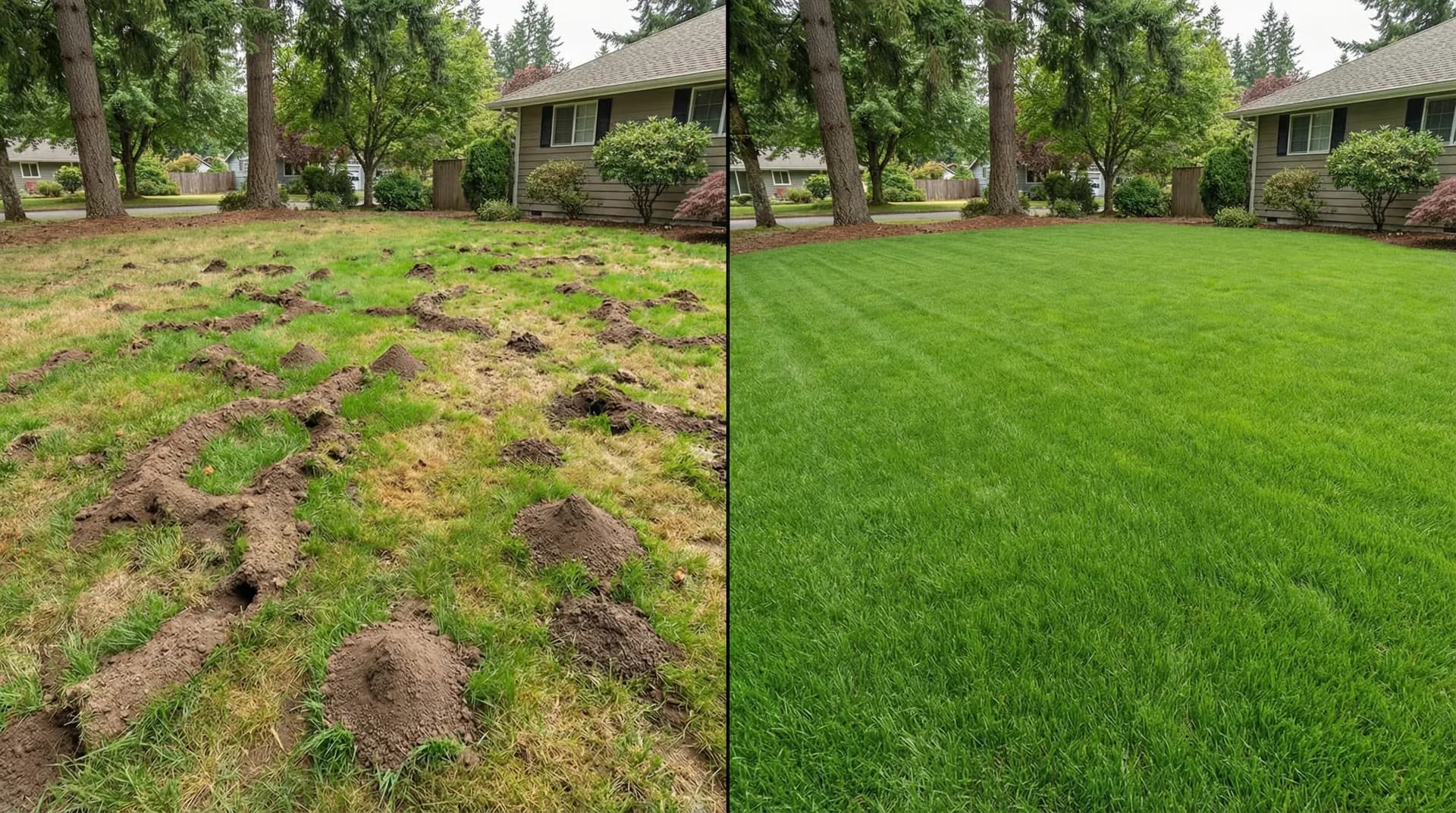
Lacey sits on a glacial outwash plain where sandy, well-drained prairie soils meet the moisture of the South Sound. That combination creates mole conditions that surprise homeowners who expect dry, sandy ground to be mole-free. Got Moles has been solving Lacey's mole problems since 2017 with chemical-free methods that work with any soil type.
Call (253) 750-0211219+ Five-Star Google Reviews·Chemical-Free·Proven Results
Got Moles provides professional mole control in Lacey, Washington. Chemical-free methods. Nearly 5,000 clients served since 2017. Call (253) 750-0211 for a free quote.
Lacey has grown from a small bedroom community into a city of nearly 60,000, but it's kept its family-centered character. Hawks Prairie, Woodland Creek, and the neighborhoods near Saint Martin's University give the city a suburban feel with easy access to Olympia and Interstate 5. Joint Base Lewis-McChord's northern gate sits just south of town, and the steady rotation of military families keeps the community energized and diverse.
Why Moles Thrive in Lacey
Lacey's glacial outwash soils are sandier and more porous than the heavier clays found elsewhere in the South Sound. But porous doesn't mean dry — the region's 50 inches of annual rainfall percolates quickly through the sandy layers and maintains soil moisture at tunnel depth year-round. The prairie soils that once covered this area before development were rich in organic material, and that legacy persists in residential topsoil. Woodland Creek and its tributaries keep the water table elevated across the eastern half of the city. The result is soil that's easy for moles to tunnel through and rich enough to sustain the earthworm populations they depend on.
Moles in Lacey Neighborhoods
Hawks Prairie in the northwest sees heavy mole activity in the newer subdivisions where fresh topsoil was laid over the native sandy outwash. That layering creates a moisture trap at the interface that earthworms and moles both exploit. Woodland Creek neighborhoods deal with moles migrating from the creek's riparian corridor, which provides unbroken habitat connecting natural areas to residential lots. Properties near Saint Martin's University campus, with its mature trees and large irrigated lawns, see spillover mole activity. The Panorama City retirement community's well-maintained grounds are a consistent target. Neighborhoods along Yelm Highway near the JBLM gate deal with moles pushing in from the adjacent open land and training areas. The newer developments east of Marvin Road see moles at the forest-to-lawn transition as land is cleared for housing.
How We Help Lacey Homeowners
Year-Round Mole Control
$100/month
Our Total Mole Control Program keeps your yard protected all year. Regular visits, immediate response to new activity, and a report after every check.
Get Year-Round Protection→One-Time Mole Removal
$450 flat rate
A focused, one-month eradication program for properties under 1 acre. 4-5 weekly visits. If we don't catch a mole, you only pay the $150 setup fee.
Get One-Time Removal→Commercial Mole Control
Custom quote
Annual contracts for property managers, HOAs, sports facilities, and commercial grounds. Professional reporting, reliable scheduling.
Get a Commercial Quote→Local Tip
Lacey's sandy soil means mole tunnels are often deeper than you'd expect. Surface ridges may not appear until an infestation is well established. If you notice soft spots when you walk across your lawn — the ground gives slightly underfoot — that's a tunnel below and a sign to call before the visible damage starts.
How It Works
Call
Phone quote, no obligation
Book
Pay $150 setup. We schedule your first visit.
Trap
Tech inspects and sets traps on the first visit
Report
Weekly checks. Written report every visit.
Lacey Mole Control FAQ
I thought sandy soil was bad for moles. Why do I have them in Lacey?
Common misconception. Sandy glacial outwash soil is actually easier for moles to tunnel through than heavy clay. As long as there's enough moisture to support earthworms — and Lacey's 50 inches of rain ensures there is — moles will thrive. Sandy soil just means they dig faster.
My neighborhood in Hawks Prairie was built five years ago. Why are moles showing up now?
New construction temporarily disrupts mole activity, but once landscaping matures and irrigation systems establish consistent soil moisture, the habitat becomes attractive again. Five years is a typical timeframe for mole populations to recolonize developed land in Lacey. The earlier you address it, the easier the problem is to manage.
Does military housing near JBLM have more mole problems?
Neighborhoods near the base perimeter do see higher mole pressure. The undeveloped buffer zones and training areas adjacent to JBLM are essentially undisturbed mole habitat. Moles expand from that habitat into nearby residential areas. We serve many homes in the Lacey neighborhoods along the JBLM boundary.
Are your traps safe for my kids who play in the backyard?
Completely safe. Our professional traps are placed underground inside active mole tunnels. There's nothing on the surface — no poison, no chemicals, no exposed traps. Your kids can play in the yard normally during and after treatment.
How often should I have my property checked if I live near Woodland Creek?
Creek-adjacent properties face ongoing reinvasion pressure. After initial clearance, we recommend our monitoring program with regular visits. The frequency depends on how close you are to the creek and how active the corridor is, but monthly checks during peak seasons keep new arrivals from establishing before they cause damage.
Ready for Mole-Free Living in Lacey?
Call (253) 750-0211 or fill out the form below.
CALL (253) 750-0211Free quote. No obligation.