
Are Moles Good for Your Yard? The Honest Washington Homeowner Answer
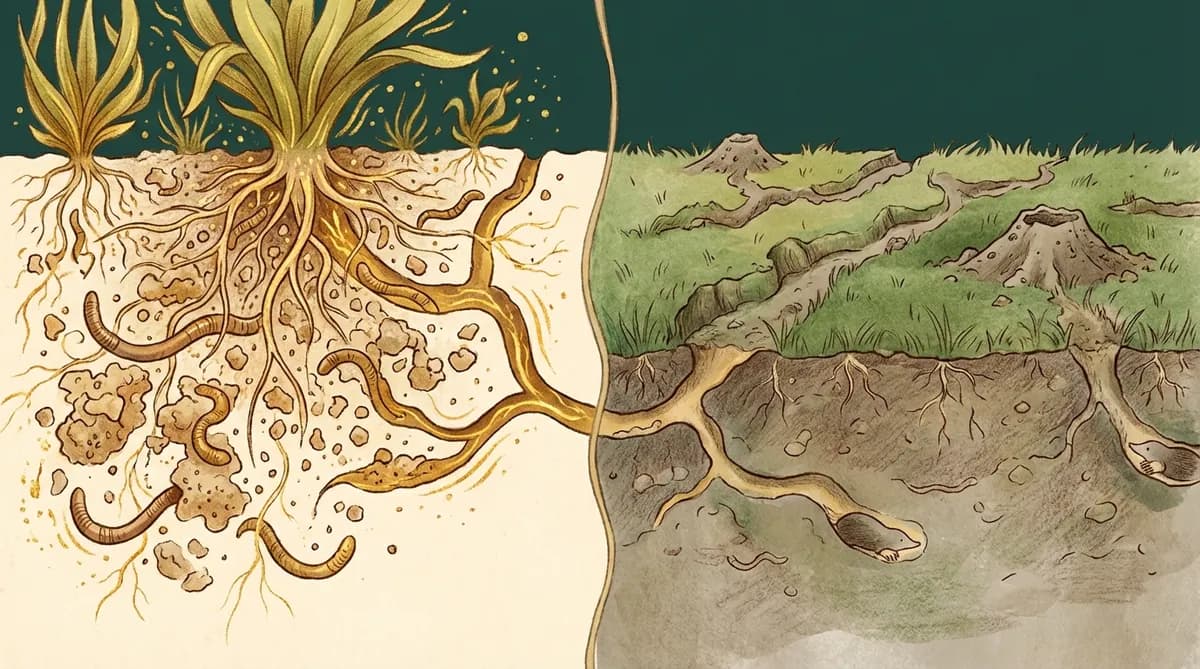
Moles provide genuine soil benefits — aeration, organic matter mixing, and consumption of grubs and other invertebrate pests. But for Western Washington homeowners maintaining a landscaped lawn, the damage from tunneling and mound production usually outweighs those benefits. A single Townsend's mole can tunnel 18 feet per hour and produce 15-25 fresh mounds per week, turning a manicured lawn into a minefield of ridges and dirt piles. The honest answer: moles are good for soil health, but bad for the lawn sitting on top of it. For a natural meadow or large rural property, leaving them alone is reasonable. For a maintained residential lawn in Seattle, Bellevue, Tacoma, or anywhere else in the Puget Lowlands, professional removal is the better call.
Want moles handled for good, not just for now? Our recurring mole protection keeps your Western Washington yard covered with regular visits and a written report after every check.
The Real Benefits of Moles in Your Yard
Moles aren't villains. They're native Pacific Northwest insectivores doing what evolution built them to do over the last several million years. Three concrete ecological benefits matter.
Soil aeration. Mole tunnels create channels through compacted soil that allow air, water, and nutrients to reach root zones. In heavy clay and glacial till soils common across the Puget Sound lowlands, this natural aeration can improve drainage and reduce waterlogging in ways that commercial core aeration services charge homeowners $100-$200 to achieve. The aeration effect is real — agricultural and soil-science research has documented it across multiple mole species worldwide.
Natural pest control. Moles eat grubs, beetle larvae, centipedes, millipedes, slugs, snails, and various other soil invertebrates. Grubs alone can damage lawns significantly when their populations get high (the classic 'brown patch' in otherwise-healthy turf). A mole actively feeding on grubs is providing pest-suppression service that would otherwise require insecticide application.
Soil mixing and organic-matter cycling. As moles tunnel, they move deeper subsoil to the surface and pull surface organic matter down into their runs. This mixing improves soil structure, redistributes nutrients, and helps maintain the soil biology that supports healthy lawns and gardens. Earthworm biologists sometimes refer to moles as 'accidental soil engineers.'
These benefits are real. They're also largely invisible and indirect — measured over years of soil health rather than in a given week's yard appearance.
The Damage Moles Cause to Maintained Lawns
The damage, by contrast, is visible every single day.
Surface tunneling. Feeding tunnels run 1-4 inches below the surface, creating raised ridges that crisscross the lawn. The grass directly above these tunnels has its roots physically separated from the soil beneath them. Within a week or two of tunnel construction, the strip of grass above the ridge turns brown and dies. A Townsend's mole can produce 100+ feet of surface ridges on a single quarter-acre lot in a month of active feeding.
Volcano-shaped mounds. Each time the mole excavates from deeper tunnels, it pushes a cone of loose soil up to the surface. These mounds smother the turf underneath, disrupt mowing, create uneven ground for walking, and introduce bare soil that weeds colonize rapidly. A single Townsend's mole produces 15-25 fresh mounds per week during peak spring and autumn activity — hundreds per month on an untreated property.
Tunnel collapse injuries. The surface soil over shallow mole tunnels is soft and collapses under foot traffic. Dogs running across mole-damaged lawns, children playing, lawn equipment operators — all are at risk of twisted ankles and knee injuries when the ground gives way unexpectedly. Small but real injury risk, especially in yards with heavy activity.
Indirect plant damage. Moles don't eat plants directly — they're insectivores, not rodents. But tunneling near root zones can physically disrupt plant root systems, especially for shallow-rooted perennials and vegetables. More importantly, voles (which are rodents and DO eat roots) routinely use mole tunnels as highways to access garden beds. Plant damage in a yard with mole activity is usually vole damage exploiting mole infrastructure. See Mole vs Vole vs Gopher for the full distinction.
Irrigation disruption. Deep tunnels passing under sprinkler heads and irrigation lines can cause settling, misalignment, and occasional line breaks. Pop-up sprinklers that no longer pop to the right height are often collateral mole damage.
How the Benefit-vs-Damage Calculation Varies by Property Type
The honest answer to 'are moles good for my yard' depends on what kind of yard you have.
Manicured residential lawn. The damage clearly outweighs the benefits. A $15,000 landscape investment on a Bellevue or Sammamish suburban lot doesn't benefit meaningfully from the aeration that moles provide; it's damaged in ways that require hundreds of dollars in repair work each year. Professional core aeration every 2-3 years achieves similar soil-structure benefits without the damage. For this property type, removal is the clear choice.
Mixed lawn and garden with extensive plantings. Still damage-dominant. Moles don't eat plants, but the secondary vole damage via mole tunnels affects bulbs, vegetable gardens, and ornamental plantings. The aeration benefits are real but distributed; the damage is concentrated and visible.
Natural meadow or low-maintenance naturalized yard. Benefits may outweigh damage. If you're not maintaining a perfect lawn and are comfortable with a natural landscape, the soil benefits are real and the surface disruption is aesthetically less problematic. Some property owners on large rural lots deliberately leave moles alone for this reason.
Agricultural or pasture land. Mixed. Moles can be beneficial for soil aeration and grub control, but heavy mole activity on pasture creates tripping hazards for livestock and equipment issues. Commercial agricultural operations typically manage mole populations rather than eliminating them.
Commercial landscape (HOA, property management, sports fields). Damage-dominant, usually. The liability of uneven ground from tunnels combined with the aesthetic expectation on managed landscapes makes removal the standard approach. See Commercial Mole Control for how we handle these.
For typical Western Washington residential customers in Seattle, Tacoma, Puyallup, Renton, and similar cities — the population we serve most — the calculation comes out on the damage side nearly every time.
Should You Leave Moles Alone?
Yes, if:
- Your property is mostly natural, unmaintained, or deliberately naturalized - You have a large rural property where surface damage doesn't materially affect use - You're comfortable with the aesthetic of a working soil ecosystem rather than a manicured lawn - The mole activity is genuinely minimal and concentrated in areas you don't use - The soil benefits matter to you more than the visible damage
No, if:
- Your maintained lawn is being damaged - You've invested significantly in landscaping, irrigation, or turf - You have pets or kids running on the lawn regularly (tunnel collapse injury risk) - Activity is escalating during spring or autumn peaks - You see plant damage alongside tunnels (indicates voles using mole infrastructure) - The yard is part of a managed property where appearance matters - You're considering selling your home within the next 1-2 years (mole damage reduces perceived condition)
For homeowners in the 'no' category, Got Moles uses chemical-free physical trapping exclusively. Safe for pets, kids, and the soil itself. No poisons, no toxicants, no residues. Start with One-Time Mole Removal for a focused single-service approach or the Total Mole Control Program for year-round protection against reinvasion. Nearly 5,000 Western Washington properties since 2017 and 219+ five-star Google reviews.
The Misconception That Moles Eat Plants
The biggest source of confusion in 'are moles good for my garden' is the widespread misconception that moles eat plants.
They don't.
Moles are insectivores. Order Eulipotyphla, the same order as shrews and hedgehogs. Their diet is 55-93% earthworms, with the remainder being grubs, beetle larvae, centipedes, millipedes, slugs, snails, and other soil invertebrates. They don't eat grass roots. They don't eat flower bulbs. They don't eat vegetables. Their teeth are adapted for gripping soft-bodied invertebrates, not chewing plant matter.
But plant damage does happen alongside mole tunnels. The culprit is almost always voles (small rodents) or occasionally gophers (larger rodents, rare in Western Washington) using the mole's tunnel system as underground highways to reach plant roots.
This means that if you're seeing both mounds and plant damage, you have a mole-plus-vole situation. Removing the mole eliminates the tunnel highways. Voles lose their infrastructure and often leave within weeks once their covered access routes are gone. It's a two-for-one benefit of mole removal on properties with vole damage.
For the detailed identification guide, see Mole vs Vole vs Gopher. For more on diet specifically, What Do Moles Eat?.
Can You Get the Benefits Without the Damage?
This is the ideal compromise homeowners often ask about: keep the soil health benefits, eliminate the surface damage. Unfortunately, you can't.
The benefits (aeration, organic matter mixing, pest consumption) are the same tunneling activity that produces the damage (ridges, mounds, root disruption). You can't have one without the other because they're literally the same biological process viewed from different angles.
The closest thing to a 'benefits without damage' approach is:
1. Professional core aeration. Commercial aeration services puncture the lawn with hollow cores 2-3 inches deep at regular intervals, producing soil-improvement benefits similar to mole activity without the ridges or mounds. Typical cost: $100-$200 per service, annual or biannual. See any local lawn-care provider.
2. Compost topdressing. Applied seasonally, this improves soil structure, adds organic matter, and supports the earthworm populations that mole activity would otherwise introduce. Moderate cost, visible benefits over 2-3 years.
3. Beneficial nematodes for grub control. If your primary concern about grubs was the damage they cause (not their availability as mole food), beneficial nematode applications target grubs without requiring moles. This works reasonably well in Western Washington's wet soils.
4. Earthworm-friendly lawn practices. Avoiding broad-spectrum pesticides, maintaining organic matter through mulching, and minimizing compaction supports the earthworm populations that would otherwise draw moles. Counter-intuitively, a healthy earthworm-rich lawn is MORE attractive to moles, not less — but the soil structure benefits without surface damage.
None of these alternatives are strictly equivalent to what moles do, but they deliver the soil-improvement outcomes homeowners actually care about without the mound production. Combined with professional mole removal, they produce the best long-term yard condition for most residential properties.
Got Moles Serves Western Washington
Got Moles is a mole-only specialist covering King, Pierce, Snohomish, and Thurston counties — the heart of Western Washington. We've trapped moles on nearly 5,000 properties since 2017, chemical-free, with 219+ five-star Google reviews across three local offices.
Local service areas include mole control in Burien, Auburn mole removal, and mole control near Kirkland — plus every neighboring city on our service areas map.
If moles have moved into your yard, the fastest path to a solved problem is our One-Time Mole Removal or a direct conversation: call (253) 750-0211 or use our contact form.
Why is your yard a mole target?
Get your free 2-minute Mole Risk Score — a personalized report on what is drawing them in and how to make your property less attractive.
Find my risk scoreFree. No call required. Takes about 2 minutes.
Frequently Asked Questions
Do moles aerate the soil in my yard?
Yes. Mole tunnels create air channels that improve drainage and oxygen flow to root zones. The benefit is real but comes bundled with the damage — the same tunnels separate grass roots from soil, killing the turf above them. For most residential properties, professional core aeration achieves similar soil benefits without the surface damage. If you care specifically about aeration, pay for that service rather than tolerating mole activity.
Do moles eat plant roots or garden vegetables?
No. Moles are insectivores, not rodents. Their diet is earthworms (55-93%) plus grubs and other soil invertebrates. Plant damage in yards with mole activity is typically caused by voles (small rodents) that use mole tunnels as highways to access roots, bulbs, and vegetables. If you're seeing plant damage alongside mole tunnels, you have a mole-plus-vole situation and removing the mole often eliminates both problems together.
How many moles are actually in my yard?
Far fewer than the damage suggests. A single Townsend's mole — Washington's largest and most common species — can tunnel up to 18 feet per hour and produce 15-25 fresh mounds per week. What looks like a 'mole infestation' of 10+ animals is usually 1-2 moles doing a lot of work. Assume one mole per quarter acre unless you're seeing two completely separate tunnel networks with no connecting runs.
Are moles actually beneficial or is that a myth?
Genuinely beneficial at the soil-ecosystem level — aeration, organic matter cycling, pest consumption are all real effects documented in ecological research. But 'beneficial for the soil' isn't the same as 'beneficial for a maintained residential lawn.' For wildflower meadows, rural acreage, and deliberately naturalized landscapes, leaving moles alone makes sense. For a Seattle suburban yard with mature landscaping, the damage outweighs the benefits most of the time.
Will removing moles damage my soil health long-term?
No, not meaningfully. Professional core aeration every 2-3 years replaces the aeration benefit. Compost topdressing maintains organic matter. Beneficial nematodes handle grubs if that's a concern. Earthworms remain active in any healthy lawn regardless of mole presence. Thousands of Western Washington lawns have been mole-free for years under ongoing TMCP coverage with excellent soil and turf health — removal doesn't create a soil deficit.
Do moles help with grub problems in my lawn?
Marginally. Moles do eat grubs, but grubs are only 5-20% of their diet — they're opportunistic on grubs but primarily hunt earthworms. A heavy grub population isn't reliably reduced by a resident mole. If you have documented grub damage, beneficial nematodes or targeted lawn treatments are more effective than tolerating a mole for incidental grub consumption.
Are there mole-friendly landscape designs that coexist with moles?
Yes. Designs that minimize lawn area in favor of mulched beds, native plantings, and naturalized ground cover reduce the visible damage from mole activity while maintaining the soil-health benefits. A mole in a native-plant garden produces less aesthetic disruption than one in an open turf lawn. For property owners moving toward low-maintenance Pacific Northwest landscape styles, coexistence is reasonable. For traditional manicured lawns, removal remains the practical approach.
Related Services & Resources
Our Services
- Total Mole Control Program — $100/month year-round protection
- One-Time Mole Removal — $450 flat rate with guarantee
- Commercial Mole Control — annual contracts for property managers
Learn More
- How It Works — our 4-step process
- FAQ — 26 expert answers
- Service Areas — 77 cities across Western Washington
Spencer Hill is a US Army veteran and founder of Got Moles, a mole control specialist serving Western Washington. He has helped over 5,000 homeowners reclaim their yards using chemical-free, professional trapping methods.
Ready to Reclaim Your Yard?
Call (253) 750-0211 — we serve all of Western Washington.
CALL (253) 750-0211Free. No obligation.
Or get your free 2-minute Mole Risk Score for a personalized report on why moles target your yard.