
What Do Moles Eat? (And Why It Matters for Your Yard)
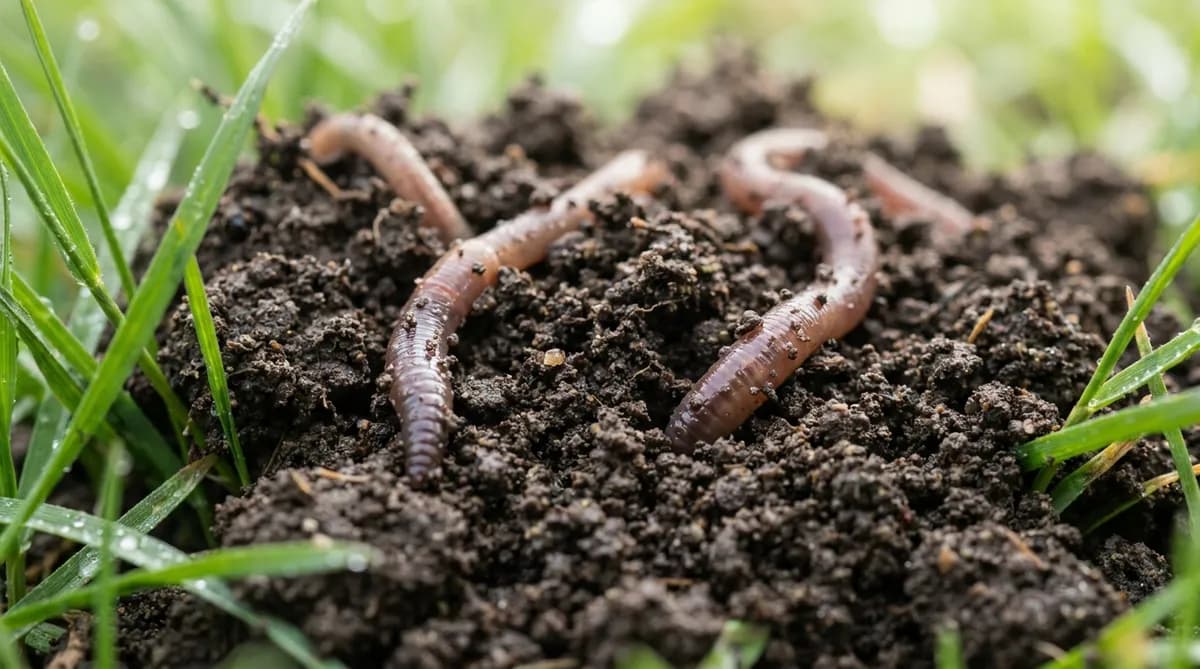
Moles eat earthworms. That's the headline. Earthworms make up 55 to 93 percent of a mole's diet, with grubs, beetle larvae, centipedes, slugs, and other soil insects making up the rest. A Townsend's mole — the most common species in Western Washington — eats 60 to 80 percent of its body weight in worms and insects every day. What moles do NOT eat: grass roots, bulbs, tubers, or vegetables. That matters because nearly every DIY fix sold for moles — grub killers, plant-based repellents, root treatments — targets a food source moles barely touch.
Want moles handled for good, not just for now? Our ongoing mole protection keeps your Western Washington yard covered with regular visits and a written report after every check.
Why This Question Matters
This isn't trivia. The answer to "what do moles eat" decides whether most DIY mole control will work on your yard.
If moles ate grass roots, killing the grass would move them along. If they ate grubs, a grub treatment would starve them out. If they ate bulbs, protecting your bulbs would end the problem.
They don't eat any of those things as a primary food. And that's why the $30 bag of grub killer on the shelf at your local hardware store isn't going to solve what's happening under your lawn.
Here's what moles actually eat, in order of importance. We've treated nearly 5,000 properties across Western Washington. This is the real picture, with nothing pulled from a random blog.
Got Moles by the Numbers
Practitioner perspective from one of Western Washington's most established mole-control specialists. Every fact below the diet section comes from direct field experience, not secondary research.
5,000+ properties — treated across Western Washington since 2017.
219+ five-star Google reviews — across three Google Business Profile locations.
One species focus — mole control only, no other pests. Eight years of pattern recognition on one animal in one region.
Zero chemicals — professional, mechanical placement in active tunnels. Safe for pets, children, and pollinators.
Primary Food: Earthworms
Earthworms are the reason moles are in your yard.
How much of a mole's diet is earthworms: studies and Washington State University Extension references put the figure between 55 and 93 percent. That's a huge range because it varies by species, season, and soil conditions — but it's always the majority. The Townsend's mole, which is the biggest and most common species in Western Washington, leans toward the upper end. Pacific Coast moles are similar.
How much a mole eats in a day: a Townsend's mole eats 60 to 80 percent of its body weight in food each day. A 4-ounce mole eats roughly 2.5 to 3 ounces of earthworms daily. The Pacific Coast mole eats even more, relative to size — up to twice its body weight — which works out to around 100 to 150 individual worms per day.
Why earthworms: worms are soft-bodied, high in protein, and packed with moisture. A mole can consume them without needing to chew hard casings. Earthworm density in the soil correlates directly with mole activity. A lawn with healthy soil and strong earthworm populations is prime mole habitat.
The hidden irony: the better your lawn, the more attractive it is to moles. Rich, moist, well-drained soil — the exact soil a well-maintained Pacific Northwest lawn produces — supports dense earthworm populations. Moles follow worms. Homeowners who invest in soil quality are also investing in mole habitat, whether they know it or not.
Spencer Hill, founder of Got Moles — over 8 years and nearly 5,000 Western Washington properties of field experience — observes: "A Townsend's mole eats 60 to 80 percent of its body weight in earthworms every day. A Pacific Coast mole eats up to twice its body weight — 100 to 150 worms a day. That's why grub treatments don't move them. The grubs aren't the meal. The worms are."
Secondary Food: Grubs, Insects, and Other Invertebrates
Everything else in a mole's diet falls under "secondary."
The list: grubs (beetle larvae — Japanese beetle, June bug, European chafer), centipedes and millipedes, slugs and snails, spiders, soil insects and larvae, and occasional worms from other families.
How much of the diet this is: roughly 5 to 30 percent, depending on species and season. In soils where earthworm populations are seasonally low, moles rely more heavily on grubs and insect larvae. In Western Washington's wet climate, earthworm populations are generally strong year-round, so secondary foods make up a smaller share.
One species exception: the Townsend's mole is the only western mole species documented to occasionally eat underground plant material — tubers, bulbs, and roots. This is a minor part of the diet, and it's not why moles are in your yard. But it's worth noting because it's the single sliver of plant-eating that exists in the family.
The shrew mole — the smallest mole in North America, also found in Western Washington — has the broadest diet of the three local species. It eats earthworms, insects, and plant material, and it forages above ground as well as below. Shrew moles are less common on residential lawns, tending to stick to wooded edges and stream banks.
What Moles Do NOT Eat
This is the part homeowners get wrong most often.
Moles do not eat grass. Not grass blades, not grass roots. The dying patches you see along mole tunnels aren't from eating — they're from the roots being severed by tunneling.
Moles do not eat bulbs. Tulip bulbs, crocus bulbs, daffodil bulbs. If your bulbs are disappearing, the culprit is voles, not moles. Voles are plant-eating rodents that use mole tunnels for access. This is why homeowners blame moles for plant damage that moles didn't do.
Moles do not eat vegetables. Carrots, potatoes, anything in your raised beds. Again, if vegetables are being eaten underground, you have voles or gophers, not moles.
Moles do not eat your pets' food or scavenge kitchen scraps. They're underground animals that hunt live invertebrates. They don't come above ground to steal from bird feeders or garbage cans.
What they do cause: tunneling damage that disrupts root systems. When a mole pushes through the soil under a rose bush, the roots get severed. The plant wilts or dies. But the mole isn't eating it — it's just passing through looking for worms.
If plants are being eaten in a yard with mole tunnels, something else is eating them and using the mole tunnels to get there.
Specific Foods People Ask About
Once people learn moles are insectivores, the next question is always specific. Do moles eat termites? What about meat? Fruit? We've heard most of them. Here's a quick run-through of what people ask about and why the answer is usually no.
Termites. Technically yes — termites are insects, and moles eat insects. But termites live in wood and wood-adjacent soil, not in lawn turf. A mole tunneling through your front lawn isn't going to encounter many. If you have a termite problem, you have a termite problem. The moles aren't going to help.
Grasshoppers. No. Grasshoppers are above-ground insects. Moles spend their lives underground hunting soft-bodied invertebrates. A mole would never meet a grasshopper unless one fell into a tunnel by accident.
Frogs. No. Same reason. Frogs live above ground or in water. Moles can't catch what they can't tunnel into.
Dirt. No, despite what you'd think watching a mole churn through soil. Moles displace dirt to reach worms. They don't eat the dirt itself. The digestive system is built for soft-bodied prey, not soil.
Fruit. No. Moles are insectivores. The Townsend's mole occasionally takes underground plant material like bulbs or tubers, but fruit isn't on the menu for any North American mole.
Meat. No, in the sense people usually mean. Moles don't scavenge dead animals or eat meat scraps. They hunt live invertebrates: worms, grubs, centipedes, slugs.
Peanuts. No. There's a persistent home remedy that suggests baiting moles with peanuts. Moles ignore peanuts. Wrong food group entirely.
Tomatoes. No. If your tomatoes are being eaten underground, you have voles or rats. Not moles.
Garlic. No. Garlic shows up in old folk remedies as a mole repellent, planted around the yard to drive moles away. It doesn't work, and moles certainly don't eat it.
Different mole species in different states. Washington's three mole species are different from the eastern moles in Florida or the Carolinas, but the diet is the same across all North American moles. Earthworms first, soil invertebrates second. Florida homeowners ask the same question and get the same answer. Geography doesn't change the food source. Earthworm density does.
Why This Breaks Most DIY Mole Control
Here's where the food source facts collide with what's sold at garden centers.
Grub killers are the #1 DIY mole control product. The sales pitch is logical on the surface: kill the grubs, the moles lose their food, and they leave. The problem is that grubs are a minor food source for moles, not a primary one. Killing grubs might reduce the mole's diet by 10 to 20 percent. The moles are still eating 80 percent of their normal food, which is earthworms.
Moles don't leave because of grub treatment. We've seen this on dozens of properties. Homeowners apply grub killer in spring, expect the moles to disappear, and the mounds keep showing up through summer.
Spencer Hill, founder of Got Moles — over 8 years and nearly 5,000 Western Washington properties of field experience — adds: "The single most common pattern we see is a homeowner who applied grub killer in spring, then watched the mounds keep coming through summer. The product worked on the grubs. It didn't work on the moles, because moles aren't there for the grubs. They're there for the worms."
Castor oil and plant-based repellents target the idea that moles have a sensitive sense of smell and will avoid treated ground. The Washington State University Extension fact sheet on mole management — *Mole Management in Washington Backyards* (FS146E, David Pehling, September 2014) — is direct on this point: "Castor oil repellents have shown efficacy on eastern moles, but repellents have not proven effective on western species." The species in Western Washington are western species. Reality: moles sometimes shift to a different part of the same yard. They don't leave the property, because the food is still there.
Protecting individual plants makes sense if you have voles or gophers. For moles, it's targeting the wrong animal. Moles aren't trying to eat the plant. They're tunneling past it to get to worms.
The one method that reliably removes moles: physical trapping in active tunnels, performed with the right placement and timing. This doesn't depend on manipulating the food source. It depends on understanding mole behavior — which is what One-Time Mole Removal is built around. Practical walkthrough in How to Get Rid of Moles in Your Yard.
Seasonal Eating Patterns in Western Washington
Mole activity tracks earthworm activity. When the worms move, the moles follow.
Spring (March through May): peak earthworm activity. Soil moisture is high, worms are close to the surface, and mole surface tunneling is most visible. This is the busiest season for mole damage because the food source is right at ground level. Moles barely need to dig deep.
Summer (June through August): worms retreat deeper as topsoil dries out. Moles follow them to 8 to 20 inches below the surface. Surface mounds decrease, and homeowners often think the moles have left. They haven't — they're just feeding deeper. Irrigated lawns keep worms and moles near the surface when unirrigated surrounding soil dries — a pattern that shows up consistently on well-irrigated Eastside lawns in Bellevue, where summer mounding stays heavy long after drier neighborhoods go quiet.
Autumn (September through November): rains return, worms come back up, and fresh mole damage reappears. This catches many homeowners off guard because the summer quiet made the yard look resolved.
Winter (December through February): worms stay active in Western Washington's mild winters. Moles feed year-round. There's no hibernation. In wet winters, surface damage can be visible through February.
Why Moles Are in Your Yard Specifically
If your yard has moles and your neighbor's doesn't, here's what's happening.
Soil quality differences. Your yard likely has better soil — more organic matter, more moisture, more worms. Healthy lawn care practices (aeration, topdressing, compost applications, regular watering) produce the exact conditions moles prefer.
Lot proximity to natural habitat. Properties adjacent to parks, wooded areas, greenbelts, or undeveloped land have constant pressure from dispersing moles. A cleared yard is prime new territory for any mole looking to establish.
Irrigation patterns. Regularly irrigated lawns keep worms near the surface year-round. Neighbors on natural rainfall may have unattractive dry summer soil that moles avoid. This is part of why Kirkland mole control calls cluster around homes with established sprinkler systems and mature lawn programs.
Recent lawn work. New sod, aeration, or topsoil amendments briefly disturb soil but also create rich conditions that worms (and moles) move into quickly.
None of this means your lawn care is wrong. Most of what makes a yard mole-attractive is also what makes it a good yard. The practical answer is usually protection, not elimination of the conditions.
What You Can Actually Do About the Food Source
Short answer: not much that works.
Long-term reduction of earthworm populations would technically reduce mole attraction, but it would also wreck your soil. Earthworms are essential to lawn health. Removing them means worse soil structure, worse drainage, worse grass. No professional recommends this approach.
Heavy chemical applications can reduce soil invertebrate populations generally, but they introduce environmental and pet-safety risks that outweigh any mole reduction benefit. Chemical-free is the safer and more effective path.
Irrigation adjustments can push moles deeper temporarily during dry stretches, but in Western Washington's wet climate this rarely eliminates activity.
The practical truth: moles are in your yard because your yard is good. The fix isn't making your yard worse. The fix is removing the moles.
The Bottom Line
Moles eat earthworms, mostly. Grubs and other soil invertebrates second. They don't eat your plants, bulbs, roots, or vegetables.
That's why grub killers don't work. That's why castor oil doesn't work. That's why plant-protection sprays don't work for moles. They're all targeting the wrong food source.
What does work is physical trapping, done correctly, in active tunnels. That's what we do — and the only thing we do. Got Moles serves Pierce, King, and Snohomish Counties with chemical-free One-Time Mole Removal and year-round Total Mole Control Program protection. If you've been treating for grubs and the mounds keep coming, now you know why — see Does Grub Control Actually Get Rid of Moles? for the full breakdown.
Earthworm Species in Western Washington Lawns
The diet explains why your yard has moles. A brief look at which earthworms specifically populate Western Washington soils explains why the density is so high here.
The dominant earthworms in Puget Lowland residential soils are non-native European species introduced over the past 150 years through nursery plants, soil amendments, and agricultural activity. The most common are *Lumbricus terrestris* (the familiar 'nightcrawler'), *Aporrectodea caliginosa* (a common garden earthworm), and *Lumbricus rubellus* (the red wiggler). Together these species create earthworm densities of 100-500 individuals per square meter in healthy irrigated lawns — some of the highest worm densities in North America.
Native Pacific Northwest earthworms also exist but are less common in lawn settings — they're more associated with undisturbed forest soils. Giant Palouse earthworms (*Driloleirus americanus*) are a native species in eastern Washington but not a significant presence west of the Cascades.
For moles, the practical effect is that Western Washington lawns offer a year-round earthworm supply at densities moles in most other parts of the country don't encounter. A lawn that's treated, irrigated, amended, and maintained creates even higher worm densities than unmanaged soil. This is why good lawn care practices also create good mole habitat — and why neighborhoods built around premium lawn care, like much of Redmond, see persistent mole pressure year after year.
The species also matter because different worm species use different soil layers. *L. terrestris* (nightcrawlers) come closer to the surface at night and during wet periods — which is when mole surface activity peaks. *A. caliginosa* stays in middle soil layers — which is where mole permanent tunnels run. A mole patrolling its network encounters different worm species at different depths, giving a reliable food supply across conditions.
Short version: the worms that make Western Washington lawns beautiful also make them mole magnets. The solution isn't to kill the worms; it's to remove the mole. See What Attracts Moles to Your Yard? for the broader attractant context.
Where Got Moles Works
Got Moles is a mole-only specialist covering King, Pierce, Snohomish, and Thurston counties — the heart of Western Washington. We've trapped moles on nearly 5,000 properties since 2017, chemical-free, with 219+ five-star Google reviews across three local offices.
Local service areas include mole control in Auburn, Kirkland mole removal, and mole control near Redmond — plus every neighboring city on our service areas map.
If moles have moved into your yard, the fastest path to a solved problem is our Commercial Mole Control or a direct conversation: call (253) 750-0211 or use our contact form.
Why is your yard a mole target?
Get your free 2-minute Mole Risk Score — a personalized report on what is drawing them in and how to make your property less attractive.
Find my risk scoreFree. No call required. Takes about 2 minutes.
Frequently Asked Questions
Do moles eat grubs?
Yes, but grubs are a secondary food source — roughly 5 to 20 percent of a mole's diet. Earthworms are the primary food, making up 55 to 93 percent. Killing grubs barely affects the mole's food supply. This is the #1 reason grub-killer DIY treatments fail to remove moles.
Do moles eat grass roots or plant bulbs?
No. Moles are insectivores — they eat earthworms, grubs, and insects, not plants. If roots, bulbs, or plants are being eaten in a yard with mole tunnels, the culprit is almost always voles using the mole tunnels for access. The Townsend's mole occasionally eats underground plant material, but it's a minor part of the diet and not why moles are in your yard.
How much do moles eat in a day?
A Townsend's mole eats 60 to 80 percent of its body weight in food every day — roughly 2.5 to 3 ounces for a 4-ounce mole. A Pacific Coast mole can eat up to twice its body weight, around 100 to 150 individual earthworms. That constant feeding is why mole damage accumulates so fast.
Will killing grubs in my lawn make moles leave?
No, not reliably. Grubs are only 5 to 20 percent of a mole's diet. Earthworms are the main food, and they'll still be there after the grub treatment. Moles almost always continue using the yard. Grub treatment may help with beetle damage to the lawn, but it doesn't solve a mole problem.
Can I get rid of moles by removing the earthworms from my yard?
No. You shouldn't try. Earthworms are essential to soil health — they aerate the soil, process organic matter, and keep drainage working. Removing them would ruin your lawn's health and wouldn't guarantee mole elimination anyway. The practical path is removing the moles, not the worms.
What do moles eat and drink?
Moles get most of their water from the earthworms they eat. Earthworms are roughly 80% water by weight. A mole eating 60 to 80 percent of its body weight in worms daily is also drinking the equivalent of several ounces of water in the process. They don't typically drink standing water. This is one reason mole activity tracks soil moisture: dry soil drives worms deeper, which drives moles deeper or to wetter parts of the property.
Are moles in Florida different from moles in Washington?
Different species, similar diets. Florida has the eastern mole (Scalopus aquaticus). Washington has Townsend's, Pacific Coast, and shrew moles. All North American moles are insectivores feeding on earthworms first and grubs second. Geography doesn't change what moles eat. Only earthworm density and soil moisture do. A Washington mole and a Florida mole would behave identically if you swapped them.
Related Services & Resources
Our Services
- Total Mole Control Program — $100/month year-round protection
- One-Time Mole Removal — $450 flat rate with guarantee
- Commercial Mole Control — annual contracts for property managers
Learn More
- How It Works — our 4-step process
- FAQ — 26 expert answers
- Service Areas — 77 cities across Western Washington
Spencer Hill is a US Army veteran and founder of Got Moles, a mole control specialist serving Western Washington. He has helped over 5,000 homeowners reclaim their yards using chemical-free, professional trapping methods.
Ready to Reclaim Your Yard?
Call (253) 750-0211 — we serve all of Western Washington.
CALL (253) 750-0211Free. No obligation.
Or get your free 2-minute Mole Risk Score for a personalized report on why moles target your yard.