
Do Moles Carry Diseases?
Moles are not a significant disease risk to humans. They do not carry rabies, they do not directly transmit Lyme disease, and leptospirosis from a mole — while theoretically possible — has no documented human cases. The more realistic concern on a Western Washington property is the parasites a mole can host: fleas, ticks, and mites that could transfer to pets or kids spending time in the yard.
Want moles handled for good, not just for now? Our year-round mole protection keeps your Western Washington yard covered with regular visits and a written report after every check.
Do Moles Carry Diseases That Infect Humans?
For the most part, no.
Moles are solitary animals that live almost their entire lives underground. They don't congregate in colonies, they don't share dens or latrines, and they don't come into contact with other animals the way rats or raccoons do. That relative isolation means moles are unusually free of the pathogen load you find in other yard wildlife.
The practical answer for the vast majority of Western Washington homeowners: if you have moles in your yard, you're dealing with a lawn-damage problem, not a disease problem.
Can You Get Leptospirosis from a Mole?
Leptospirosis is a bacterial infection that spreads through the urine of infected mammals. Moles CAN theoretically carry it, the same way nearly any mammal can. The risk to people is low but non-zero.
The infection pathway usually isn't a mole directly — it's contaminated water or soil, typically where infected rodent urine has pooled. On a typical yard with a few moles tunneling under the lawn, the odds of catching lepto are very low. The higher risk is to dogs that dig into active mole tunnels and get mouth-to-soil contact.
The practical protection: keep dogs away from active mole holes if you can, and make sure leptospirosis vaccination is current for outdoor dogs (it's part of the standard Western Washington wet-climate canine protocol most vets recommend).
What Parasites Can Moles Transmit to Pets or People?
This is the one worth paying attention to.
Moles can host fleas, ticks, and mites. Those parasites don't stay on the mole if a better option appears. A dog digging into an active tunnel, a cat carrying a dead mole in its mouth, or a kid playing where a mole has been active can all pick up a hitchhiker.
The parasite risks:
- Fleas. Can jump from a mole onto a dog, cat, or person. Straightforward to treat with standard flea products. - Ticks. A tick that's fed on a mole and then moves to a person can transmit what ticks always transmit — most relevantly Lyme disease and Bartonella in the PNW. The mole is just a taxi. - Mites. Less common as a human problem but can cause skin irritation on pets.
The protective steps are the ones you're probably already doing: flea-and-tick prevention for pets, checking yourself and kids after yard time during peak tick months (May through July in Western Washington), and good hand-washing after gardening.
Do Moles Carry Rabies?
Effectively no. There are no documented cases of mole-to-human rabies transmission in North America. Rabies in the U.S. is overwhelmingly carried by bats, raccoons, skunks, foxes, and unvaccinated domestic animals. Moles aren't on the standard surveillance list for a reason — they don't interact with rabies vectors often enough to act as a reservoir.
If a mole bites a person (see Do Moles Bite?), rabies is essentially never the concern. Standard wound care and tetanus status are.
How Do You Remove Moles Without Exposing Pets or Kids?
The disease angle is worth taking seriously for one reason: it's a reason to get the moles dealt with rather than learn to live with them. An active mole population is an open invitation to parasites, and parasites are the real risk.
Got Moles uses exclusively chemical-free methods — professional, mechanical placement in active tunnels. That means no bait stations that might attract other wildlife, no residues on the lawn, no poisons for pets or kids to stumble into. It also means the moles go quickly, which is usually what cuts the parasite window short.
For a full picture of what we do and how we do it, see How It Works or check the service options at One-Time Mole Removal and the Total Mole Control Program.
Tick Risk: What's Actually in Western Washington?
The practical disease pathway to worry about isn't the mole itself — it's what the mole carries.
In Western Washington, the most common tick species encountered in residential yards are the Western black-legged tick (*Ixodes pacificus*) and the Pacific Coast tick (*Dermacentor occidentalis*). Both can ride on moles, voles, shrews, and other small mammals that live in your lawn and adjacent brush. Lyme disease transmission from Western black-legged ticks is documented in PNW counties, though less common than in the Upper Midwest or Northeast US. The Washington State Department of Health tracks cases annually and reports that the highest per-capita risk counties in our service area are King, Pierce, and Snohomish — the same counties where mole density is highest.
Peak tick season in our region runs roughly April through July. Active mole populations at that same window mean you've got two overlapping risks: soft tunnels that concentrate soil parasites near the surface, and wildlife activity that can ferry ticks onto pets. The connection isn't direct disease from moles — it's that a property with heavy mole activity is also usually a property with habitat conditions (moisture, organic matter, cover) that tick populations thrive in.
Removing the moles doesn't eliminate ticks, but it reduces one of the transport vectors. The standard PNW yard-safety stack applies either way: flea and tick prevention on pets, tick checks after yard time, long sleeves and closed shoes in brushy areas from April through July, and a call to the vet if a pet shows any unusual lethargy or lameness during tick season.
Local Mole Control Across King, Pierce, and Snohomish
Got Moles is a mole-only specialist covering King, Pierce, Snohomish, and Thurston counties — the heart of Western Washington. We've trapped moles on nearly 5,000 properties since 2017, chemical-free, with 219+ five-star Google reviews across three local offices.
Local service areas include mole control in Sammamish, Issaquah mole removal, mole control near Puyallup, and Renton mole control — plus every neighboring city on our service areas map. To clear the moles behind the risk, see our guide on how to get rid of moles.
If moles have moved into your yard, the fastest path to a solved problem is our One-Time Mole Removal or a direct conversation: call (253) 750-0211 or use our contact form.
What is drawing moles to your yard?
Free 2-minute Mole Risk Score with a personalized report on why moles keep coming back — and the chemical-free steps to stop them.
Find my risk scoreFree. No call required. Takes about 2 minutes.
Frequently Asked Questions
Can my dog get sick from eating a mole?
Usually no. A dog that catches and eats a mole is unlikely to become sick from the mole itself. The bigger risks are parasites (fleas and ticks transferring off the mole) and — less commonly — leptospirosis if the dog has mouth contact with heavily contaminated soil. Keep up with your dog's standard flea-and-tick prevention and lepto vaccination and the risk drops further. Call your vet if the dog shows any unusual symptoms in the days after.
Are mole tunnels dangerous for kids playing in the yard?
Tunnels themselves aren't a disease risk to kids. The parasites the moles can carry are, so basic hand-washing after yard play and checking for ticks during tick season handles the real concern. The other kid-safety issue with mole tunnels is physical — the soft ground above a fresh tunnel can collapse under foot, which is a sprained-ankle risk more than anything else.
Do moles carry hantavirus?
No — hantavirus is associated with specific rodents, primarily deer mice. Moles are not rodents (they're members of the order Eulipotyphla, closer to shrews than to mice) and are not recognized hantavirus carriers. The classic PNW hantavirus risk comes from deer mouse droppings in sheds and outbuildings, not moles in the lawn.
Should I wear a mask or gloves when cleaning up mole mounds?
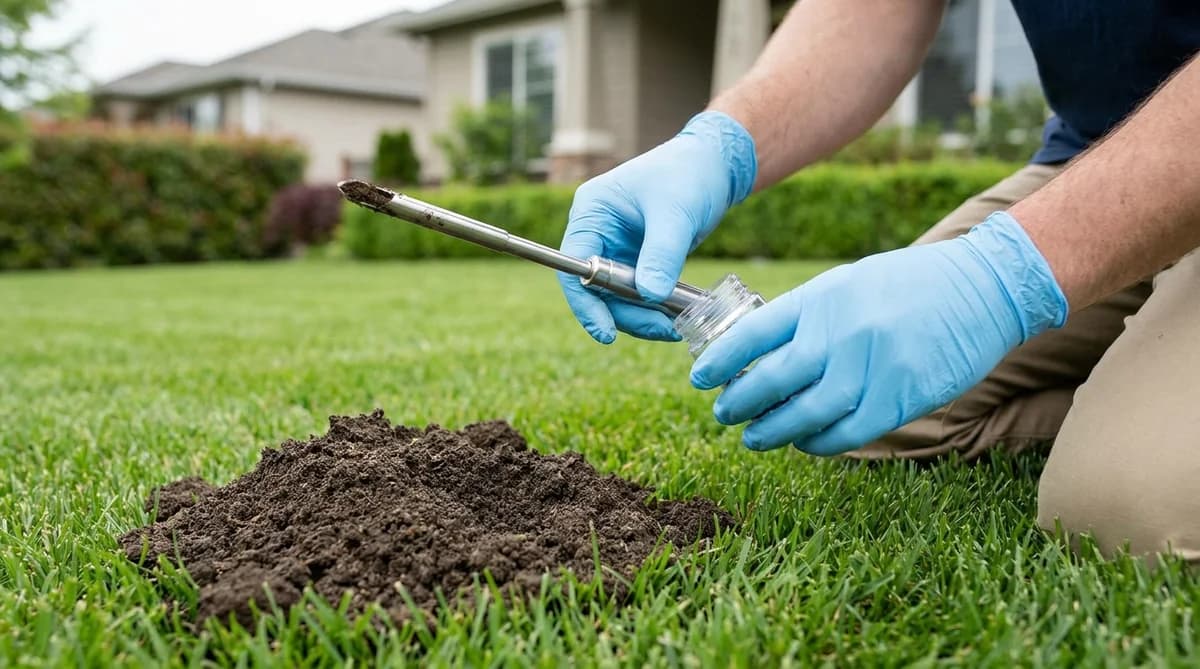
Gloves, yes — always, for any yard work where you're moving soil. A dust mask is overkill for mole mounds but reasonable if you're doing extensive excavation and the soil is dry and dusty. Regular gardening hygiene covers the disease risk here; there's no special mole-mound precaution on top of standard practice.
We have chickens — are moles a disease risk to them?
Very low direct risk. Chickens and moles don't share many pathogens, and the chickens will sometimes eat parts of a dead mole without issue. The indirect risk is the same parasite story — if a mole with ticks or mites is in an area chickens use, the parasites may transfer. Standard poultry parasite management handles it.
Related Services & Resources
Our Services
- Total Mole Control Program — $100/month year-round protection
- One-Time Mole Removal — $450 flat rate with guarantee
- Commercial Mole Control — annual contracts for property managers
Learn More
- How It Works — our 4-step process
- FAQ — 26 expert answers
- Service Areas — 77 cities across Western Washington
Spencer Hill is a US Army veteran and founder of Got Moles, a mole control specialist serving Western Washington. He has helped over 5,000 homeowners reclaim their yards using chemical-free, professional trapping methods.
Ready to Reclaim Your Yard?
Call (253) 750-0211 — we serve all of Western Washington.
CALL (253) 750-0211Free. No obligation.
Or get your free 2-minute Mole Risk Score for a personalized report on why moles target your yard.