
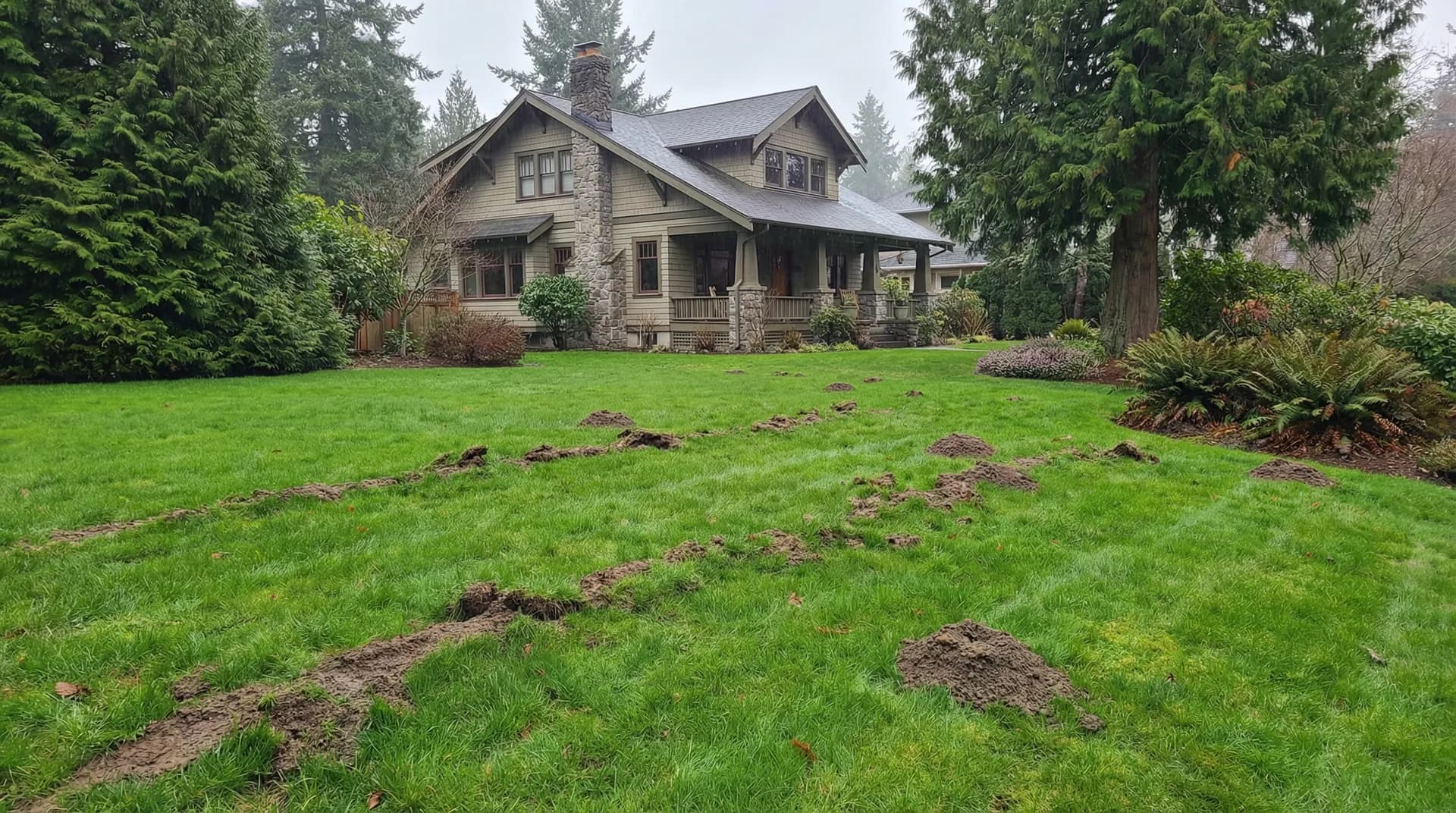
Mole Control in Puyallup
The entire Puyallup Valley sits on deposits from the 5,600-year-old Osceola Mudflow, leaving behind some of the richest, deepest alluvial soil in Western Washington. That same soil that once made Puyallup the daffodil capital of the world now feeds the earthworm populations that Townsend's moles can't resist. Got Moles has worked this valley since 2017.
Call (253) 750-0211219+ Five-Star Google Reviews·Chemical-Free·Proven Results
Got Moles provides professional mole control in Puyallup, Washington. Chemical-free methods. Nearly 5,000 clients served since 2017. Call (253) 750-0211 for a free quote.
Puyallup is the heart of the valley. The Washington State Fair brings over a million visitors every September, but locals know the real charm is year-round. Pioneer Park, the Saturday Farmers Market, the Meeker Mansion, and the daffodil fields that bloom each spring give this community an identity rooted in agriculture and tradition. Downtown has an unhurried energy, and the views of Mount Rainier from South Hill are hard to beat.
Why Moles Thrive in Puyallup
The Puyallup River deposited alluvial sediment up to 98 feet deep across the valley floor, creating soft, loamy soil that's easy for moles to tunnel through and rich in the invertebrates they eat. The river's ongoing influence keeps the water table relatively high, especially in the lower valley near the floodplain. Average annual rainfall around 40 inches keeps the soil consistently moist, and the mild Pacific Northwest climate means there's no hard freeze to slow mole activity. This combination of deep alluvial soil, high moisture, and abundant food makes the Puyallup area one of the most active mole zones in Pierce County.
Moles in Puyallup Neighborhoods
Downtown valley properties near Pioneer Park and the Puyallup River corridor see heavy mole activity because of the high water table and soft alluvial soil. South Hill, sitting above the valley floor, has different conditions entirely — newer subdivisions built on glacial till where developers graded and laid topsoil over compacted ground, creating moisture pooling at the interface. Neighborhoods along Woodland Avenue and near the fairgrounds deal with moles migrating from surrounding agricultural land. The areas around Wildwood Park and the Van Lierop Bulb Farms corridor see consistent pressure because moles thrive in the transition zone between cultivated land and residential yards. Properties along the Riverwalk Trail near the Puyallup River face reinvasion from the riparian corridor.
How We Help Puyallup Homeowners
Year-Round Mole Control
$100/month
Our Total Mole Control Program keeps your yard protected all year. Regular visits, immediate response to new activity, and a report after every check.
Get Year-Round Protection→One-Time Mole Removal
$450 flat rate
A focused, one-month eradication program for properties under 1 acre. 4-5 weekly visits. If we don't catch a mole, you only pay the $150 setup fee.
Get One-Time Removal→Commercial Mole Control
Custom quote
Annual contracts for property managers, HOAs, sports facilities, and commercial grounds. Professional reporting, reliable scheduling.
Get a Commercial Quote→Local Tip
In the lower valley near the river, watch for mole activity to spike after heavy rain events when the water table rises. Moles push toward the surface when deeper tunnels flood, and that's when they do the most visible damage to your lawn.
How It Works
Call
Phone quote, no obligation
Book
Pay $150 setup. We schedule your first visit.
Trap
Tech inspects and sets traps on the first visit
Report
Weekly checks. Written report every visit.
Puyallup Mole Control FAQ
Is mole activity different in the valley versus up on South Hill?
Yes. Valley-floor properties near the river sit on deep alluvial soil with a high water table, which means consistent year-round mole activity. South Hill yards are on glacial till with a shallower topsoil layer. Moles still thrive on South Hill, but the activity patterns are different. We adjust our approach based on the specific soil conditions of your property.
Will moles damage my garden beds and flower bulbs?
Moles are insectivores and won't eat your bulbs or plants directly. However, their tunneling tears through root systems, dries out soil, and creates pathways that voles use to access and eat bulbs and roots. Removing the moles eliminates both the direct tunneling damage and the vole highway problem.
My property is near the Puyallup Fairgrounds. Does that increase mole problems?
Properties near the fairgrounds and surrounding open land do see higher mole pressure. The large, undisturbed areas around the fairgrounds serve as a mole reservoir. When moles expand their territory, nearby residential yards are the first to get hit. Ongoing monitoring is the best approach for properties in that zone.
How do your methods work compared to the grub killer my neighbor uses?
Grub killers target one food source, but Townsend's moles primarily eat earthworms, not grubs. Killing grubs won't drive moles out and may actually harm your lawn's ecosystem. Our professional trapping targets the moles directly — faster, more effective, and no chemicals in your soil.
Do moles cause problems with the old drainage systems in the valley area?
Yes. Mole tunnels can redirect water flow, undermine shallow drain lines, and create soft spots where the ground collapses over tunnel networks. In the valley where the water table is already high, mole tunneling can worsen drainage issues noticeably. Getting on top of the problem early prevents these secondary issues from compounding.
Ready for Mole-Free Living in Puyallup?
Call (253) 750-0211 or fill out the form below.
CALL (253) 750-0211Free quote. No obligation.