
Are Moles Nocturnal?
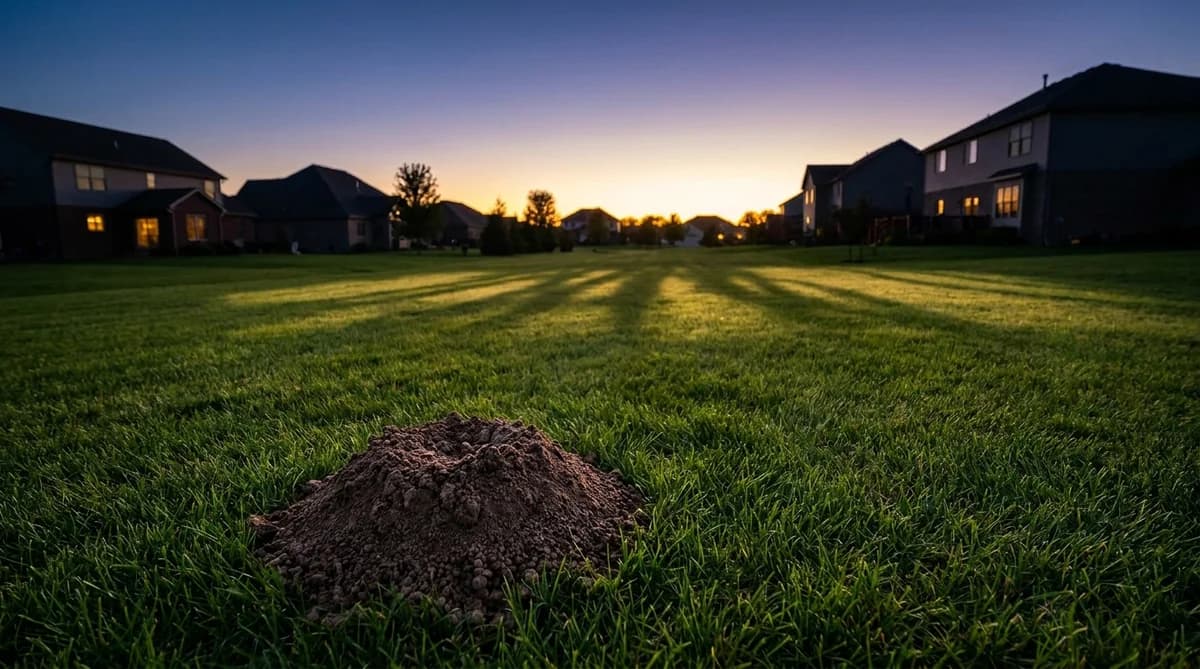
Moles are not strictly nocturnal. They are crepuscular — most active at dawn and dusk — and they run a roughly 4-hour cycle of foraging and rest around the clock, day and night. That's why fresh mounds can appear in a Western Washington yard at any hour. Peak seasonal surface activity runs March through June, but there is no real 'off' period underground.
Want moles handled for good, not just for now? Our monthly mole protection keeps your Western Washington yard covered with regular visits and a written report after every check.
What Does 'Nocturnal' Actually Mean?
Strict definitions matter here. A nocturnal animal — a bat, a raccoon, an owl — sleeps through daylight and is active through the night. That's not what moles do.
The correct term for a mole is crepuscular: most active at dawn and dusk. Some biologists also describe moles as polyphasic, meaning they run on repeated short cycles rather than one big sleep-wake rhythm. Both descriptions are accurate. Neither is 'nocturnal' in the strict sense.
Are Moles Nocturnal? The Crepuscular Answer
Moles are most active in the hour before sunrise and the hour after sunset — that's when peak foraging happens. They are also active through the rest of the day and night in shorter bursts. In Western Washington, with our long summer days and short winter ones, the crepuscular pattern shifts along with sunrise and sunset times.
Research on Townsend's moles, the largest species on Pacific Coast lawns, shows roughly a 4-hour cycle: about 4 hours of foraging, then 3 to 4 hours of rest, around the clock. Multiply that across a 24-hour day and a single mole runs through six cycles daily — three of them during daylight hours.
This is why the homeowner-question 'when are moles active' doesn't have a simple answer. A fresh mound at 11am is as normal as one at 5pm. There's no golden hour for trapping based on time of day.
Why Do Moles Prefer Low Light?
A mole's eyes are about the size of a pinhead and mostly covered in fur. They detect light but nothing else — no images, no motion tracking, no color. Low-light conditions aren't about better vision for a mole; they're about two other things.
Predator avoidance. Hawks, owls, and coyotes — the main surface-level mole predators in Western Washington — are either daytime hunters (hawks) or dawn/dusk hunters (coyotes). Moles moving to the surface, pushing up mounds, carry the highest risk of being picked off. Doing that work at dawn or dusk, when hawks haven't started the shift yet and coyotes are between hunting periods, is a small but real edge.
Earthworm behavior. Earthworms move toward the surface when the soil is wet and cool. In a PNW summer, that's dawn. In a PNW winter, it's essentially all day. Mole activity follows the worms, and the worms follow the moisture.
When Do Moles Actually Sleep?
Moles don't 'sleep through the day' — they rest in short bursts.
A rest period for a Townsend's mole looks like 3 to 4 hours curled up in a nest chamber, usually a slightly enlarged section of the tunnel lined with dry grass or leaves. The nest sits below the main feeding runs, often 18 inches or more below the surface in our clay-heavy PNW ground. The mole isn't unconscious — it can hear tunnel vibrations and will rouse quickly if a predator or another mole approaches.
Between rest periods, the mole patrols its tunnel network looking for earthworms that have fallen in, replaces collapsed sections, and occasionally pushes new runs into fresh soil. A single mole can cover 200 to 300 feet of tunnel per cycle. That's why one mole can create the impression of an 'infestation' — it's the mileage, not the count.
How Do Mole Activity Patterns Affect Western WA Homeowners?
Two practical implications for a PNW yard.
Fresh mounds appear at any hour. If you noticed a mound at breakfast and another one in the afternoon, that's not two moles. It's one mole working its way through a tunnel network on its normal cycle. Don't count mounds as a way of counting moles.
Peak surface activity is seasonal, not hourly. March through June is when Townsend's moles push the most fresh soil to the surface, expanding their territory and displacing earthworm-rich ground. Winter activity doesn't stop in Western Washington — the soil stays warm and wet year-round — but surface evidence slows down from July through February because moles are working deeper in established runs. For more on timing your response, see When Are Moles Most Active in Washington.
Does the Time of Day Matter for Mole Control?
Mole trapping works any time of day, any month of the year. The 24/7 cycle means a well-placed trap in an active tunnel will catch the mole on its next patrol — usually within hours.
What matters is tunnel reading, not timing. A trap placed in an abandoned run can sit there for a week and catch nothing. A trap placed in an active feeding run can catch its target in the next cycle. That's the entire difference between successful mole removal and frustrating DIY attempts.
Got Moles schedules around the homeowner, not around the mole. See the service options at One-Time Mole Removal or the year-round Total Mole Control Program.
How Washington's Daylight Cycle Shifts Mole Behavior
One thing that makes the Western Washington mole pattern distinct from other parts of the country: the length of daylight swings dramatically across the year, and mole crepuscular activity shifts with it.
At the summer solstice in June, Seattle gets nearly 16 hours of daylight. Sunrise is around 5:15am and sunset around 9:10pm. That pushes the dawn and dusk activity windows to the edges of a homeowner's day — the mole's peak foraging is happening when you're either still asleep or winding down indoors. You wake up to fresh mounds that weren't there yesterday.
At the winter solstice in December, daylight drops to about 8.5 hours. Sunrise is around 7:55am and sunset around 4:20pm. Dawn and dusk activity happens during the homeowner's normal waking hours, and the mole's resting periods spread across the short night. Despite the short days, activity doesn't drop — the soil stays workable year-round in the Puget Lowlands, and moles don't hibernate. If anything, the overlap between mole active periods and human observation periods increases in winter, which is why homeowners often notice 'new' mole activity in December and January even though the moles were there all summer too.
The upshot: mole activity in Western Washington is a year-round constant. The apparent seasonality is mostly about whether you're awake when it happens.
Where Got Moles Works
Got Moles is a mole-only specialist covering King, Pierce, Snohomish, and Thurston counties — the heart of Western Washington. We've trapped moles on nearly 5,000 properties since 2017, chemical-free, with 219+ five-star Google reviews across three local offices.
Local service areas include mole control in Federal Way, Renton mole removal, and mole control near Kent — plus every neighboring city on our service areas map.
If moles have moved into your yard, the fastest path to a solved problem is our One-Time Mole Removal or a direct conversation: call (253) 750-0211 or use our contact form.
Why is your yard a mole target?
Get your free 2-minute Mole Risk Score — a personalized report on what is drawing them in and how to make your property less attractive.
Find my risk scoreFree. No call required. Takes about 2 minutes.
Frequently Asked Questions
Do moles sleep at all?
Yes — in short bursts. A mole rests for 3 to 4 hours at a time in a nest chamber, usually tucked below the main feeding tunnels. The rest isn't deep sleep the way mammals we're familiar with sleep; it's more like a dozing state where the mole can still respond to tunnel vibrations. Over a full 24-hour day, a mole accumulates 8 to 12 hours of rest total, spread across multiple cycles.
Why do I see more mole activity in the morning?
Two reasons. Earthworms come closer to the surface overnight when the soil is cool and damp — that pulls moles toward the top few inches of soil to feed. And moles push up mounds during their active cycles, so the fresh soil you see at breakfast is the result of 3-4 hours of pre-dawn work. Afternoon mounds happen too, but morning ones are the most visible because they accumulate while you're asleep.
Are moles more active in summer or winter in Western Washington?
Slightly more active at the surface in spring (March-June). But underground activity is year-round here. PNW winters don't freeze the soil deep enough to stop earthworm activity, so moles keep feeding and patrolling their tunnels all year. The difference is visibility — more new mounds during spring expansion, fewer in mid-winter when they're working existing runs. See our seasonal deep-dive for timing specifics.
Will running outside lights at night keep moles away?
No. Moles live underground and don't use surface vision for anything meaningful — light levels in your tunnels are irrelevant to them. Outdoor lighting won't repel, deter, or even slightly inconvenience a mole. Save the electricity for actual outdoor use.
Does mole activity stop during heavy rain?
The opposite. Heavy rain pushes earthworms toward the surface (they migrate to avoid drowning in waterlogged deeper soil), and that's a feast for moles. Rainy periods in Western Washington are often when mole activity is highest — you'll see fresh mounds within hours of a good soak. If you're trying to time a trap-setting visit, a day after rain is often when activity is most obvious.
Related Services & Resources
Our Services
- Total Mole Control Program — $100/month year-round protection
- One-Time Mole Removal — $450 flat rate with guarantee
- Commercial Mole Control — annual contracts for property managers
Learn More
- How It Works — our 4-step process
- FAQ — 26 expert answers
- Service Areas — 77 cities across Western Washington
Spencer Hill is a US Army veteran and founder of Got Moles, a mole control specialist serving Western Washington. He has helped over 5,000 homeowners reclaim their yards using chemical-free, professional trapping methods.
Ready to Reclaim Your Yard?
Call (253) 750-0211 — we serve all of Western Washington.
CALL (253) 750-0211Free. No obligation.
Or get your free 2-minute Mole Risk Score for a personalized report on why moles target your yard.