
Mole Control in Bonney Lake
Bonney Lake's position at the base of the Cascade foothills puts it right in the transition zone between foothill forest and valley lowland. That's prime territory for Townsend's moles. Got Moles has protected Bonney Lake properties since 2017 with chemical-free trapping safe for the families and pets that make this community home.
Call (253) 750-0211219+ Five-Star Google Reviews·Chemical-Free·Proven Results
Got Moles provides professional mole control in Bonney Lake, Washington. Chemical-free methods. Nearly 5,000 clients served since 2017. Call (253) 750-0211 for a free quote.
Bonney Lake sits at the edge of the Cascade foothills with Mount Rainier dominating the eastern horizon. The community has grown fast, but it hasn't lost its residential character. Lake Tapps, Lake Bonney, and 142 acres of parks give families plenty of room to spread out. Master-planned neighborhoods like Tehaleh and Sky Island blend into the surrounding forests and trails, and the vibe is quiet, family-centered, and outdoorsy.
Why Moles Thrive in Bonney Lake
At 591 feet of elevation, Bonney Lake sits on a mix of glacial till and volcanic deposits from Mount Rainier. The gently rolling hills create varied drainage patterns where moisture collects in low spots and swales between hills. Lake Tapps and Lake Bonney influence the local water table, and the forested areas surrounding newer developments maintain high soil moisture year-round. The combination of loamy forest soil in the eastern neighborhoods and glacial outwash in the western areas means mole-friendly conditions stretch across the entire city.
Moles in Bonney Lake Neighborhoods
Tehaleh, surrounded by forest with walking trails and natural areas, sees significant mole activity at the boundary between developed lots and surrounding woodland. Moles established in the forest push into freshly landscaped yards as the neighborhood expands. Sky Island and neighborhoods along the Lake Tapps shoreline deal with moisture-driven mole activity thanks to the elevated water table near the lake. Properties along the 192nd Avenue corridor between older established neighborhoods and newer construction see moles exploiting disturbed soil from ongoing development. Allan Yorke Park and the Victor Falls area create green corridors that funnel mole movement into adjacent residential areas. The Fennel Creek drainage that runs through the city's core keeps surrounding neighborhoods consistently active.
How We Help Bonney Lake Homeowners
Year-Round Mole Control
$100/month
Our Total Mole Control Program keeps your yard protected all year. Regular visits, immediate response to new activity, and a report after every check.
Get Year-Round Protection→One-Time Mole Removal
$450 flat rate
A focused, one-month eradication program for properties under 1 acre. 4-5 weekly visits. If we don't catch a mole, you only pay the $150 setup fee.
Get One-Time Removal→Commercial Mole Control
Custom quote
Annual contracts for property managers, HOAs, sports facilities, and commercial grounds. Professional reporting, reliable scheduling.
Get a Commercial Quote→Local Tip
In Tehaleh and other neighborhoods carved from forest, keep an eye on the edge of your property closest to the tree line, especially in the first two to three years after landscaping. That forest-to-lawn transition is where moles cross into your yard. Catching them early at the edge is easier than dealing with an established tunnel network across the whole lot.
How It Works
Call
Phone quote, no obligation
Book
Pay $150 setup. We schedule your first visit.
Trap
Tech inspects and sets traps on the first visit
Report
Weekly checks. Written report every visit.
Bonney Lake Mole Control FAQ
My new construction home in Tehaleh already has mole mounds. How is that possible?
New subdivisions built on former forestland are magnets for mole problems. Construction pushes moles to the edges temporarily, but once sod goes down and irrigation starts, they move right back in. The forest surrounding Tehaleh is permanent mole habitat, and the transition to irrigated lawns actually makes your yard more attractive to moles than the forest floor.
Does living near Lake Tapps make mole problems worse?
Properties near Lake Tapps do see elevated mole activity. The lake influences the local water table, keeping nearby soil moist at tunnel depth even during dry periods. That consistent moisture supports the earthworm populations moles depend on. The effect extends several hundred yards from the shoreline.
Is mole activity in Bonney Lake seasonal or year-round?
Year-round, though you'll notice it more in spring and fall. Bonney Lake's elevation means slightly cooler soil temperatures than the valley floor, which can push peak surface tunneling a bit later into spring. But the ground never freezes hard enough to stop moles completely.
Can moles damage my sprinkler system?
Mole tunnels typically run 3 to 8 inches below the surface, the same depth as many residential irrigation lines. They won't chew through pipes, but tunneling alongside or underneath sprinkler lines can shift them, create air pockets, and cause uneven watering. Removing the moles before they undermine your irrigation system saves you from a more expensive repair.
What's the difference between mole mounds and the ant hills I see in my yard?
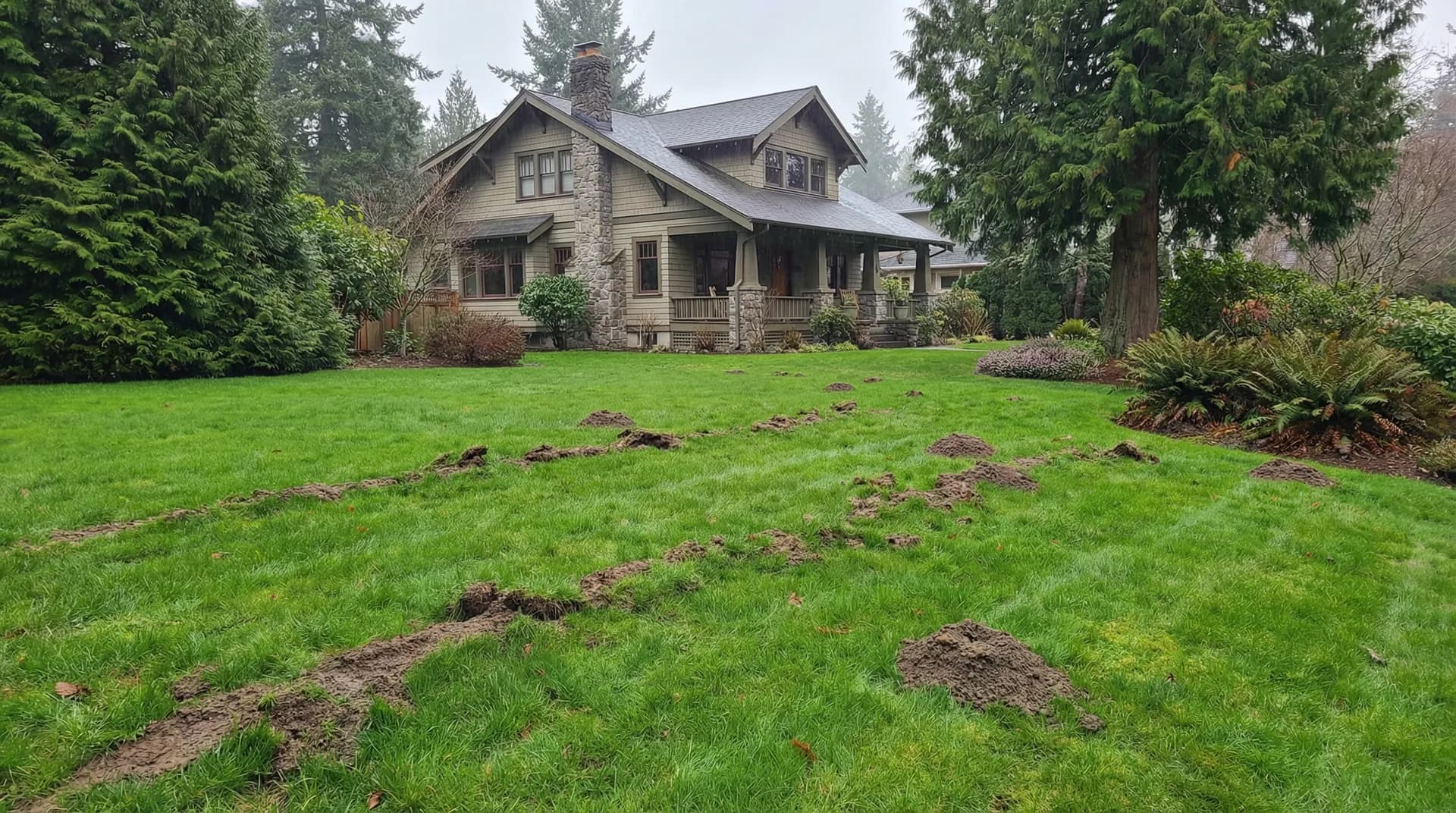
Mole mounds are volcano-shaped piles of soil typically 6 to 12 inches across with a plugged hole in the center. Ant hills are smaller, finer-grained, and usually have visible ant activity around the entrance. Mole mounds also have raised ridges connecting them across your lawn. If you're seeing both, the moles are the bigger problem to address first.
Ready for Mole-Free Living in Bonney Lake?
Call (253) 750-0211 or fill out the form below.
CALL (253) 750-0211Free quote. No obligation.